













Newfound variant of HIV progresses to AIDS faster and may be more transmissible
Available treatments work equally well against the variant.

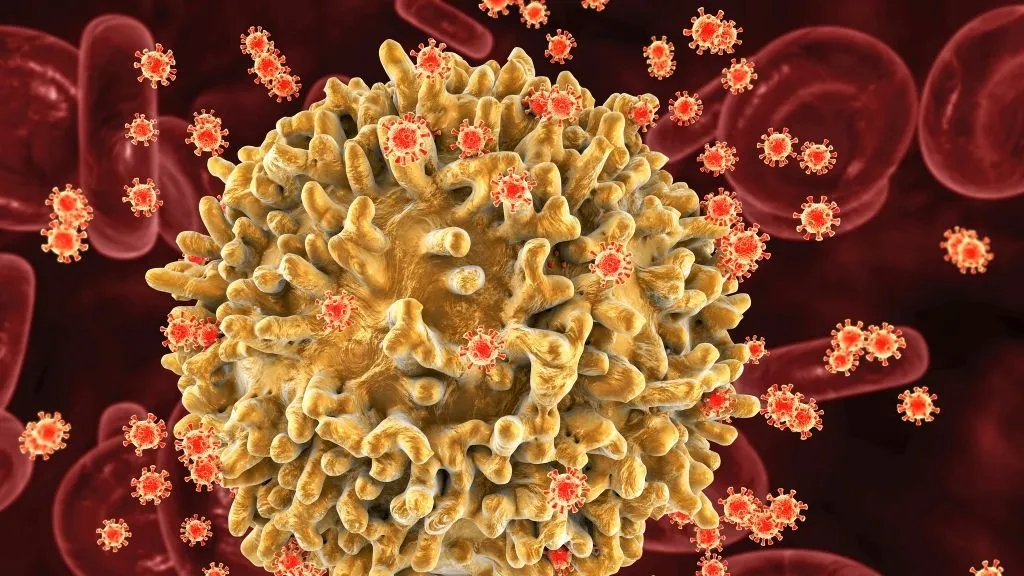
A newfound variant of HIV, the virus that causes AIDS, has been uncovered in the Netherlands and appears to cause faster disease progression compared with other versions of the virus.
The human immunodeficiency virus (HIV) infects and destroys immune cells called CD4 cells in the body, causing the number of these cells to plummet. If left untreated, the infection then progresses to AIDS. In people infected with the newfound HIV variant, called the VB variant, the CD4 counts fall at about twice the rate as those of people infected with closely related HIV strains, meaning those of the same genetic subtype (B).
Without treatment, infections with the VB variant would likely progress to AIDS, on average, within two to three years of a person's initial HIV diagnosis, researchers reported Thursday (Feb. 3) in the journal Science. With other versions of the virus, a similar degree of decline occurs about six to seven years after diagnosis, on average.
Related: Do other viruses have as many variants as SARS-CoV-2?
"We found that on average, individuals with this variant would be expected to progress from diagnosis to 'advanced HIV' in nine months, if they do not start treatment and if diagnosed in their thirties," first author Chris Wymant, a senior researcher in statistical genetics and pathogen dynamics at the University of Oxford, told Live Science in an email. The disease's progression would be even faster in an older person, he said.
Thankfully, in their study, the team found that antiretroviral drugs, the standard treatment for HIV, work just as well against the VB variant as they do against other versions of the virus. "For an individual on successful treatment, the deterioration of the immune system towards AIDS is stopped, and transmission of their virus to other individuals is stopped," Wymant said.
"The authors use the case study to underpin the importance of universal access to treatment," said Katie Atkins, chancellor's fellow at Edinburgh Medical School and an associate professor at the London School of Hygiene and Tropical Medicine who was not involved in the study. "Both because we want to directly reduce the number of people dying unnecessarily of AIDS, but also as a means to reduce the amount of circulating virus and therefore reduce the chance of new, more deadly variants emerging," she told Live Science in an email.
Get the world’s most fascinating discoveries delivered straight to your inbox.
How the variant was spotted
Wymant and infectious-disease epidemiologist Christophe Fraser, the study's senior author, are both key members of the BEEHIVE project, an effort to better understand HIV biology, evolution and epidemiology. "The BEEHIVE project, begun in 2014, was created to understand how changes in the virus, encoded in its genetics, cause differences in disease," Wymant said. "The project brings together data from seven national HIV cohorts in Europe plus one in Uganda."
While analyzing data from the ongoing study, the team identified 17 individuals infected with a "distinct" HIV variant, all of whom carried strikingly high concentrations of the virus in their blood early in infection — between six months and two years post-diagnosis. Fifteen of the infected individuals were from the Netherlands, one was from Switzerland and one was from Belgium.
The newfound variant belongs to the genetic subtype B, a group of related HIV viruses most commonly found in Europe and the U.S., the team found. To see if they could find more examples of the variant in the Netherlands, the researchers screened data from the ATHENA national observational HIV cohort, a large group of HIV-positive individuals in the Netherlands who were diagnosed between 1981 and 2015.
Viral genetic sequence data was available for more than 8,000 of these individuals, and of these, about 6,700 were infected with subtype B viruses. Within this group, the researchers identified 92 individuals with the distinctive VB variant, which brought their total to 109.
Based on the available clinical data, these 109 individuals carried 3.5-fold to 5.5-fold higher viral loads than people infected with other subtype B strains. And at their time of diagnosis, the individuals infected with the VB variant already had lower CD4 counts than those infected with other strains. So compared with other people newly diagnosed with HIV, their CD4 counts both started lower and fell faster.
Related: 11 surprising facts about the immune system
To explain how this sharp uptick in virulence arose, the researchers went back to the VB variant genome, searching for clues. They found that the variant carries many mutations, scattered throughout its genome, so for now, they couldn't pinpoint a single, isolated genetic cause for the virus's increased virulence, they reported.
"It is unlikely that one mutation, or even one gene, is responsible for this change," said Joel Wertheim, an associate professor of medicine at the University of California, San Diego, who was not involved in the study. "Working out this mechanism is of great interest," he told Live Science in an email.
RELATED CONTENT
The team was able to construct a diagram called a phylogenetic tree based on the available genetic data, "very similar to normal family trees for humans" that show how closely different individuals are related to each other, Wymant said. Based on this tree, they estimated that the VB variant likely first appeared during the late 1980s or 1990s in the Netherlands. Around that time, the first antiretroviral treatment for HIV had just been approved by the U.S. Food and Drug Administration, and treatments using combinations of antiretrovirals were not yet available, according to a 2019 review in the journal Health Affairs.
"During this decade, there would have been a high prevalence of untreated HIV infected individuals who were not virally suppressed in Western Europe," Atkins said. "This high number of people who were not virally suppressed would have provided a large virus population in which a new variant could have emerged."
The tree suggested that individuals who caught the VB variant carried "viruses that were unusually closely related to each other," Wymant said. This finding suggests that little viral evolution occurred between the time that someone acquired the virus and the point when they passed it on to someone else.
In other words, on top of being highly virulent, the VB variant may also be more transmissible than other versions of HIV. However, this finding is less conclusive than the evidence of increased virulence, since the tree provides only indirect evidence of the virus's transmissibility, Wymant said.
After the VB variant emerged in the 1980s or 1990s, the number of people infected with the variant steadily increased until about 2010. At the same time, the proportion of new VB cases among all new subtype B cases began to increase. This increase peaked around 2008 and then steadily declined, the team found.
"This is most likely a by-product of the strong efforts in the Netherlands to decrease transmission of any HIV, regardless what variant it is," Wymant said. Absolute numbers of both VB and non-VB diagnoses were declining at this time, and there is some uncertainty in the data as to the exact ratio of VB to non-VB infections, the authors noted.
The discovery of a highly virulent HIV variant isn't necessarily surprising, Wertheim said. "This finding is in line with both evolutionary theory and the trends towards increased virulence we've seen in the United States over the decades," he told Live Science. "I am most surprised by how stark and distinct this newly described cluster is."
Looking forward, Wertheim said he expects many groups around the world to begin screening their data to see if the VB variant has spread beyond the Netherlands. "Also, I am curious as to whether similar variants have emerged elsewhere in the world," Wertheim said.
Other than the cases detected in people from Switzerland and Belgium, the team found no initial evidence of the variant beyond the Netherlands. They searched publicly available viral genetic sequences and found no trace elsewhere, but there may be at least a few others infected with the variant that have yet to be identified, Wymant said. "By making the genetic sequence of the VB variant openly available, we are allowing other investigators in different countries to check their own private data," he said.
Future studies of the VB variant could reveal how it builds up in the blood and decimates CD4 cells so quickly, and also provide more details as to how the variant first evolved. The team found evidence that the variant steadily picked up its mutations, one by one, over time, but they couldn't tell if this evolution occurred in multiple individuals or just one, Wymant said.
In the meantime, should the general public be concerned about the newfound VB variant?
"The public needn't be worried," Wymant said. "Finding this variant emphasises the importance of guidance that was already in place: that individuals at risk of acquiring HIV have access to regular testing to allow early diagnosis, followed by immediate treatment … These principles apply equally to the VB variant."
Originally published on Live Science.

Nicoletta Lanese is the health channel editor at Live Science and was previously a news editor and staff writer at the site. She is a recipient of the 2026 AHCJ International Health Study Fellowship, with a project focused on antibiotic stewardship practices in Japan and the U.S. They hold a graduate certificate in science communication from UC Santa Cruz and degrees in neuroscience and dance from the University of Florida. Beyond Live Science, Lanese's work has appeared in The Scientist, Science News, the Mercury News, Mongabay and Stanford Medicine Magazine, among other outlets. Based in NYC, she also remains involved in dance and performs in local choreographers' work.