
 Live Science Plus



New 'Jaguar' Catfish Species Found in Amazon

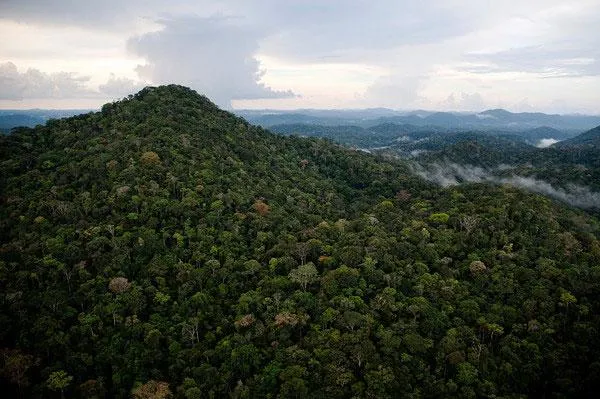
In a previously unexplored area of the Amazon rain forest, scientists have discovered a new species of catfish swimming in a tributary to the great Amazon River.
The fish was found during a series of expeditions to explore the biodiversity of the rain forests of the northern margin of the Amazon River in the Brazilian state of Pará, in the world's largest block of protected rain forest , which covers 10 million acres (4 million hectares).
"Discoveries like this one remind us that we still have a lot to learn about the biodiversity of the Amazon ," said Patricia Baião, Amazon program director at Conservation International Brazil, which helped organize the expeditions. [Related: Images of an Amazon journey .]

The fish is a cream color with a pattern of dark patches on its body, reminiscent of jaguar fur. For this reason, the fish was named Stenolicnus ix, "Ix" being a Mayan word used to describe jaguars .

The newfound species differs from other species of the same genus by the length of the nasal barbells the whiskerlike tactile organs extending from the mouth.
The Stenolicnus ix individual found by the expedition was collected with a sieve by scraping sand and leaf litter from the Curuá River bed.
"This fish was collected when we were about to finish our research in the creek. It is very small and, therefore, very hard to find. This is why we collected only a single individual," said Wolmar Wosiack, researcher and curator of the ichthyology collection of the Emilio Goeldi Museum, in the state of Pará.
Some 15 species of fish were also observed in the same narrow, shallow waters, in an area about 16 feet (5 meters) wide and less than 3 feet (1 m) deep.
Wosiack and his colleagues, Luciano Montag, of the Federal University of Pará, and Daniel Coutinho, a graduate student at the university, described the newly discovered fish in a study detailed in a recent issue of the journal Zootaxa.

The expeditions, organized by Emílio Goeldi Museum and Conservation International Brazil, took place in 2008 with about 30 researchers who set out to explore an area of more than 30 million acres (12 million hectares) and map out the biodiversity of this protected area previously unknown to science. The expeditions were led by Alexandre Aleixo, researcher and curator of the ornithological collection of the Museu Goeldi.
- Image Gallery: New Species of the Amazon
- In Images: Journey Into the Tropical Andes
- 8 of the World's Most Endangered Places
