













Did Army Spray Harmful Chemicals on US Cities?
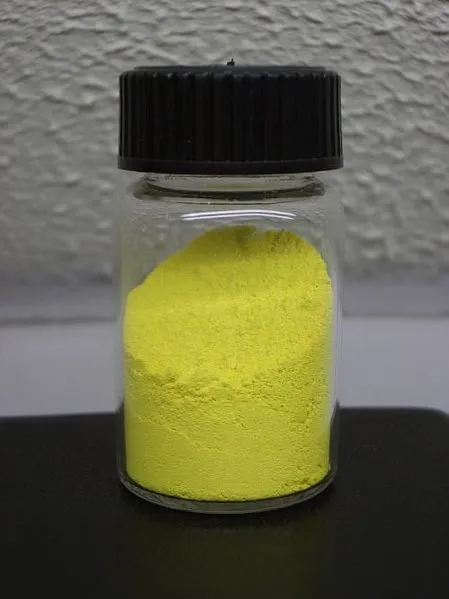
During the 1950s and '60s, the U.S. Army dusted chosen American cities from coast to coast with a fine powder of a fluorescent, potentially toxic chemical. And now one scientist says, at least in the case of St. Louis, that powder may have contained radioactive material.
The powder scattering was part of Operation Large Area Coverage (LAC), a series of tests the Army says were designed to assess the threat of biological attacks by simulating the airborne dispersion of germs. The experiments exposed large swathes of the United States, and parts of Mexico and Canada, to flurries of a synthesized chemical called zinc cadmium sulfide.
New research from sociologist Lisa Martino-Taylor in St. Louis, one of the cities singled out for heavy-duty testing during LAC, suggests the Army may have mixed radioactive particles with the zinc cadmium sulfide it spread throughout a poor, mostly black neighborhood there.
Martino-Taylor, a professor at St. Louis Community College-Meramec, admits she has no direct proof radioactive material was released in St. Louis, but her report on the chemical tests compelled both of Missouri's U.S. senators to send letters to Army Secretary John McHugh demanding information, according to the Associated Press. [The 10 Most Outrageous Military Experiments]
Her study examines organizational connections between scientists working on the zinc-cadmium-sulfide tests in St. Louis and researchers who, at around the same time, were engaged in human radiation experiments and releases of radioactive material into the environment that have been proven. (Many established human radiation experiments in the United States are detailed in the 1995 report of Bill Clinton's Advisory Committee on Human Radiation Experiments.) It also notes that United States Radium Corporation, a company notorious for manufacturing a radioactive, glow-in-the dark paint that killed and sickened some of its workers in the 1920s, supplied the army's zinc cadmium sulfide, originally developed as another fluorescent paint pigment.
The conclusion Martino-Taylor draws, that the St. Louis tests likely involved radiological testing on humans, is highly contentious. Not in dispute, though, is the fact that the Army exposed people around the country to a poorly studied and potentially harmful chemical, without their consent.
What is zinc cadmium sulfide?
Get the world’s most fascinating discoveries delivered straight to your inbox.
Zinc cadmium sulfide, created by heating a mixture of the compounds zinc sulfide and cadmium sulfide, was reportedly chosen by the Army for the physical similarities its powder form shares with a cloud of microbes and for its easy detection under ultraviolet light. (The chemical's three constituent elements are zinc, cadmium and sulfur, but the Army's powder formulation also contained small quantities of either silver or copper to activate the chemical's fluorescence, as well as a silicate to aid in dispersion.)
The Army spread zinc cadmium sulfide in St. Louis with motorized blowers perched atop low-income housing buildings, claiming at the time that the machines were part of a test for smoke screens that could guard against aerial observation by Russians, according to the Associated Press. But when the machines' true purpose was revealed by the Army in 1994, a public outcry led to Congress' request that the National Research Council (NRC) probe zinc cadmium sulfide's health effects.
Due to a scarcity of past research on the chemical, the NRC's investigation assessed the risk that would have been posed if unmixed forms of zinc cadmium sulfide's most dangerous component, cadmium, had been dispersed in proportionate quantities. [Why Is Cadmium So Dangerous?]
The council's report concluded that, while the toxicity of zinc cadmium sulfide itself was not well understood, the quantities of the chemical released by the Army would not have harmed the public even if the cadmium involved had acted just like purer, probably more toxic forms of the element.
How much zinc cadmium sulfide were citizens exposed to?
The NRC estimated the maximum potential dose of cadmium, a known carcinogen, by one person during LAC would have been 24.4 micrograms over 31 months by a resident of St. Louis. (Exposures could have been much higher in Biltmore Beach, Fla., where more powder was released, as the area was remote at that time and apparently deemed to be unpopulated.) For comparison, Americans take in an average of 18.9 micrograms of cadmium every day in their food, while smokers are exposed to 1.7 micrograms of cadmium in every cigarette, according to the International Agency for Research on Cancer (IARC).
By those figures, the Army exposed St. Louis residents to a maximum of 14.4 cigarettes' worth of cadmium over 31 months. David Eaton, a professor of environmental and occupational health sciences at the University of Washington, says if the NRC's calculations hold up, he wouldn't have minded living under a zinc cadmium sulfide blower in St. Louis.
"If I were confident that the exposures were not hugely in excess of the worst-case analysis, it wouldn't bother me at all," Eaton told Life's Little Mysteries. "I would find many other things to worry about before that."
Has further research been carried out?
The NRC's assessment concluded with a recommendation that the Army carry out animal testing to assess the specific toxicity risks of zinc cadmium sulfide. The 1997 report claimed the Army had already initiated the recommended research at that time, but it remains unclear if it was ever completed or released for outside evaluation.
Dave Foster, a spokesperson for the U.S. Army, would not comment on whether the research had been begun or completed. Foster told Life's Little Mysteries that Missouri Sen. Claire McCaskill had requested similar information, and that the Army will first respond to her, which he expects to happen sometime this week.
LAC tests also included the dispersion of biological agents, including Serratia marcescens, Bacillus globigii, Bacillus subtilis and Aspergillus fumigates. Though they were not thought to be harmful at the time, some of the organisms used have since been shown to be potentially pathogenic in people with weakened immune systems. The NRC's report did not attempt to assess the health risks posed by those microbes.
Follow Life's Little Mysteries on Twitter @llmysteries. We're also on Facebook & Google+.