















The Best Science Photos of the Week - March 17, 2012

Rainbow Star Cluster Sparkles

Hundreds of thousands of glittering stars shine in a globular cluster known as Messier 9 at the center of our galaxy in a new photograph from the Hubble Space Telescope. [Read full story]
Horizontal Tornado

New images of a weird weather phenomenon known as a roll cloud have surfaced from Richland, Miss.
The images, taken on a camera phone by Mississippi resident Daniel Blake Fitzhugh, reveal a seemingly endless roll cloud, or arcus cloud, a low cloud formation that forms over the sea or at the edges of thunderstorms. Fitzhugh sent in an image and video of the cloud to LiveScience after seeing an earlier report of a roll cloud off the coast of Brazil. [Read full story]
World's Largest Conservation Area

Wildlife in Africa got an extra level of protection Thursday (March 15) with the official creation of the world's largest international conservation area spanning the borders of Botswana, Angola, Namibia, Zambia and Zimbabwe. Here, an elephant sprays dust in the KAZA conservation area. [Read full story]
KAZA Residents

Two kingfishers on a branch. The KAZA area is home to 3,000 species of birds. [See more images from the KAZA Conservation Area]
Vanishing Water

In one of our "images of the day" posted this week, the Icelandic waterfall Gullfoss pours nearly 5,000 cubic feet (140 cubic meters) of water over its edge each second. Gullfoss (which means 'Golden Falls' in English) is on the Hvita river in southwest Iceland. The falls were once considered for hydroelectric power, but fortunately for this stunning vista, they were sold to the Icelandic government instead and preserved. Now the spot is one of the most popular tourist destinations in Iceland.
Never-Ending Ice

Another gorgeous image of the day! Here, three viewers are silhouetted against Argentina's Perito Moreno Glacier, a sea of ice 19 miles (30 kilometers) long and up to 558 feet (170 meters) deep. This view in Los Glaciares National Park is easily accessible to travelers. Tour companies even lead guided trips for adventurous souls who want to walk on the glacier's surface.
How Our Moon Evolved

Two new NASA videos use the latest close-up imagery of the moon from the Lunar Reconnaissance Orbiter to reveal Earth's natural satellite in a whole new light. This illustration shows the still-molten moon just after its formation about 4.5 billion years ago. [Read full story]
Get the world’s most fascinating discoveries delivered straight to your inbox.
Here Comes Trouble

An image gallery we posted this week, LiveScience looks at the microscopic critters that can cause all sorts of misery. This image, made using a scanning electron microscope, shows the free-swimming protozoan Giardia, which causes diarrhea and other symptoms when it infects the small intestine, often as a result of contaminated drinking water.
The Beauty of an Earthquake Zone
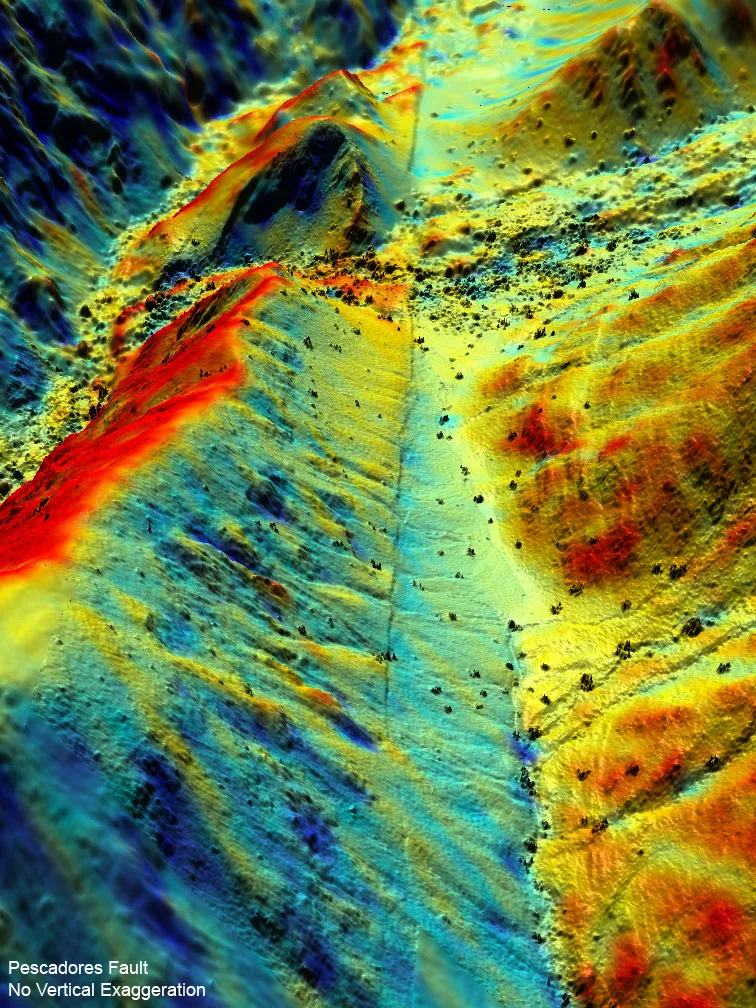
Geologists gain insights into how earthquake faults behave, thanks to a sophisticated tool called LiDAR which stands for "light detection and ranging." Shown here, a LiDAR image of the Pescadores Fault in Mexico after a 7.2 earthquake. [Read full story]
Mini Horned Dinosaurs Named
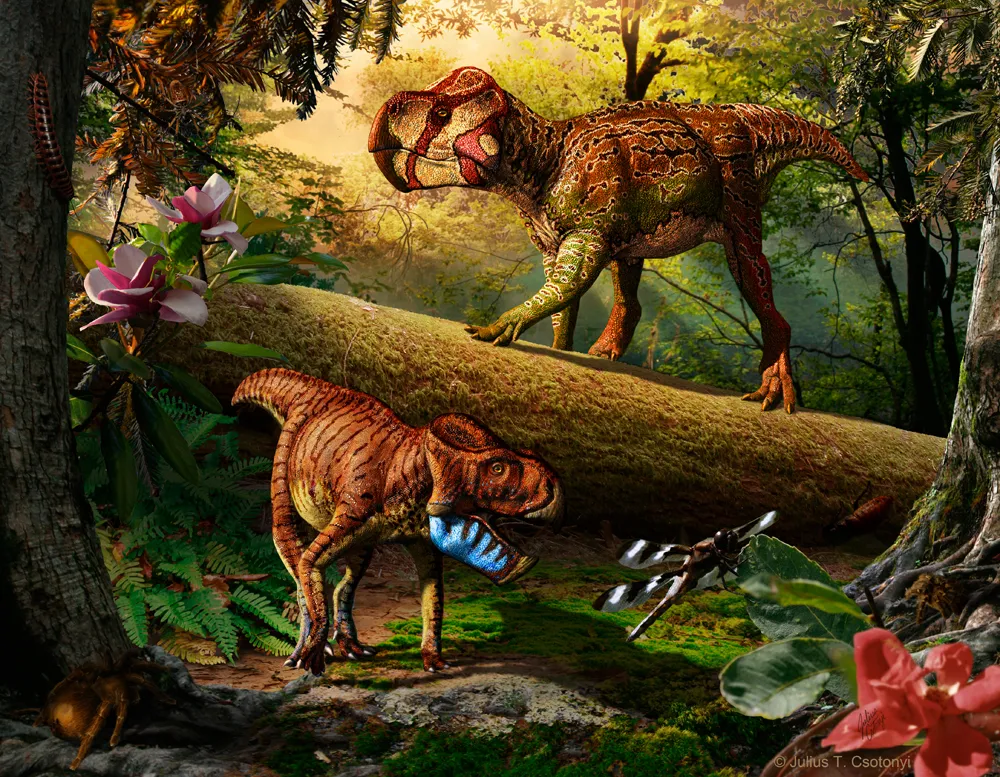
The oldest and smallest horned dinosaur in North America finally gets a name after decades of research. The little horned dinosaur (Gryphoceratops morrisoni), lower left in the photo, measuring 1.6 feet (0.5 meters) long, lived about 83 million years ago. The study, reported this week, also detailed another newly named species of horned dinosaur: Unescopceratops koppelhusae, upper right, which lived 75 million years ago, in what is now Alberta, Canada. [Read full story]
