


-
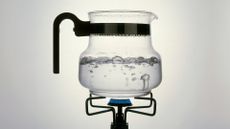 Why does boiling water have bubbles, except in a microwave?
Bubbles are usually the first sign that water’s coming to the boil, but heating it in a microwave seems to skip this important step. Here’s what’s going on.
11 Commentschemistry -
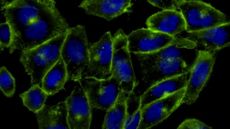 Science history: Scientists use 'click chemistry' to watch molecules in living organisms — Oct. 23, 2007
Carolyn Bertozzi and colleagues laid out a way to make paradigm-shifting "click-chemistry" compatible with living cells, opening up a window into living organisms.
chemistry -
 Why does slicing onions make you cry?
Here's why you may start tearing up while slicing an onion.
chemistry -
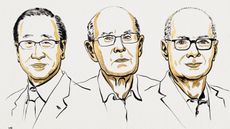 'Harry Potter' materials land three scientists Nobel Prize in chemistry
Susumu Kitagawa, Richard Robson and Omar Yaghi awarded the 2025 Nobel Prize in Chemistry "for the development of metal–organic frameworks."
4 Commentschemistry -
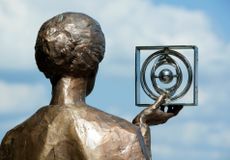 Nobel Prize in Chemistry: 1901-Present
The Nobel Prize in Chemistry includes famous winners such as Marie Curie and Otto Hahn.
chemistry -
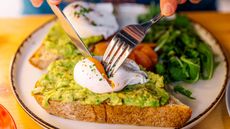 Why do avocados turn brown so quickly — and are they OK to eat at that point?
Why do avocados turn brown in a flash? The answer is in the air.
chemistry -
 Scientists transform 'forever chemicals' in water into fluoride with new process
Exposure to a sunlight-activated catalyst broke down 99% of a forever chemical, leaving behind recyclable fluoride.
2 Commentschemistry -
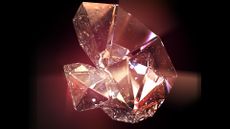 Scientists have finally made an elusive meteorite diamond, predicted to be 50% harder than Earth diamonds
Meteorite diamonds, which could be 58% harder than ordinary diamonds, have finally been made in the lab.
2 Commentschemistry -
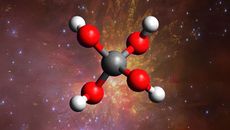 Scientists synthesized elusive 'super alcohol' — a 'seed of life molecule' that marks a step toward finding alien life
Scientists have synthesized methanetetrol, an elusive alcohol that could be the foundation of alien life.
2 Commentschemistry


