

-
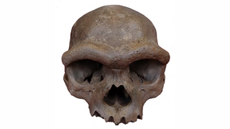 Prehistoric Jomon people in Japan had 'little to no' DNA from the mysterious Denisovans, study finds
The prehistoric Jomon people of Japan had "unexpectedly low" levels of DNA from the Denisovans, our mysterious human relatives.
5 Commentshuman-evolution -
 'DST just seems so pointless': Poll reveals most Live Science readers want to eliminate daylight saving time
Thousands of Live Science readers responded to our poll asking if they would get rid of daylight saving time.
sleep -
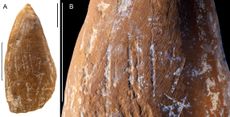 Crimean Stone Age 'crayons' were used by Neanderthals for symbolic drawings, study claims
Scientists have discovered Stone Age "crayons" in Crimea, hinting that Neanderthals may have used them for symbolic drawings or markings. But not everyone agrees.
neanderthals -
 'Chemo brain' may stem from damage to the brain's drainage system
An early-stage study has found that a common chemotherapy drug disrupts lymphatic cells in the tissue surrounding the brain. This is linked to memory issues in mice.
cancer -
 Would you get rid of daylight saving time?
The clocks in the U.S. will be "falling back" on Sunday, Nov. 2, marking the end of daylight saving time for 2025. If you could decide, would you abandon it forever?
18 Commentssleep -
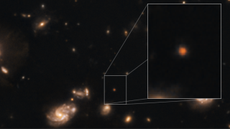 'Puzzling' object discovered by James Webb telescope may be the earliest known galaxy in the universe
While scouring images from the James Webb Space Telescope, astronomers spotted Capotauro, "one of the most puzzling discoveries" to date.
3 Commentscosmology -
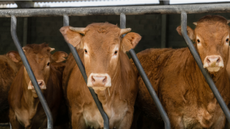 Meat eaten by city-dwelling Americans produces more CO2 than the entire UK — but there are easy ways to slash it
Halving how much edible food is thrown away, swapping beef for pork or chicken and having one meatless day a week could slash the carbon "hoofprint" of U.S. cities by up to 51%, a new study finds.
20 Commentsclimate-change -
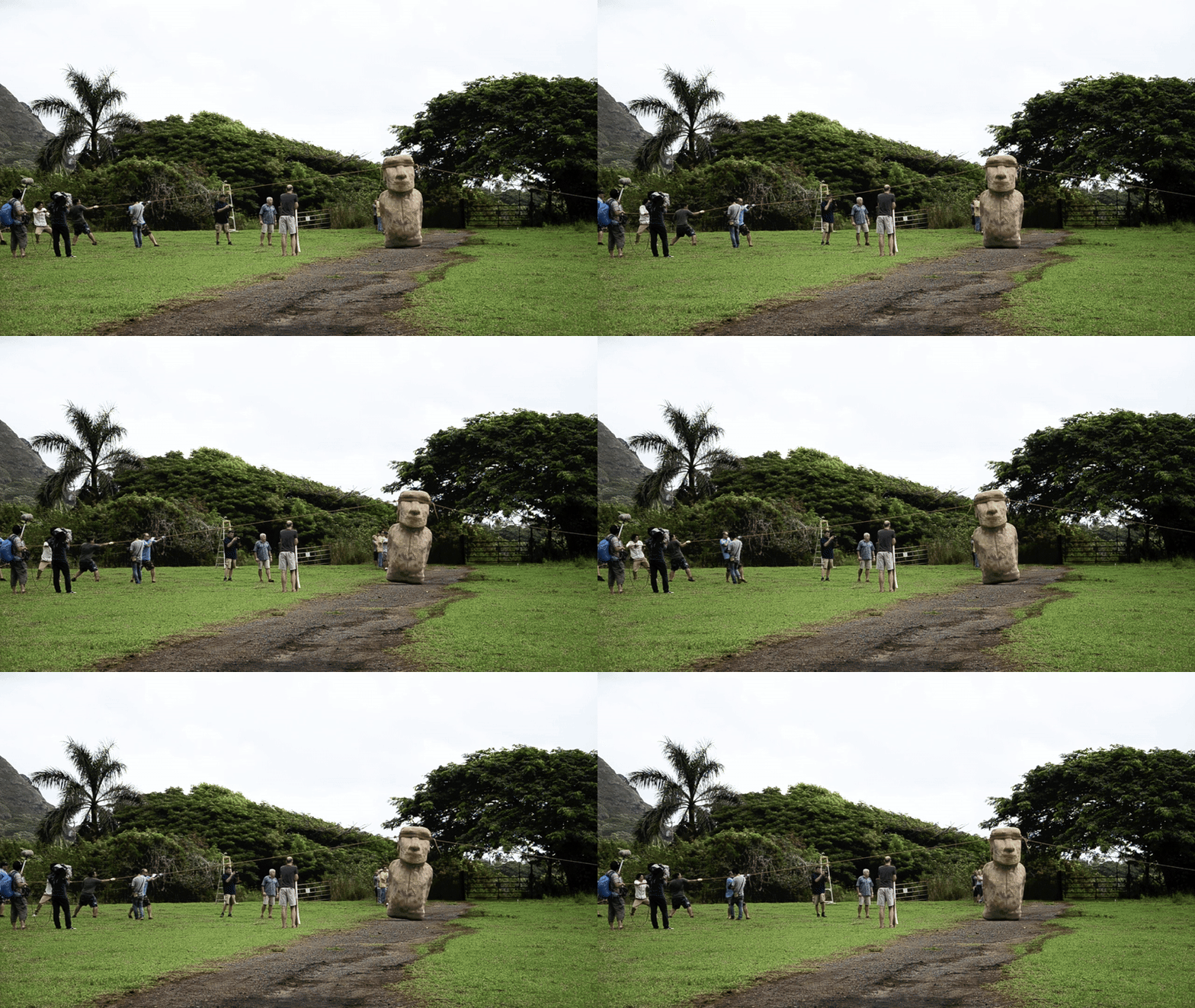 Easter Island statues may have 'walked' thanks to 'pendulum dynamics' and with as few as 15 people, study finds
Simple physics may explain how the Easter Island statues could "walk" miles with only a handful of people, but the debate over their transport is far from over.
16 Commentsarchaeology -
 Jane Goodall revolutionized animal research, but her work had some unintended consequences. Here's what we've learned from them.
Following Jane Goodall's death, chimp experts explain how her early observations still influence our understanding of our ape cousins.
2 Commentsprimates -
 James Webb telescope finds something 'very exciting' shooting out of first black hole ever imaged
Using the James Webb Space Telescope's infrared camera, scientists have captured the gigantic jet blasting out of M87* in a new light.
7 Commentsblack-holes -
 James Webb telescope could have spotted controversial 'dark stars' in the far universe
Using observations from the James Webb Space Telescope, astrophysicists have spotted what they say is compelling evidence of a new type of cosmic object called a 'dark star.'
2 Commentscosmology -
 Scientists invent 'Pulse-Fi' prototype — a Wi-Fi heart rate monitor that's cheaper to set up than the best wearable devices
Engineers are in the early stages of harnessing Wi-Fi as a way to monitor heart rates, but don't expect to use your home router anytime soon.
communications -
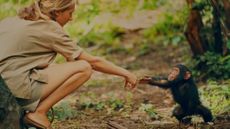 From tool use to warfare — here are 5 ways Jane Goodall revolutionized our knowledge of chimpanzees
Pioneering primatologist Jane Goodall has died at age 91. These are her five biggest contributions to how we understand about our closest living relatives.
primates -
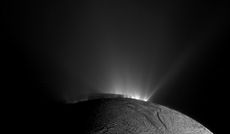 Scientists find best evidence yet that icy moon Enceladus is habitable
An ocean flowing beneath the surface of Saturn's moon Enceladus is spewing ice that holds the building blocks of life.
11 Commentssaturn -
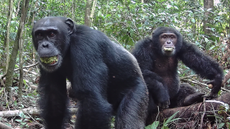 Chimps eat fruit full of alcohol, but no, they don't get drunk
Chimps' ability to metabolize fermented fruit could explain our own predilection for alcohol.
2 Commentsprimates -
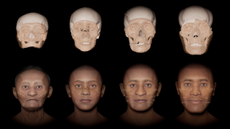 Scientists have digitally removed the 'death masks' from four Colombian mummies, revealing their faces for the first time
The reconstructions are based on the skulls of four mummified individuals who had masks tightly fitted on their faces.
archaeology -
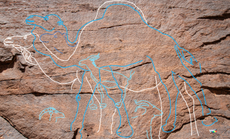 Life-size rock art points the way to oldest human inhabitants of Saudi Arabia — and the desert oases they used
Archaeologists in Saudi Arabia have discovered hundreds of rock art engravings that were carved by humans more than 12,000 years ago.
8 Commentsmiddle-east -
 In 'Secrets of the Brain,' Jim Al-Khalili explores 600 million years of brain evolution to understand what makes us human
INTERVIEW In his new BBC show, Jim Al-Khalili journeys through hundreds of millions of years of brain evolution. Live Science spoke to him about what he learned along the way and how this knowledge sheds new light on human cognition.
2 CommentsINTERVIEW -
 Abandoning daylight saving time could prevent over 300,000 stroke cases a year in the US, study claims
Springing forward by an hour each March knocks the circadian rhythm out of alignment. A new model of the chronic health impacts argues for scrapping it entirely.
43 Commentssleep -
 Soar through 44 million stars in Gaia telescope's latest 3D map of our galaxy — Space photo of the week
Scientists have used the Gaia Space Telescope to create a 3D map of star kindergartens within the Milky Way, and you can fly through it.
3 Commentsastronomy -
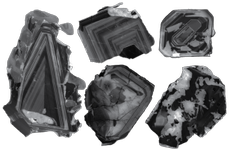 Vast source of rare Earth metal niobium was dragged to the surface when a supercontinent tore apart
Potentially the largest known source of niobium discovered in central Australia formed 830 million years ago, and we can thank the breakup of the ancient supercontinent Rodinia.
3 Commentsgeology -
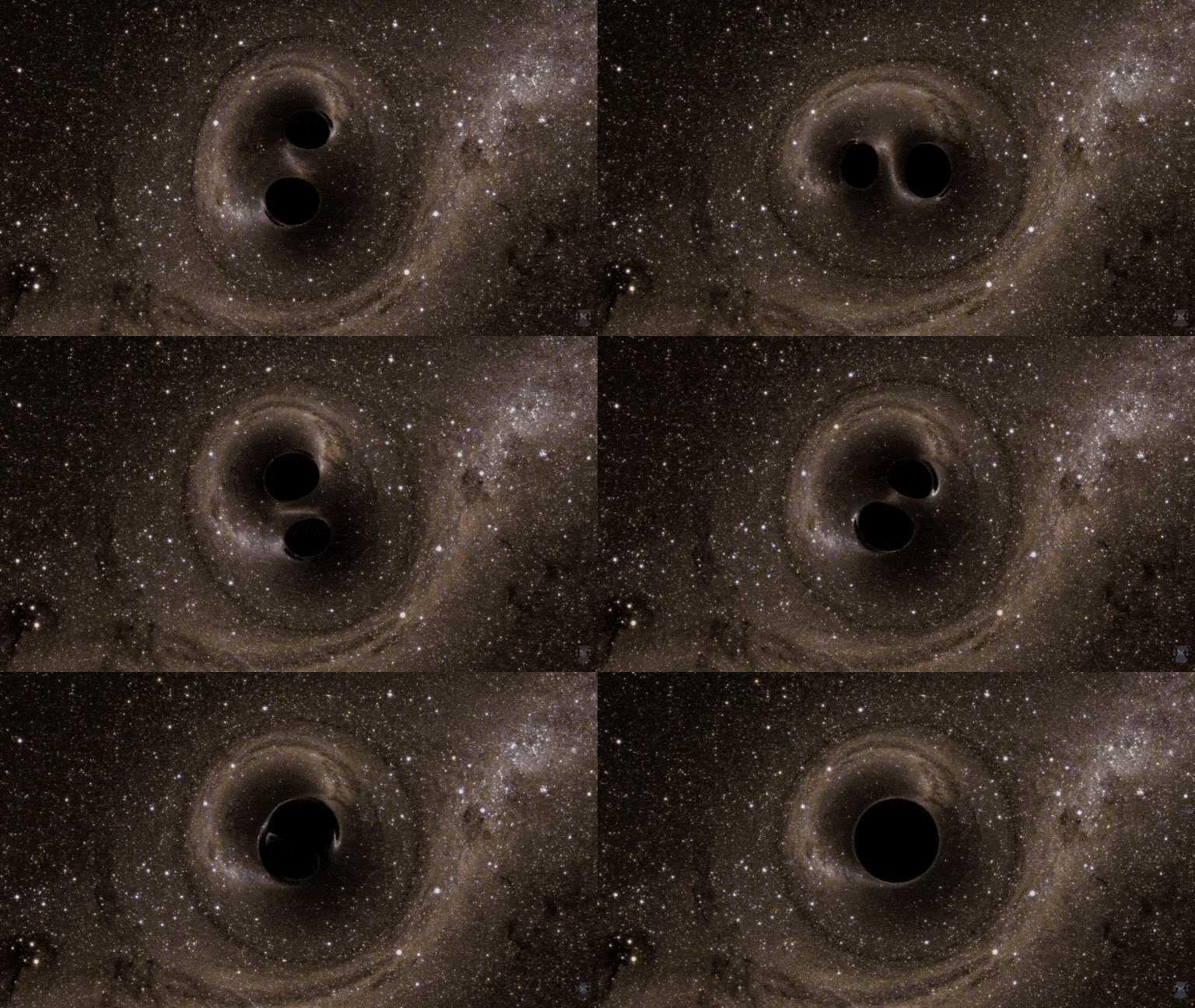 Scientists measure the 'natal kick' that sent a baby black hole careening through space for the first time
Two black holes merged together 2.4 billion light years away from Earth, and scientists have just figured out how fast the newborn ricocheted, and in which direction.
black-holes -
 'Almost like science fiction': European ant is the first known animal to clone members of another species
A species of ant found scurrying across southern Europe is the first animal found that clones males of another species.
4 Commentsinsects -
 Meet the Chinese supercar that just smashed the EV speed record
Chinese EV maker BYD has designed and tested a supercar with a top speed that rivals the best gasoline cars.
2 Commentselectric-vehicles


