

-
 Mary Anning: Life and discoveries of the first female paleontologist
Mary Anning's discoveries shocked the 19th-century scientific establishment. But her gender, poverty and lack of formal education meant she often didn't get credit for her work.
human-behavior -
 Fisher cats: Animals that aren't cats, nor are they really fishers
If the fisher cat isn't the most inaccurately named animal in North America, it's certainly up there: It's not a cat, and it doesn't care much for fishing.
land-mammals -
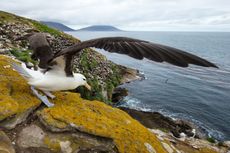 Albatrosses: Facts about the biggest flying birds
Albatrosses are big, majestic birds found soaring above most of the world’s oceans.
birds -
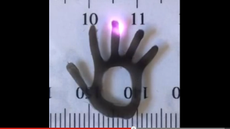 Gel Offers New Possibilities for 'Soft' Robots
The gel absorbs water at room temperature but expels it at higher temperatures.
robotics -
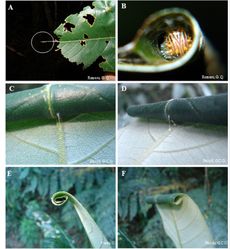 Caterpillars Build Leaf 'Houses,' Other Insects Move In
When caterpillars become butterflies, other insects take over leaf rolls.
insects -
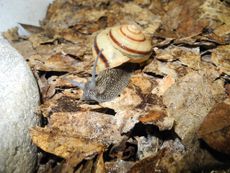 Bizarre Valentine: Why Mating Snails Stab With 'Love Darts'
Strange mating behavior may keep snails from fooling around with other beaus.
mollusks -
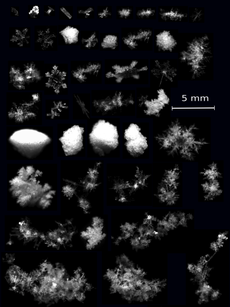 Cameras Capture Falling Snowflakes in 3D
A gadget that can snap photos of individual snowflakes in freefall could lead to more accurate weather predictions.
weather -
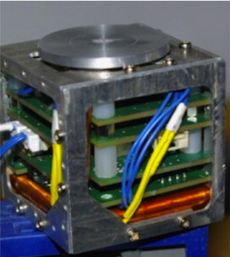 3D-Printing a Low-Cost Satellite
Seeking low-cost ways to launch their experiments into space, a team of scientists has designed a space-ready, 3-D printed CubeSat.
engineering -
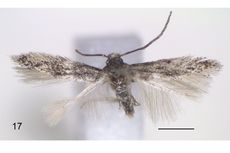 Weird Moth Genitals Reveal 3 New Species
Moths that otherwise look alike are set apart by their privates.
insects -
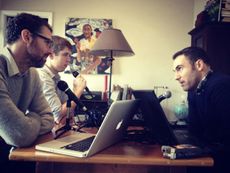 Telecommuting Gets People Back to Work Post-Sandy
Stir-crazy, but otherwise safe and healthy workers laid up by Hurricane Sandy are turning to modern technology to get their work done.
technology -
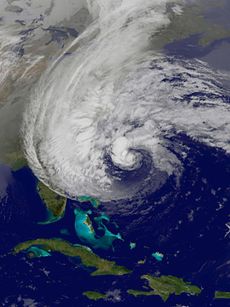 Can You Stop a Hurricane by Nuking It?
The theory goes that the energy released by a nuclear bomb detonated just above and ahead of the eye of a storm would heat the cooler air there, disrupting the storm's convection current.
weather -
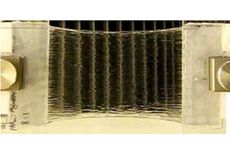 Super Stretchy Material is Also Super Strong
Scientists hope the material could one day serve as a cartilage replacement.
engineering -
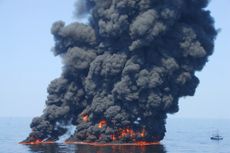 Edible Oil Dispersant Tackles Spill Cleanup Problem
The new dispersant also floats and has nonstick properties, making it safer for wildlife.
fossil-fuels -
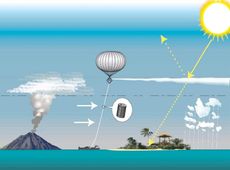 Could Pumping Aerosols into the Atmosphere Stop Global Warming?
Geoengineering is no longer fringe science as the debate shifting from whether it should be done to how.
climate-change -
 Could Space Mirrors Stop Global Warming?
While technically feasible, the costs of a giant reflector in space would be out of this world, and it might only be a short-term solution to global warming.
climate-change -
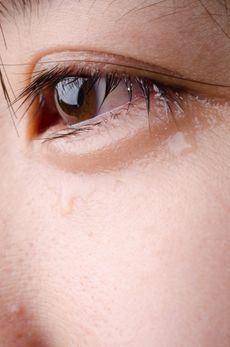 New Printer Inkjet Nozzle Inspired By Human Eye
The technology could help drive down printer ink costs.
technology -
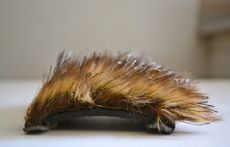 'Smart Fur' Lets Robo-Pets Read Owners' Emotions
The smart fur could allow robot pets to gauge their owners’ emotions and respond accordingly.
robotics


