













New Device Turns Waste Heat into Electricity

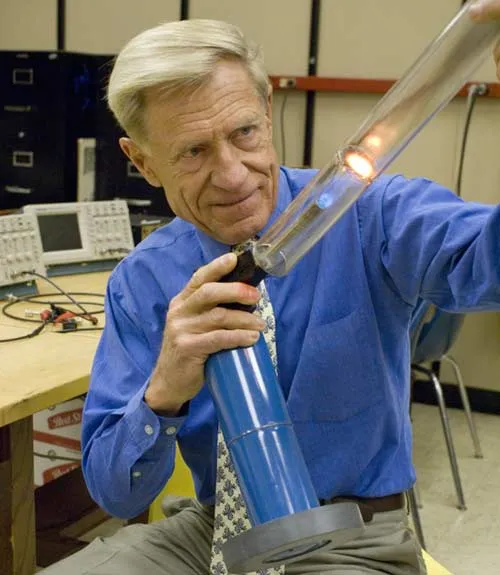
Physicists have developed a way to turn heat into sound and then electricity, suggesting a new way to effectively recycle waste energy.
“We are converting waste heat to electricity in an efficient, simple way by using sound,” said the scientist who led the effort, Orest Symko of the University of Utah. “It is a new source of renewable energy from waste heat.”
Symko’s recycling devices are cylinder-shaped “resonators” that fit in the palm of your hand. Each cylinder contains a stack of material with a large surface area—such as metal or plastic plates, or fibers made of glass, cotton or steel wool—placed between cold and hot heat exchangers.
When heat is applied, the heat builds to a particular threshold where hot, moving air produces sound at a single frequency—like air blown into a flute.
“You have heat, which is so disorderly and chaotic, and all of a sudden you have sound coming out at one frequency,” Symko said.
The sound waves then squeeze what is called a piezoelectric device (“piezo” means pressure or squeezing). The pressure created produces an electric voltage. Symko says it is similar to when you hit your "funnybone" or the nerve on outside of your elbow, thereby generating that weird, painful pinch, which is actually an electrical nerve impulse.
Symko plans to test the devices within a year at a military radar facility and the University of Utah’s hot-water-generating plant. (The U.S. Army funded the study in hopes the technology can be used to create a portable source of energy.)
Get the world’s most fascinating discoveries delivered straight to your inbox.
Symko expects these devices could be used within two years as an alternative to the photovoltaic cells that currently convert sunlight into electricity, and could also provide a new way to cool laptops and other computers, and a to generate electricity from the heat released by nuclear power plant cooling towers.
- Great Inventions: Quiz Yourself
- Power of the Future: 10 Ways to Run the 21st Century
- Scientists Generate Electricity in Novel Way
