













Clean hydrogen created from plastic waste using battery acid from old cars and solar power
Researchers turned hard-to-recycle plastic into hydrogen using battery acid. This circular upcycling system tackles multiple problematic waste streams at once, the scientists claim.

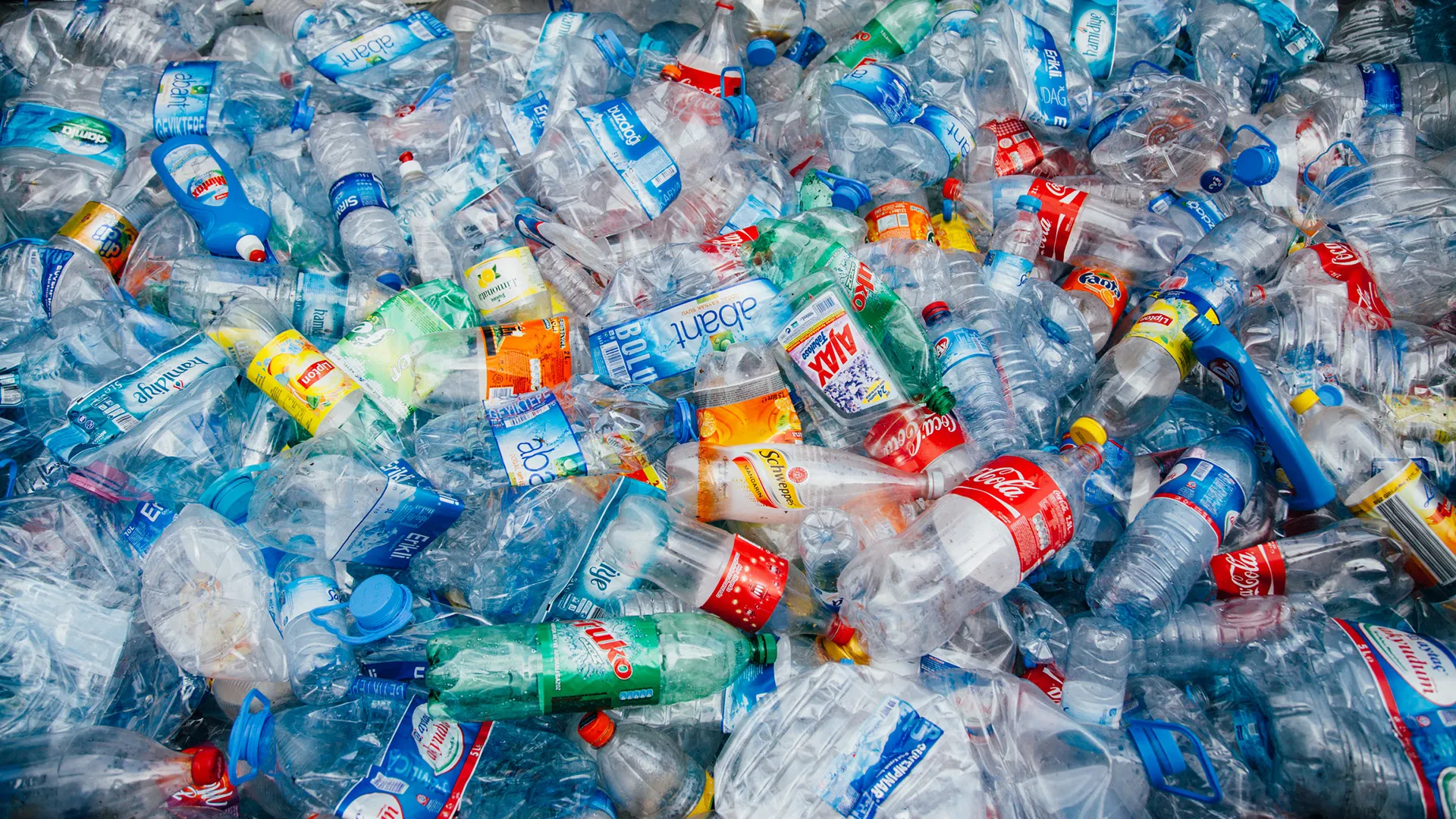
Scientists have developed a method to turn plastic waste into clean hydrogen using solar power and acid from old car batteries.
The one-pot process transforms hard-to-recycle plastics into valuable industrial chemicals and clean fuel, potentially creating a circular upcycling system that tackles multiple problematic waste streams at once, the researchers say.
The world produced more than 440 million U.S. tons (400 million metric tons) of plastic waste in 2025, but less than 10% of this was actually recycled. The challenge lies in the sheer number of different plastics we use. Some, such as polypropylene and polyethylene, can be easily melted down and remolded, while others require specific chemical processes to break the polymer structure down into its individual chemical building blocks (known as monomers).
Condensation polymers like polyethylene terephthalate (PET, often used for packaging food and drinks), polyurethane (PU, which can be used in foam cushioning, bedding and insulation), and nylon fall into this latter category. A chemical reaction between two different monomer units releases water to form bonds between these fragments, creating a long alternating polymer chain. These bonds can later be broken by adding water back to the molecule, releasing the monomer building blocks and breaking down the plastic.
In the new study, researchers took this one step further — not just recovering the monomers but also upcycling the plastic waste into other valuable chemical products.
We could extract the battery acid and use that instead. It makes a strong argument for sustainability.
Kay Kwarteng, researcher at the University of Cambridge
The team set its sights on hydrogen, a green fuel source and an important industrial feedstock, and developed a process to combine plastic depolymerization and hydrogen generation in a single reactor. While both steps have been studied individually before, no one has ever achieved them together. The researchers reported their findings in the journal Joule April 6.
The scientists began with the depolymerization step. Focusing on PET, they ground samples of plastic bottles into a fine powder and dissolved them in concentrated sulfuric acid. "We heat that up to 140°C [degree Celsius, or 284 degrees Fahrenheit] and that hydrolyses the plastic back into its monomers," study first author Kay Kwarteng, a researcher at the University of Cambridge, told Live Science. "For PET, that is ethylene glycol and terephthalic acid," which are both valuable industrial chemicals, he added.
Get the world’s most fascinating discoveries delivered straight to your inbox.
However, rather than using fresh sulfuric acid from a bottle, the team saw an opportunity to harness another problematic waste stream. "Sulfuric acid is a component of car batteries, but when they are recycled, they only recover the lead component," Kwarteng said. "We could extract the battery acid and use that instead. It makes a strong argument for sustainability."
The terephthalic acid conveniently precipitates out of the reaction as it forms, leaving an acidic mixture rich in ethylene glycol.
However, the second step, which produces hydrogen from the ethylene glycol monomer, usually needs alkaline conditions to work. The sunlight-powered reaction breaks the ethylene glycol down into even smaller chemical products, but the researchers first had to design a new catalyst that would remain stable in the battery acid.
They settled on a molybdenum metal system and added it directly to the mixture. "Once we expose the catalyst to light, it oxidizes the ethylene glycol which generates electrons," Kwarteng said. "These electrons can convert protons," — present in the acid mixture — "to hydrogen, and they oxidize the ethylene glycol to acetic acid."
The hydrogen and acetic acid formed in this process are less valuable than the ethylene glycol monomer, but crucially the approach provides a sustainable entry point for other related chemistry, said Erwin Reisner, professor of energy and sustainability at the University of Cambridge. "Instead of making hydrogen, we can hydrogenate organics," he told Live Science. "It's exactly the same system, but instead of evolving hydrogen, we just add unsaturated organics and hydrogenate them directly."
Related stories
Hydrogenation is an important industrial reaction that inserts hydrogen across a double bond, typically using hydrogen generated from fossil fuels. But in a follow-up study published in the journal Angewandte Chemie International Edition on Monday (May 4), the researchers demonstrated how their new process could be used to hydrogenate nitrogen-containing substrates into important pharmaceutical building blocks. "When we use plastics for this hydrogenation, we reduce the carbon footprint by half," Kwarteng said.
The team are now looking at tailoring the reaction design for the needs of industry and plan to test the process in a flow reactor — a system which continuously converts reactants to products, rather than producing hydrogen in batches.
The use of so many recycled reagents is impressive, Amit Kumar, a catalysis researcher at the University of St Andrews' School of Chemistry, told Live Science. But he noted that the photochemical step could prove challenging for industry. "I think it's super interesting that you can just use this plastic as a hydrogen source and science-wise it's very exciting that you can use visible light," he said. "The next step towards commercialization will be scaling up and demonstrating the process in flow."
Kwarteng, P. K., Liu, Y., Han, C., Bonke, S. A., Vahey, D. M., Pulignani, C., & Reisner, E. (2026). Solar reforming of plastics using acid-catalyzed depolymerization. Joule, 102347. https://doi.org/10.1016/j.joule.2026.102347

Victoria Atkinson is a freelance science journalist, specializing in chemistry and its interface with the natural and human-made worlds. Currently based in York (UK), she formerly worked as a science content developer at the University of Oxford, and later as a member of the Chemistry World editorial team. Since becoming a freelancer, Victoria has expanded her focus to explore topics from across the sciences and has also worked with Chemistry Review, Neon Squid Publishing and the Open University, amongst others. She has a DPhil in organic chemistry from the University of Oxford.
You must confirm your public display name before commenting
Please logout and then login again, you will then be prompted to enter your display name.