













Rare Baby Crocs Released into Wild

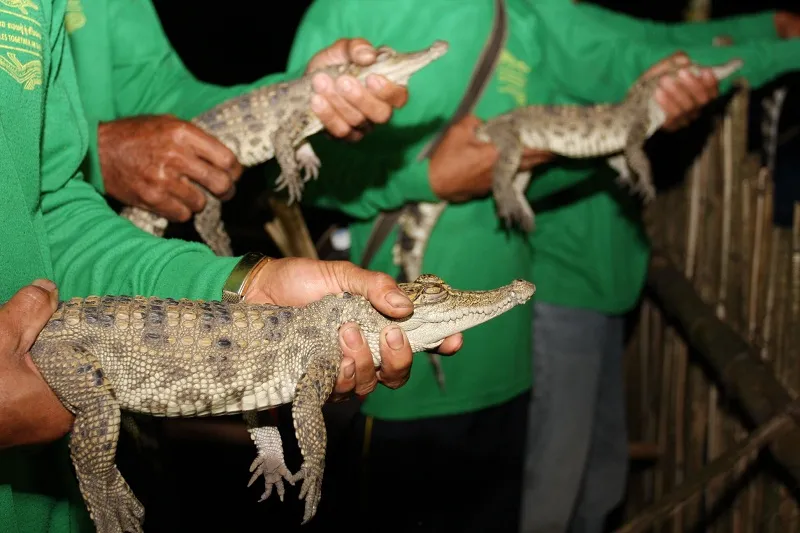
Nineteen baby Siamese crocodiles are being let loose in the wetlands of Laos, the Wildlife Conservation Society (WCS) announced this week. The effort gives a boost to the critically endangered species, which is thought to include just 250 individuals in the wild.
The rare reptiles' eggs had been incubated at the Laos Zoo after being recovered during wildlife surveys in the wetlands of Savannakhet Province, and they hatched in the summer of 2011.
The baby crocs are being let go near the same spot where they were found, but they will stay in a "soft release" pen for several months. There they will get used to their surroundings and receive supplementary food and protection from community members, according to the WCS. Rising water levels at the start of the rainy season will eventually let the crocodiles swim away on their own, but they will be monitored occasionally by conservationists.
Siamese crocodiles grow up to 10 feet (3 meters) in length, but right now, these toothy creatures of the Laos Zoo measure only about 27 inches (70 cm). The crocs have never been known to attack humans, according to the conservation agency Fauna & Flora International. Classified as critically endangered by the International Union for Conservation of Nature, the Siamese crocodile population has been cut down by overhunting and habitat loss across much of its former range through Southeast Asia and parts of Indonesia.
The release effort was organized by the WCS's Laos branch as part of a community-based program to recover the local Siamese crocodile population and restore the associated wetlands, with a focus on incentives that improve local livelihoods.
"We are extremely pleased with the success of this collaborative program and believe it is an important step in contributing to the conservation of the species by involving local communities in long-term wetland management," Alex McWilliam, a WCS conservation biologist, said in a statement. "The head starting component of this integrated WCS program represents a significant contribution to the conservation of this magnificent animal in the wild."
Follow LiveScience on Twitter @livescience. We're also on Facebook & Google+.
Get the world’s most fascinating discoveries delivered straight to your inbox.
