













Musicians' Brains Sync Up During Duet

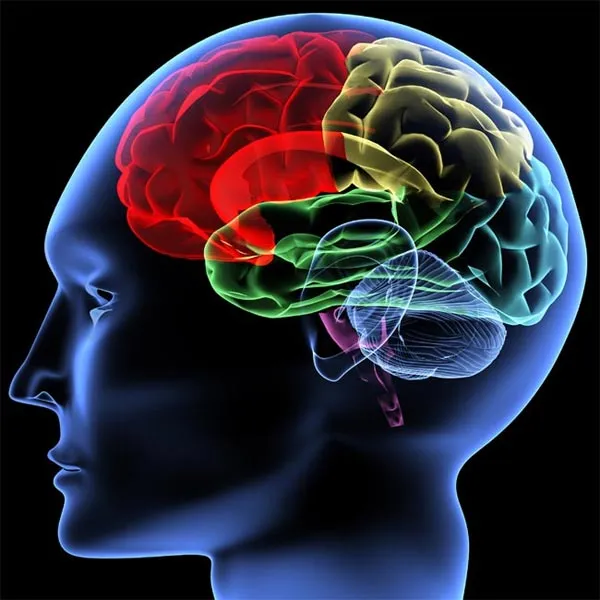
The brain waves of two musicians synchronize when they are performing duet, a new study found, suggesting that there's a neural blueprint for coordinating actions with others.
A team of scientists at the Max Planck Institute for Human Development in Berlin used electrodes to record the brain waves of 16 pairs of guitarists while they played a sequence from "Sonata in G Major" by Christian Gottlieb Scheidler. In each pair, the two musicians played different voices of the piece. One guitarist was responsible for beginning the song and setting the tempo while the other was instructed to follow.
In 60 trials each, the pairs of musicians showed coordinated brain oscillations — or matching rhythms of neural activity — in regions of the brain associated with social cognition and music production, the researchers said.
"When people coordinate their own actions, small networks between brain regions are formed," study researcher Johanna Sänger said in a statement. "But we also observed similar network properties between the brains of the individual players, especially when mutual coordination is very important; for example at the joint onset of a piece of music."
Sänger added that the internal synchronization of the lead guitarists' brain waves was present, and actually stronger, before the duet began.
"This could be a reflection of the leading player's decision to begin playing at a certain moment in time," she explained.
Another Max Planck researcher involved in the study, Ulman Lindenberger, led a similar set of experiments in 2009. But in that study, which was published in the journal BMC Neuroscience, the pairs of guitarists played a song in unison, rather than a duet. Lindenberger and his team at the time observed the same type of coordinated brain oscillations, but noted that the synchronization could have been the result of the similarities of the actions performed by the pairs of musicians.
Get the world’s most fascinating discoveries delivered straight to your inbox.
As the new study involved guitarists who were performing different parts of a song, the researchers say their results provide stronger evidence that there is a neural basis for interpersonal coordination. The team believes people's brain waves might also synchronize during other types of actions, such as during sports games.
The study was published online today (Nov. 29) in the journal Frontiers in Human Neuroscience.
Follow LiveScience on Twitter @livescience. We're also on Facebook & Google+.
