













Can a Wildfire Ever Put Itself Out?

In theory it could, but it's pretty unlikely.
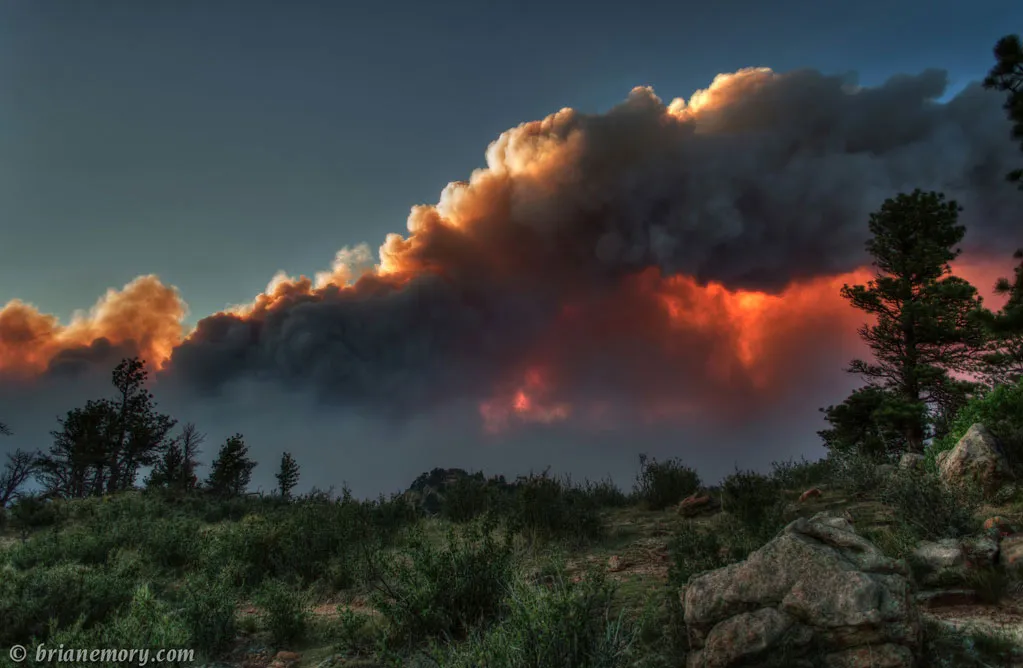
To stamp out its own flames, a wildfire would have to generate what are called pyrocumulus clouds.
Obviously fires release a lot of heat, and hot air has a tendency to rise. When hot air rises into cooler air above, water vapor condenses out and forms cumulus clouds.
The hot air rising above a fire can form pyrocumulus clouds that can form along the same path as the smoke plume from the fire.
In some situations, a wildfire might create a localized area where thunderstorms could develop with these clouds, but the scale of the fire would likely still be larger than the amount of rain, so it's unlikely the rain would quench the flames.
Follow Life's Little Mysteries on Twitter @llmysteries. We're also on Facebook & Google+.
Get the world’s most fascinating discoveries delivered straight to your inbox.
