















Arctic Sea Ice Reaches Third Lowest Point

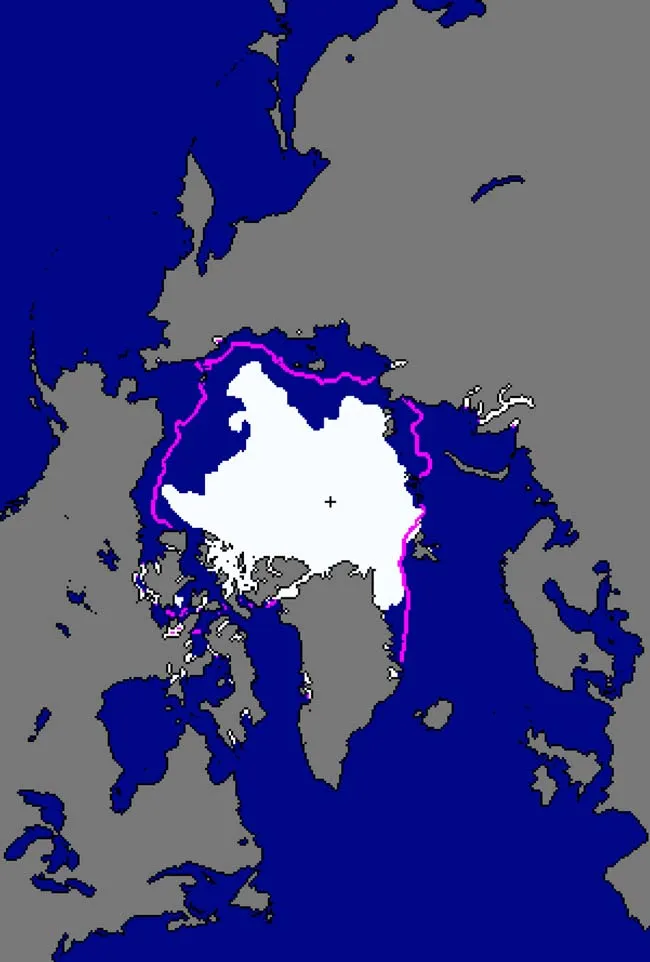
Sea-ice coverage in the Arctic experienced a highly unusual late-season decline, falling to its third lowest amount on record, the National Snow and Ice Data Center (NSIDC) announced today (Oct. 4).
It added that the abnormal event emphasizes the Arctic's growing vulnerability to summer melt.
Arctic sea ice goes through a normal cycle of summer melting and refreezing during the winter months, but the overall ice coverage has become younger and thinner during its dramatic decline over the past 30 years. Researchers who had assumed the end of the melt season had arrived when the ice coverage began growing after Sept. 10 were surprised to see it shrinking once again sometime after that and up until Sept. 19.
"The late-season turnaround indicates that the ice cover is thin and loosely packed – which makes the ice more vulnerable both to winds and to melting," said Walt Meier, NSIDC research scientist at the University of Colorado in Boulder.
Arctic sea ice reached its lowest point of 1.78 million square miles (4.60 million square kilometers) on Sept. 19, which gives 2010 the record for the third lowest ice coverage ever in both daily and monthly average tallies. That puts the ice coverage below last year's record, with the lowest- and second-lowest coverage taking place in 2007 and 2008.
The oldest and thickest ice (five years or older) has vanished almost entirely in the Arctic. Less than 23,000 square miles (60,000 square kilometers) of the old ice remained in September, as opposed to an average of 722,000 square miles (2 million square kilometers) that lingered by summer's end in the 1980s.
There's perhaps some hope for the ice coverage, because of a rebound in younger ice coverage (as new ice forms) over the past two years – even as total ice coverage has continued to fall. Whether or not the younger ice can survive the next several summers and slow the great decline remains a mystery, researchers say.
Get the world’s most fascinating discoveries delivered straight to your inbox.
But either way, all signs point to the Arctic ice coverage breaking up during the next few decades. The fabled Northwest Passage has already opened for a few bold ship captains.
"All indications are that sea ice will continue to decline over the next several decades," said Mark Serreze, director of the NSIDC. "We are still looking at a seasonally ice-free Arctic in 20 to 30 years."
