













Growth of Carbon Dioxide Levels Accelerating

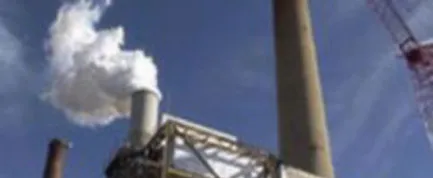
Carbon dioxide levels in the atmosphere are rising faster than predicted, largely due to a burgeoning global economy and the hampering of overburdened natural carbon-storage mechanisms on land and in the ocean, a new study finds.
While the United States and Europe are longstanding leaders in carbon output, scientists have in recent years cited the main reason for increasing carbon dioxide levels as the growing global economy, especially the explosion of economies in developing countries such as China and India.
This economic boom has indeed increased the number of carbon-emitting sources, especially coal-burning power plants, and has fueled a steady rise in the amount of the greenhouse gas emitted into the atmosphere, says study author Josep Canadell of the Commonwealth Scientific and Industrial Research Organization in Australia.
But two other key factors have come into play recently and increased the growth rate of emissions from 1.3 percent annually in the 1990s to 3.3 percent since 2000, according to the study's findings (detailed in the Oct. 22 issue of the journal Proceedings of the National Academy of Sciences).
Canadell says these factors "are driving the accumulation to almost an acceleration that we have not seen in the past."
Carbon intensity
One of these factors is the increase in carbon intensity, which measures "how much carbon you're going to produce in order to generate $1 of wealth," Canadell explained.
Get the world’s most fascinating discoveries delivered straight to your inbox.
Over the course of the 20th century, technologies advanced and became more efficient in terms of the amount of carbon it took to produce a unit of wealth.
"That is, we've been able to produce more wealth for the same amount of emissions," Canadell said.
But in the past seven years, that trend has reversed as China, India and other countries have undergone bursts in development and built more carbon-intense coal-burning plants. The result is that carbon intensity globally now has increased. So carbon dioxide is not only being added by the construction of new power plants, but by the construction of new heavily-polluting plants.
Carbon sinks
As the burning of fossil fuels puts carbon dioxide into the atmosphere, natural carbon sinks (such as plants and the ocean) take some of it out. So the amount of carbon dioxide that stays in the atmosphere is actually only a fraction of what is emitted.
But these sinks, especially the ocean, absorb carbon dioxide slowly in comparison to the rate at which it is emitted.
"The oceans actually have the capacity to uptake most of the carbon dioxide that we're emitting, most of it, but it's just that it takes thousands of years for the ocean to very slowly, but surely, do all the cleaning," Canadell told LiveScience.
With the rate of carbon dioxide emissions increasing, these sinks just can't keep up. The percentage of emitted carbon dioxide they absorb has declined in the past 50 years and will keep declining, Canadell says.
A recent study in the Journal of Geophysical Research found that carbon dioxide uptake in the North Atlantic Ocean has slowed down dramatically since the mid-1990s.
Some of the effects of global warming actually exacerbate this problem; drought, for example, hampers plant growth, which reduces the amount of carbon dioxide that goes into that sink.
Need to de-carbonize
To stop the increase in atmospheric carbon dioxide, it would take the development and widespread adoption of more carbon-efficient technologies.
"[Countries] must, they must, transform and move into a de-carbonized pathway where we can continue producing energy that doesn't have a carbon price tag at the end," Canadell said.
But these changes won't happen quickly, Canadell says, which means that the increase in carbon dioxide is "going to go on most likely for several more decades," Canadell said. (Another study in the journal Technological Forecasting and Social Change predicts that coal-burning plants could account for upwards of 60 percent of China's energy-related greenhouse gas emissions by 2020.)
When these factors are included in climate models, "the outlook for the future may be a little worse than what we thought," Canadell said.
- VIDEO: Goldilocks and the Greenhouse
- Top 10 Emerging Environmental Technologies
- What's Your Environmental Footprint?

Andrea Thompson is an associate editor at Scientific American, where she covers sustainability, energy and the environment. Prior to that, she was a senior writer covering climate science at Climate Central and a reporter and editor at Live Science, where she primarily covered Earth science and the environment. She holds a graduate degree in science health and environmental reporting from New York University, as well as a bachelor of science and and masters of science in atmospheric chemistry from the Georgia Institute of Technology.