















Super-Predators: Humans Force Rapid Evolution of Animals

Acting as super-predators, humans are forcing changes to body size and reproductive abilities in some species 300 percent faster than would occur naturally, a new study finds.
Hunting and fishing by individual sportsmen as well as large-scale commercial fishing are also outpacing other human influences, such as pollution, in effects on the animal kingdom. The changes are dramatic and may put the survival of some species in question.
In a review of 34 studies that tracked 29 species across 40 different geographic systems, harvested and hunted populations are on average 20 percent smaller in body size than previous generations, and the age at which they first reproduce is on average 25 percent earlier.
"Harvested organisms are the fastest-changing organisms of their kind in the wild, likely because we take such high proportions of a population and target the largest," said lead researcher Chris Darimont of the University of California, Santa Cruz. "It's an ideal recipe for rapid trait change."
Darimont told LiveScience that while he considers the changes to be evolutionary, some biologists consider them phenotypic and, without evidence of genetic shifts, would not call them evolution.
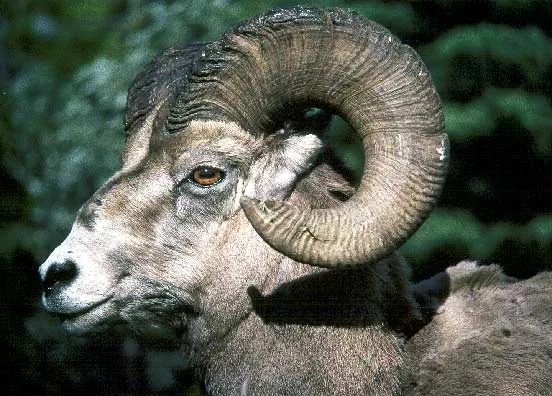
The study found dramatic change in several fish species and creatures as small as snails and as large as bighorn sheep and caribou.
Dominant force
Get the world’s most fascinating discoveries delivered straight to your inbox.
The results, published online today in the journal Proceedings of the National Academy of Sciences, are similar to a host of other scientific conclusions dating back nearly two decades.
In 1990, Douglas Chadwick wrote in National Geographic magazine how trophy hunting — the practice of selecting only the largest beasts to kill —"has caused a decline in the average size of Kodiak Bears [in Alaska] over the years."
By harvesting vast numbers and targeting large, reproductively mature individuals, human predation is quickly reshaping wild populations, leaving smaller individuals to reproduce at ever-earlier ages, Darimont explained.
"The pace of changes we're seeing supercedes by a long shot what we've observed in natural systems, and even in systems that have been rapidly modified by humans in other ways," Darimont said. The study found the changes outpace by 50 percent those brought on by pollution and human introduction of alien species.
"As predators, humans are a dominant evolutionary force, he said.
Others agree the problem is serious. Columbia University biologist Don Melnick recently said trophy hunting is akin to selective breeding and is "highly likely to result in the end of a species."
Surprising ability to change
One surprise: The capacity of creatures to change.
"These changes occur well within our lifetimes," Darimont said. "Commercial hunting and fishing has awoken the latent ability of organisms to change rapidly."
Changes occur in two ways. One is sheer genetics:
Evolution can favor smaller fish able to pass through the mesh of gill nets and survive to reproduce, thereby passing on genes for smaller offspring.
Another change process is called plasticity. Shifts to earlier reproduction, for example, can occur because there is a lot of food and fewer fish to dine on it. The fish eat more and reach maturity sooner.
"Whatever the underlying process, shifts to earlier breeding spell trouble for populations," Darimont said. "Earlier breeders often produce far fewer offspring. If we take so much and reduce their ability to reproduce successfully, we reduce their resilience and ability to recover."
One specific example: the overfished Atlantic cod on the eastern coast of Canada. Less than two decades ago, they began mating at age 6. Now they start at age 5.
Government problem
In some cases, as other studies have found, the problem results from decades of big-game hunting and, more recently, poaching. Some populations of African elephants, for example, have unnatural percentages of tusk-free animals among them now, because hunters and poachers favor the ivory.
But some government rules contribute to the problem.
"Fishing regulations often prescribe the taking of larger fish, and the same often applies to hunting regulations," Darimont said. "Hunters are instructed not to take smaller animals or those with smaller horns. This is counter to patterns of natural predation, and now we're seeing the consequences of this management."
Darimont thinks new policies are in order.
"While wolves might prey on 20 animals, humans prey on hundreds of thousands of species," he points out. "We should be mimicking natural predators, which take far less and target smaller individuals."
Policy shifts may or may not save a species, however.
"It's unknown how quickly the traits can change back, or if they will," Darimont said.

Robert is an independent health and science journalist and writer based in Phoenix, Arizona. He is a former editor-in-chief of Live Science with over 20 years of experience as a reporter and editor. He has worked on websites such as Space.com and Tom's Guide, and is a contributor on Medium, covering how we age and how to optimize the mind and body through time. He has a journalism degree from Humboldt State University in California.