
 Live Science Plus


Meteorites: Rocks that Survived Fiery Plunge to Earth

Most space rocks burn up in the Earth's atmosphere, creating shooting stars. But some larger, denser extraterrestrial rocks crash onto our planet and become meteorites. Below are meteorites from all over the world that experts have found and studied. (Image credit: All photographs by Geoffrey Notkin. Copyright 2016 Aerolite Meteorites Inc.) [Read the Full Story on Meteorite Chasers]
Canadian meteorite

Typically, meteorites that form craters are jagged and shardlike in appearance, as seen in this iron meteorite fragment recovered from the Whitecourt Crater in Canada.

Texas meteorite

In February of 2009, a fireball whizzed over Ash Creek, Texas. This small stone meteorite was found resting on the Earth's surface a few days after its speedy plummet to Earth, with a fresh, black fusion crust covering it.
Gemstones

Known as the gemstone peridot, pallasites are part of the stony-iron group of meteorites and are composed of roughly equal parts nickel-iron and olivine.
Russian meteorite

Seen zooming over Russia in February of 2013, this stone meteorite was part of the massive Chelyabinsk fireball.
Meteorite ornamentation

Iron and stony-iron meteorites consist of a mixture of two different nickel-iron alloys, which form the geometric Widmanstätten pattern.
Uncovered in Chile
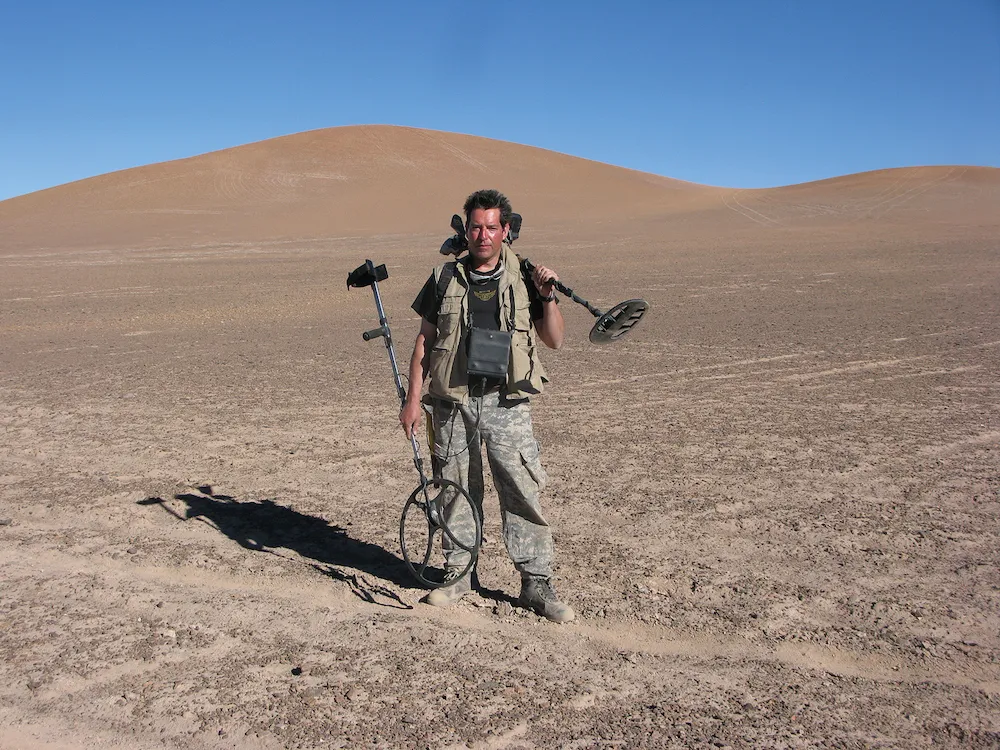
Meteorite hunter Geoff Notkin searches for space rocks with metal detectors in the Atacama Desert, Chile.
Discovered in Kansas

Geoff Notkin and Steve Arnold, who are professional meteorite hunters, pose with a 223-lb. (101 kilogram) stony-iron meteorite found in a Kansas field.
Follow Live Science @livescience, Facebook & Google+.
