














Firestorm Leaves ‘Mass Destruction’ in California
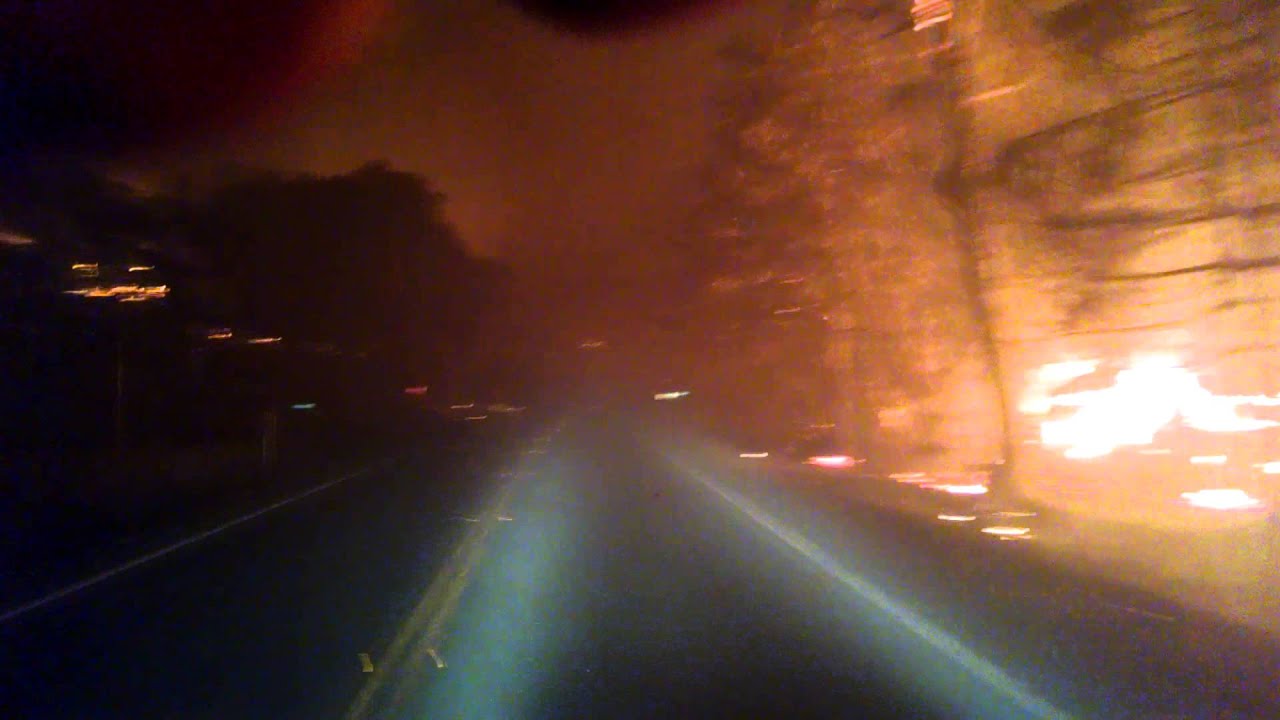
A driver makes a harrowing drive out of Anderson Springs, Calif. on Sept. 12, 2015. Credit: mulletFive/YouTube
The catastrophic wildfires burning in California, which killed at least one person over the weekend and injured several others, are being fueled by high temperataures, strong winds and years of withering drought influenced by climate change.
The Valley Fire ignited in drought-stricken Northern California early Saturday afternoon, destroying more than 400 homes and scorching 50,000 acres — an area more than twice the size of Manhattan — within about 12 hours.
“It’s a true firestorm — extremely fast moving, generating its own weather conditions, and burning literally everything in its path,” Daniel Swain, a climate earth system scientist at Stanford University, said. “The Valley Fire is breaking all the rules in the midst of a fire season that had already rewritten the rulebook. What’s going on in Lake County is a direct manifestation of California’s record-breaking drought, and it’s pretty sobering.”
Lake County Sheriff Brian Martin told the Los Angeles Times that the Valley Fire is “the worst tragedy Lake County has ever seen.”
Hints of Climate Change in California’s Drought Calif. Heads for Warmest Year As Drought Hangs On Heat Turbocharged California’s Epic Drought
The wildfires storming California have been four years in the making, as the drought, thought to be heavily influenced by climate change, has been starving California’s forests and mountains of water and snow, turning once-lush woods into crackling tinder that has ignited in explosive and unexpected ways.
Get the world’s most fascinating discoveries delivered straight to your inbox.
The trend in wildfire destruction in California and throughout the West bends toward bigger, more destructive and drought-driven blazes. On average, wildfires burn six times the acreage they did 40 years ago, while the annual number of wildfires over 1,000 acres has doubled from 50 during an average year in the 1970s to more than 100 each year since 2002, Climate Central research shows.
In California alone last year, 5,600 wildfires burned more than 600,000 acres as the drought wore on. The U.S. Forest Service anticipated that it would spend up to $1.6 billion fighting wildfires West-wide in 2015.
That scenario is playing out in California this week as just two of the state’s 13 most active and catastrophic wildfires — the Valley Fire and the Butte Fire — have burned more than 130,000 acres since Wednesday, leaving behind “mass destruction” and leading to numerous evacuations in the region, CalFire spokesman Daniel Berlant told the Sacramento Bee.
As of Monday morning, the Valley Fire had grown to 61,000 acres and is 5 percent contained. The Butte Fire had burned 71,000 acres, and is 30 percent contained.
You May Also Like: For Migrants, Bangladesh Takes Back Land From the Sea Katrina: Lasting Climate Lessons for a Sinking City Wildfires Are Ruining the National Park Service’s Birthday
Originally published on Climate Central.