
 Live Science Plus


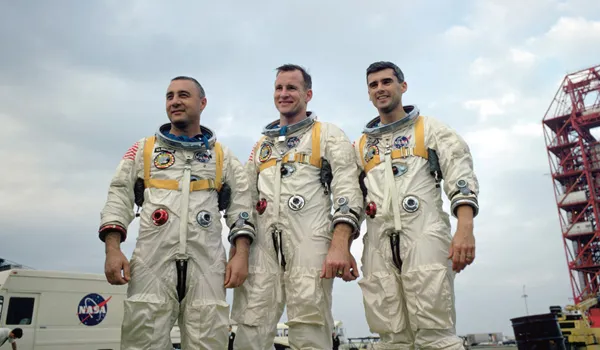
Since the 1960s, spaceflight missions have resulted in the accidental deaths of more than 20 astronauts. The most recent disaster, occurring near the end of the space shuttle Columbia's STS-107 mission in 2003, caused NASA to ground its shuttle program for more than two years.
Here, a list of the men and women who have lost their lives during spaceflight.
Mission: Apollo 1Date: Jan. 27, 1967Fatalities: Gus Grissom, Edward White II, Roger ChaffeeWhat happened: During a launch-sequence rehearsal for NASA's AS-204 Apollo mission, the cabin was filled with pure oxygen as part of its environmental control system. An electrical fault sparked a flash fire in the cabin. The fire spread quickly in the pure oxygen atmosphere, suffocating all three Apollo 1 crew members through smoke inhalation. The launch pad test site was renamed Apollo 1 in honor of the crew, and the accident led to major design and engineering modifications as well as revisions to test planning operations and manufacturing procedures.

Mission: Soyuz 1Date: April 24, 1967Fatalities: Vladimir KomarovWhat happened: Soyuz 1, the Soviet space program's one-day mission, launched on April 23, 1967, but soon began experiencing various mechanical issues the solar panels did not unfold, and the vessel experienced stability problems. After the Soyuz module re-entered the atmosphere April 24, its parachute did not open properly, causing it to crash to Earth at almost full speed. Cosmonaut Vladimir Komarov died on impact.
Mission: Soyuz 11Date: June 30, 1971Fatalities: Georgi Dobrovolski, Viktor Patsayev, Vladislav VolkovWhat happened: Soyuz 11 launched on June 6, 1971, and docked with the space station Salyut 1 for a three-week stay. When the vehicle undocked, a valve on the Soyuz 11 accidentally opened, causing a pressure leak in the cabin. The three cosmonauts were killed as the capsule depressurized during preparations for atmospheric re-entry on June 30. The malfunctioning valve was discovered only when the module was opened by a recovery team.
Mission: STS-51-LDate: Jan. 28, 1986Fatalities: Greg Jarvis, Christa McAuliffe, Ronald McNair, Ellison Onizuka, Judith Resnik, Michael J. Smith, Dick ScobeeWhat happened: During the Space Shuttle Challenger's 10th mission, STS-51-L, the rockets propelling the vessel exploded 73 seconds after launching from the Kennedy Space Center in Florida. All seven crew members were killed. President Ronald Reagan formed the Rogers Commission to investigate the accident, and its analysis concluded it had been caused by the failure of an O-ring seal on one of the solid rocket boosters. The Challenger disaster resulted in a 32-month hiatus for the shuttle program .
Mission: STS-107Date: Feb. 1, 2003Fatalities: Rick D. Husband, William McCool, Michael P. Anderson, David M. Brown, Kalpana Chawla, Laurel B. Clark, Ilan RamonWhat happened: At the end of its two-week mission, the Space Shuttle Columbia disintegrated as it re-entered the Earth's atmosphere. The accident was determined to have been caused by damage that had occurred during liftoff, when a chunk of insulating foam broke off from the external tank and hit the orbiter's left wing. The structural failure of the shuttle's leading wing ultimately resulted in the spacecraft breaking apart, killing the seven-person crew. All of the NASA space shuttle program's flight operations were delayed for 29 months following the disaster.
Got a question? Send us an email and we'll crack it. Follow Remy Melina on Twitter @RemyMelina