













What Exactly Is a 'Sputnik Moment'?
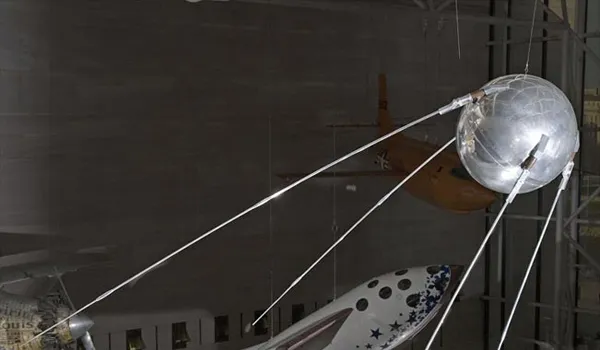
The phrase "Sputnik moment" has been tossed around during recent debates and press conferences regarding the technology gap between the United States and other nations, but what does the evocative phrase mean?
Government officials, including Sen. John Kerry (D-Mass.) and President Barack Obama, have used the term "Sputnik moment" to describe the United States' need to catch up to the rapid development of other countries, especially when it comes to clean energy and technology.
[Got a question? Send us an email and we'll look for an expert who can crack it.]
"From wind power to nuclear reactors to high-speed rail, China and other countries are moving aggressively to capture the lead," U.S. Secretary of Energy Steven Chu told press sources on Nov. 29. "Given that challenge, and given the enormous economic opportunities in clean energy, it's time for America to do what we do best: innovate."
The original Sputnik moment came a couple of weeks after Sputnik 1, the first Earth-orbiting satellite, was launched into orbit by the Soviet Union on Oct. 4, 1957. At the time, Sputnik was the first human-built object launched into orbit.
"A Sputnik moment is a trigger mechanism, an event that makes people collectively say that they need to do something, and this sets a course in another direction," said Roger Launius, senior curator of the National Air and Space Museum's division of space history at the Smithsonian Institution.
The small Sputnik satellite heralded the dawn of the so-called Space Race between the U.S. and Soviet Union that ended with Americans landing on the moon in the late 1960s and early 1970s. Sputnik 2 was launched on Nov. 3, 1957, and because of the Space Race going on at the time, the U.S. attempted to launch Vanguard TV3 on Dec. 6, 1957, but the fuel tanks of the rocket to which the satellite was attached ruptured and exploded on the launch pad.
Get the world’s most fascinating discoveries delivered straight to your inbox.
"It wasn't an 'Aha!' moment it didn't happen overnight," Launius told Life's Little Mysteries. "It built up over a period of time, until the government said, 'We have to do things differently.' This led to the creation of NASA and the National Defense Education Act, which provided funding for improving science and mathematics education."
Similarly, China's advancement, which includes developing technology for the highest-efficiency coal plants and rapidly installing turbines for wind energy-generating fields, has made U.S. government officials take notice of our own need to increase funding in energy innovation.
The fear of another Sputnik moment may drive the U.S. to re-invest in clean energy as well as education, science and innovation fields.
"Although people have been discussing the need for clean energy and investing in our future through science and technology for at least a decade, it's good to have such prominent individuals say that we need to take action," Launius said.
Follow Remy Melina on Twitter @RemyMelina.