



Images: Amazing Arctic - Creatures of the Bering Sea

A Shrimp Specimen

A shrimp specimen recovered from approximately 600 feet (182 meters) deep during undersea research of Pribilof Canyon in the Bering Sea, off the Greenpeace support vessel M/V Esperanza.
Northern Fur Seals

Northern fur seals sit on the rocks at Alaska's St. Paul Island.
A Giant Pacific Octopus
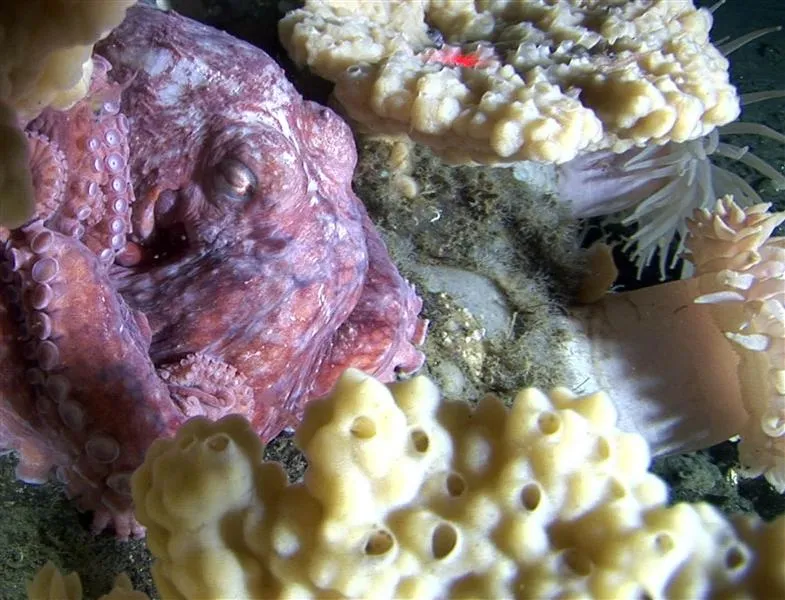
A giant Pacific octopus rests among anenomes and sponges at 1,132 feet (345 meters) deep during undersea research of Pribilof Canyon in the Bering Sea, off the Greenpeace support vessel M/V Esperanza.

A Specimen of Hard Cup Coral

A species of hard cup coral, Caryophyllia alaskensis, in the Bering Sea. It was retrieved by a remotely operated vehicle from approximately 3,000 feet (900 meters) deep during research along Zhemchug Canyon.
Colorful deep

A sea anemone and a sea star on the seabed, with a basket star in the background. Also visible on the seabed are a hermit crab and shrimp.It was taken with a Deep Worker submersible at a depth of approximately 1,300 feet (400 meters) in Pribilof Canyon.
Evidence of Bottom Trawling

Evidence of bottom trawling, as seen at approximately 1,000 feet (300 meters) deep by manned submersibles during undersea research of Pribilof Canyon in the Bering Sea. Frame-grab from HD video.
Swiftia Coral

A piece of swiftia coral collected during undersea research of Zhemchug Canyon in the Bering Sea.
Get the world’s most fascinating discoveries delivered straight to your inbox.
A Deep Submersible with Dalls Porpoise

A deep submersible, piloted by Greenpeace's John Hocevar descends to the deep as a Dalls porpoise swims overhead during undersea research of Zhemchug Canyon.
A Golden King Crab

A golden king crab resting on a piece of sponge, collected during undersea research of Zhemchug Canyon in the Bering Sea, off the Greenpeace support vessel M/V Esperanza.
Surface life

A humpback whale breeches in the Gulf of Alaska.
