













Women Should Receive Whooping Cough Vaccine During Each Pregnancy

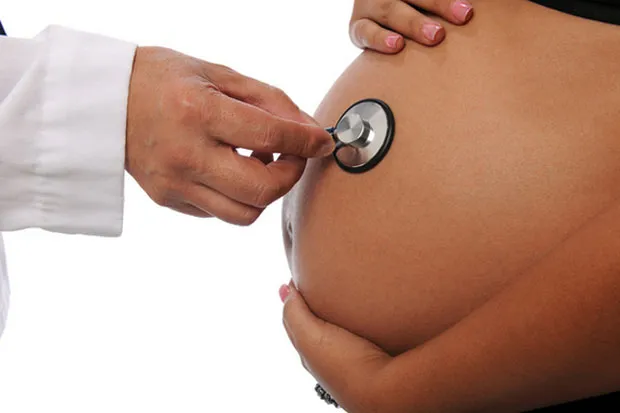
Women should be vaccinated against whooping cough every time they become pregnant, an advisory panel for the Centers for Disease Control and Prevention (CDC) said today.
If the whooping cough vaccine is not administered during pregnancy, it should be given shortly after the mother gives birth, the panel said. The vaccine is known as Tdap because it protects against tetanus and diphtheria, as well as pertussis (whooping cough).
Most deaths from whooping cough occur in infants under 3 months old, the CDC says.
Giving the vaccine to a pregnant woman is thought to protect the newborn against whooping cough during the first few months of life — before the child can receive a whooping cough vaccination of its own. This protection occurs because a pregnant women's antibodies are transferred to the fetus.
Vaccinating women during pregnancy or shortly after they give birth also lowers the risk they will carry the bacteria that cause whooping cough, and infect their infant.
"This is a great opportunity for obstetricians to help their patients protect their newborns and themselves. I urge all obstetricians to recommend and give Tdap vaccine to their pregnant patients," said Dr. Richard Beigi, a member of the group that advised the CDC panel.
The panel reviewed research on the vaccine and found that giving Tdap during one pregnancy may not provide protection if a woman becomes pregnant again. The levels of antibodies attained from the vaccination may be too low to transfer to a fetus in future pregnancies, the panel said.
Get the world’s most fascinating discoveries delivered straight to your inbox.
Last year, the panel voted to recommend giving pregnant women the Tdap vaccine only if they had not received the vaccine before.
So far this year, there have been more than 32,000 cases of whooping cough in the United States, and 16 deaths, according to the CDC. The country is on track to have the most reported cases of the disease since 1959.
Pass it on: Pregnant women should receive a Tdap vaccine.
Follow Rachael Rettner on Twitter @RachaelRettner, or MyHealthNewsDaily @MyHealth_MHND. We're also on Facebook & Google+.

Rachael is a Live Science contributor, and was a former channel editor and senior writer for Live Science between 2010 and 2022. She has a master's degree in journalism from New York University's Science, Health and Environmental Reporting Program. She also holds a B.S. in molecular biology and an M.S. in biology from the University of California, San Diego. Her work has appeared in Scienceline, The Washington Post and Scientific American.