













Climate Change Could Melt Wolverines' Snowy 'Refrigerators'

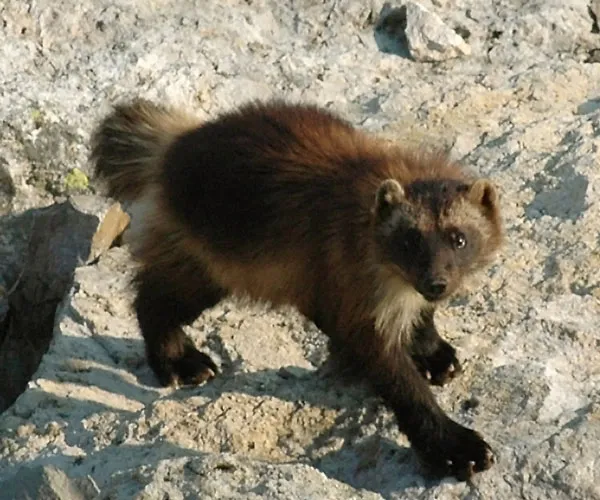
Wolverines, bearlike members of the weasel family, seem to depend on spring snow cover, but it's not clear why.
Now, an international group of researchers has a new theory: Wolverines use snow like a refrigerator to preserve food during the lean, cold times after their young are born, they suggest.
The animals live in the northern parts of North America, Asia and Europe where resources can be scarce. Their vulnerability to warming landed them as a "candidate for protection" in 2010 under the U.S. Endangered Species Act. As such, ever year the U.S. Fish and Wildlife Service will review the wolverines' status and work with others to implement voluntary measures.
After reviewing previous work on wolverine reproduction and food availability, the research team concluded that the wolverines live only within a "refrigeration zone," where spring snow and cold allow them to store the food they scavenge or kill. This strategy keeps insects, bacteria and other scavengers from consuming it.
Wolverines eat everything from moose and mountain goats to ground squirrels, birds' eggs and berries.
"Understanding why and how wolverines exist where they do and the various adaptations they have evolved to eke out a living will better inform population management strategies and conservation of the species," lead researcher Robert Inman of the Wildlife Conservation Society's North America Program said in a statement.
Better understanding how wolverines use the snow is crucial to understanding how climate change change will affect the animals, according to Inman and colleagues.
Get the world’s most fascinating discoveries delivered straight to your inbox.
Both captive and wild wolverines have been observed hiding food, such as meat taken from reindeer carcasses, creating caches of food for lean times. These caches are important for the survival of young wolverines, since these animals give birth in a narrow window of time, unusually early in the year for carnivores that do not hibernate, Inman and colleagues write. [World's Cutest Baby Wild Animals]
Caches allow the females easy access to stored food during the late winter and early spring as they lactate. Without cached food, the young die early in their lives, they write.
The results are detailed in the June issue of the Journal of Mammology.
Follow Wynne Parry on Twitter @Wynne_Parry or LiveScience @livescience. We're also on Facebook & Google+.
