
 Live Science Plus


Folksy, Animated Rodent Challenges 'Invasive Species' Label

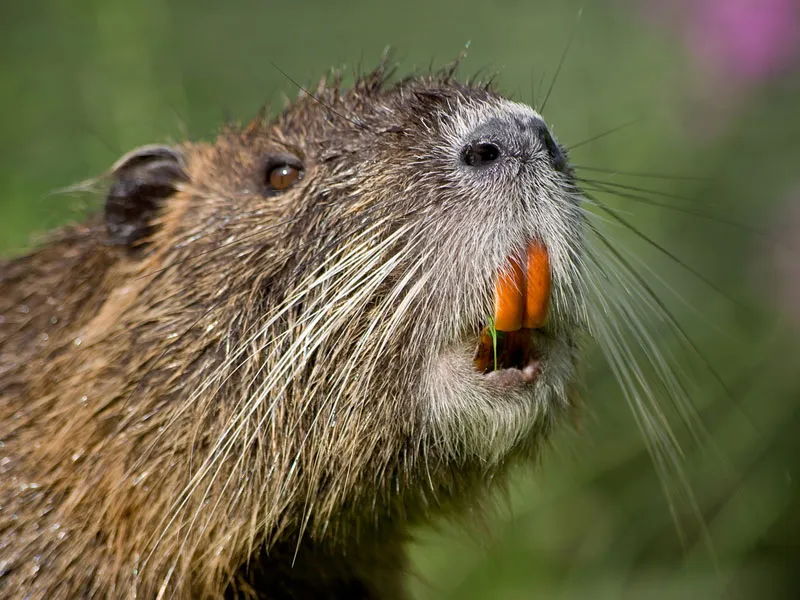
As large rodents with ratlike tails, orange teeth, a reputation for chewing up fragile vegetation and a South American origin, nutria are the sort of species that tend to earn the hostile-sounding label, "invasive species."
But now a friendly, animated nutria is challenging this notion. In a short video, created by filmmaker Drew Christie and published on the New York Times' website, a nutria living in Lake Washington, in Washington state, argues that nutria are perhaps no more deserving of the "invasive" label than humans themselves.
"I know us nutria have a bad habit of overpopulating an area, and overharvesting the edible plants within a small area, resulting in a die-off of desirable plant species. But that sounds a lot like someone else I know of," says the nutria in the film "Hi! I'm a Nutria." He continues, "I know I am not really supposed to be here, but guess what, neither are you."

Nutria, originally from South America, were imported into the U.S. for their fur – just as the fur trade motivated Europeans to settle North America much earlier, the video points out.
Do you think humans are an invasive species?
The animals eventually escaped or were released by those raising them. In Louisiana, nutria have destroyed wetlands with their habit of overgrazing vegetation. A campaign there to reduce their population by marketing them as food has given way to a bounty program.
More than 600 nutria farms existed in Oregon and Washington from the 1930s to the 1950s. Flooding and storms enabled some nutria to escape, and farmers also released nutria when raising them became uneconomical, according to the Washington Department of Fish and Wildlife.
Christie's grandfather was among the farmers who released their nutria. Now, the descendants of these animals are aggravating homeowners near Lake Washington, Christie writes.
"My aim is just to say, 'Hey, look in the mirror before blaming all your problems on rodents and other easy targets,'" Christie writes in The New York Times.
You can follow LiveScience senior writer Wynne Parry on Twitter @Wynne_Parry. Follow LiveScience for the latest in science news and discoveries on Twitter @livescience and on Facebook.
