








-
 FeaturesSelf-driving, solar-powered cars that talk to each other? What vehicles might look like in 10 years.
Car technology is making rapid advances, and the car you will drive in 10 years may be very different from the one you're driving today.
-
-
 SCIENCE SPOTLIGHTAdversity shaped our evolution as a species. People raised in it may have underrecognized strengths because of it.
Psychologists have long studied the deficits associated with being raised in adversity. They're now discovering the hidden strengths that can emerge in those settings.
-
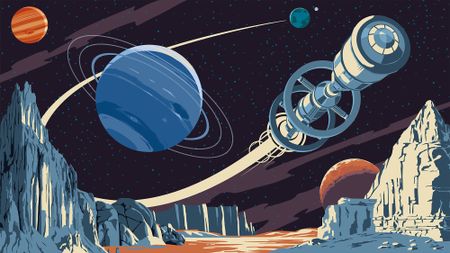 Science Spotlight'Everything we know about space travel is going to change within a decade': The fusion breakthrough that could unlock a path to the stars
Several companies have made significant headway toward nuclear fusion propulsion drives. Is humanity on the brink of a revolution in spaceflight?
-
 Science SpotlightClimate change will triple the number of days over 105 F in the US. The health impacts will be dire.
Extreme heat will become more common as the climate continues to warm. That will affect almost every facet of our health.
-
 Science Spotlight'Wildfire smoke is the fastest-growing environmental threat in the US': How a warming world will poison the air we breathe
Wildfires are projected to increase dramatically due to climate change. That could trigger a massive increase in heart attacks, premature births and early deaths, research reveals.
-


-
-
 CancerCould simple blood tests identify cancer earlier?
Blood tests that detect early cancer are coming to market. Could they lead to earlier diagnosis and treatment?
-
 FeaturesPlate tectonics may be why Earth has life — and the key to finding life elsewhere in the universe
Emerging evidence suggests that plate tectonics, or the recycling of Earth's crust, may have begun much earlier than previously thought — and may be a big reason that our planet harbors life.
-
 Astronomy'Like trying to see fog in the dark': How strange pulses of energy are helping scientists build the ultimate map of the universe
Astronomers are using radio pulses from space to find missing baryonic matter and learn about supermassive black holes, stellar formation and galaxy evolution.
2 Comments -
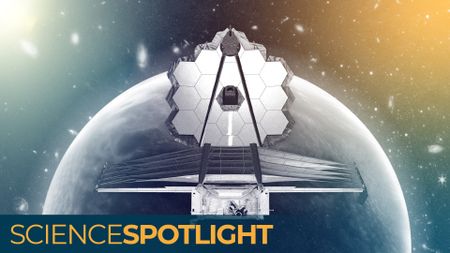 Extraterrestrial LifeWill the James Webb telescope finally lead us to alien life?
Three years into its mission, the James Webb Space Telescope has advanced the search for alien life more than any machine before it. What will it find next?
-
 Human EvolutionA braided stream, not a family tree: How new evidence upends our understanding of how humans evolved
Evidence is mounting that the evolution of our species is more convoluted than we imagined — more like a braided stream than a branching tree.
2 Comments -
 Artificial IntelligenceAI is entering an 'unprecedented regime.' Should we stop it — and can we — before it destroys us?
The technological singularity — the point at which artificial general intelligence surpasses human intelligence — is coming. But will it usher in humanity's salvation, or lead to its downfall?
14 Comments -
 ArchaeologyEarth's magnetic field is weakening — magnetic crystals from lost civilizations could hold the key to understanding why
Artifacts from the Iron Age have revealed an intense historical magnetic anomaly in the Middle East. Could using a similar approach elsewhere help us unravel the mysteries of Earth's magnetic field?
-
 Astronomy'No radio astronomy from the ground would be possible anymore': Satellite mega-swarms are blinding us to the cosmos — and a critical 'inflection point' is approaching
Invisible radiation leaking out of private satellites, like SpaceX's Starlink spacecraft, is disrupting radio astronomers' ability to detect important signals from across the universe. If left unchecked, we could reach an "inflection point" beyond which we can no longer properly study the cosmos, researchers warn.
9 Comments -
 Vikings'If it was a man, we would say that's a warrior's grave': Weapon-filled burials are shaking up what we know about women's role in Viking society
New research is finding that some women in Viking Age Scandinavia were buried with war-grade weapons. Experts are divided about what that means.
7 Comments
-


