
 Live Science Plus


Scientists discover new part of the body
The newfound structure sits within the masseter, a key muscle for chewing.

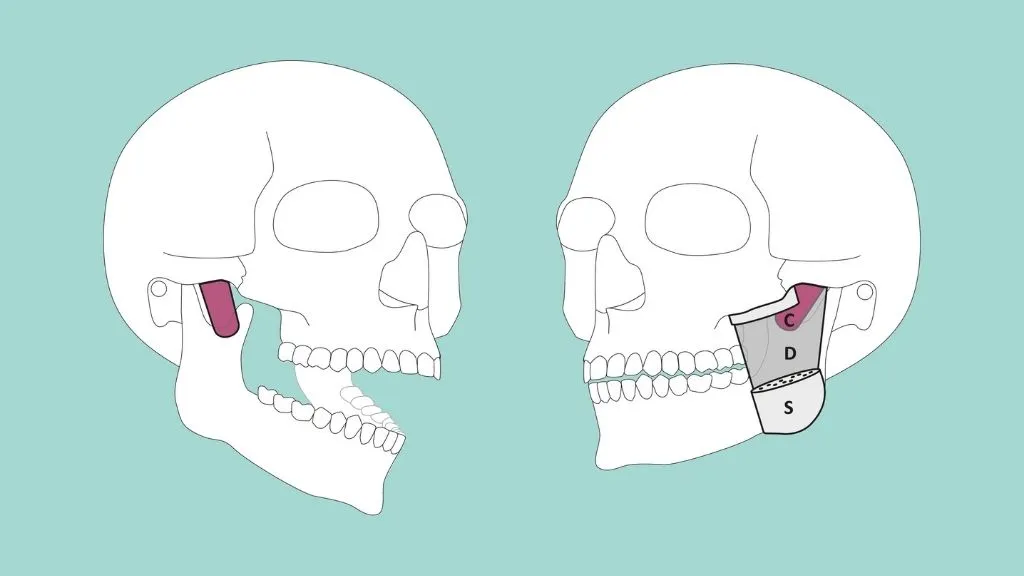
Scientists recently uncovered a part of the body that had never been described before: a deep layer of muscle in the masseter, which raises the lower jaw and is critical for chewing.
Modern anatomy textbooks describe the masseter muscle as having two layers, one deep and one superficial. "However, a few historical texts mention the possible existence of a third layer as well, but they are extremely inconsistent as to its position," the study authors wrote in a new report, published on Dec. 2 in the online edition of the journal Annals of Anatomy. So the team decided to check whether the prominent jaw muscle might have a hidden, super-deep layer, as the historical texts suggest.
To do so, they dissected 12 human cadaver heads that had been preserved in formaldehyde; they also took CT scans of 16 "fresh" cadavers and reviewed an MRI scan from a living subject, according to the report. Through these examinations, they identified an "anatomically distinct" third layer of the masseter muscle. This deep, deep layer runs from the zygomatic process — a bony projection that forms part of the "cheek bones" and can be felt just in front of the ear — to the coronoid process — a triangular projection on the lower jawbone.
Related: The 7 biggest mysteries of the human body
"This deep section of the masseter muscle is clearly distinguishable from the two other layers in terms of its course and function," first author Szilvia Mezey, a senior lecturer in the Department of Biomedicine at the University of Basel in Switzerland, said in a statement. Based on the arrangement of the muscle fibers, the muscle layer likely helps stabilize the lower jaw by "elevating and retracting" the coronoid process, the team wrote in their report. And in fact, the newfound muscle layer is the only part of the masseter that can pull the jawbone backward, Mezey said.
RELATED CONTENT
"Although it's generally assumed that anatomical research in the last 100 years has left no stone unturned, our finding is a bit like zoologists discovering a new species of vertebrate," senior author Dr. Jens Christoph Türp, a professor and clinician at the University Center for Dental Medicine Basel, said in the statement.
In their paper, the team proposed that the newfound muscle layer be named "Musculus masseter pars coronidea," meaning "coronoid part of the masseter." The discovery could be important in a clinical context, because knowing about the muscle layer could help doctors to both better perform surgeries in that region of the jaw and better treat conditions involving the joint that joins the jawbone to the skull, they noted.
Get the world’s most fascinating discoveries delivered straight to your inbox.
Originally published on Live Science.

Nicoletta Lanese is the health channel editor at Live Science and was previously a news editor and staff writer at the site. She is a recipient of the 2026 AHCJ International Health Study Fellowship, with a project focused on antibiotic stewardship practices in Japan and the U.S. They hold a graduate certificate in science communication from UC Santa Cruz and degrees in neuroscience and dance from the University of Florida. Beyond Live Science, Lanese's work has appeared in The Scientist, Science News, the Mercury News, Mongabay and Stanford Medicine Magazine, among other outlets. Based in NYC, she also remains involved in dance and performs in local choreographers' work.