It's quick and easy to access Live Science Plus, simply enter your email below. We'll send you a confirmation and sign you up for our daily newsletter, keeping you up to date with the latest science news.
Get the world’s most fascinating discoveries delivered straight to your inbox.
You are now subscribed
Your newsletter sign-up was successful
Want to add more newsletters?
Join the club
Get full access to premium articles, exclusive features and a growing list of member rewards.
An account already exists for this email address, please log in.
Trump admin wants to curtail 'gain-of-function' research — but it's a cornerstone of biology, scientists say
Gain-of-function experiments can help researchers get ahead of viruses naturally gaining the ability to infect people in the wild. But they're also used for many other areas of study within biology.
Gain-of-function experiments are often associated with studies that raise the risk of dangerous viral "lab leaks." But in reality, they're a key aspect of many lines of research across biology and not inherently risky.
(Image credit: KATERYNA KON/SCIENCE PHOTO LIBRARY via Getty Images)
In May 2025, President Donald Trump signed an executive order to restrict research on virusesand pathogens called gain-of-function studies. The National Institutes of Health is now taking steps to cancel dozens of such studies — including ones that have been deemed safe by agency scientists who reviewed them, according to Science magazine and The Washington Post.
The term "gain of function" is often taken to refer to research with viruses that puts society at risk of an infectious disease outbreak for questionable gain. Some research on emerging viruses can result in variants that gain the ability to infect people, but this does not necessarily mean the research is dangerous or that it is not fruitful. Concerns have focused on lab research on the virus that causes bird flu in 2012 and on the virus that causes COVID-19 since 2020.
The possibility that a genetically modified virus could escape the lab needs to be taken seriously. But it does not mean that gain-of-function experiments are inherently risky or the purview of mad scientists. In fact, gain-of-function approaches are a fundamental tool in biology used to study much more than just viruses, contributing to many, if not most, modern discoveries in the field, including penicillin, cancer immunotherapies and drought-resistant crops.
Latest Videos From
As scientists whostudy viruses, we believe that misunderstanding the term "gain of function" as something nefarious comes at the cost of progress in human health, ecological sustainability and technological advancement. Clarifying what gain-of-function research really is can help clarify why it is an essential scientific tool.
What is gain of function?
To study how a living thing operates, scientists can change a specific part of it and then observe the effects. These changes sometimes result in the organism's gaining a function it didn't have before or losing a function it once had.
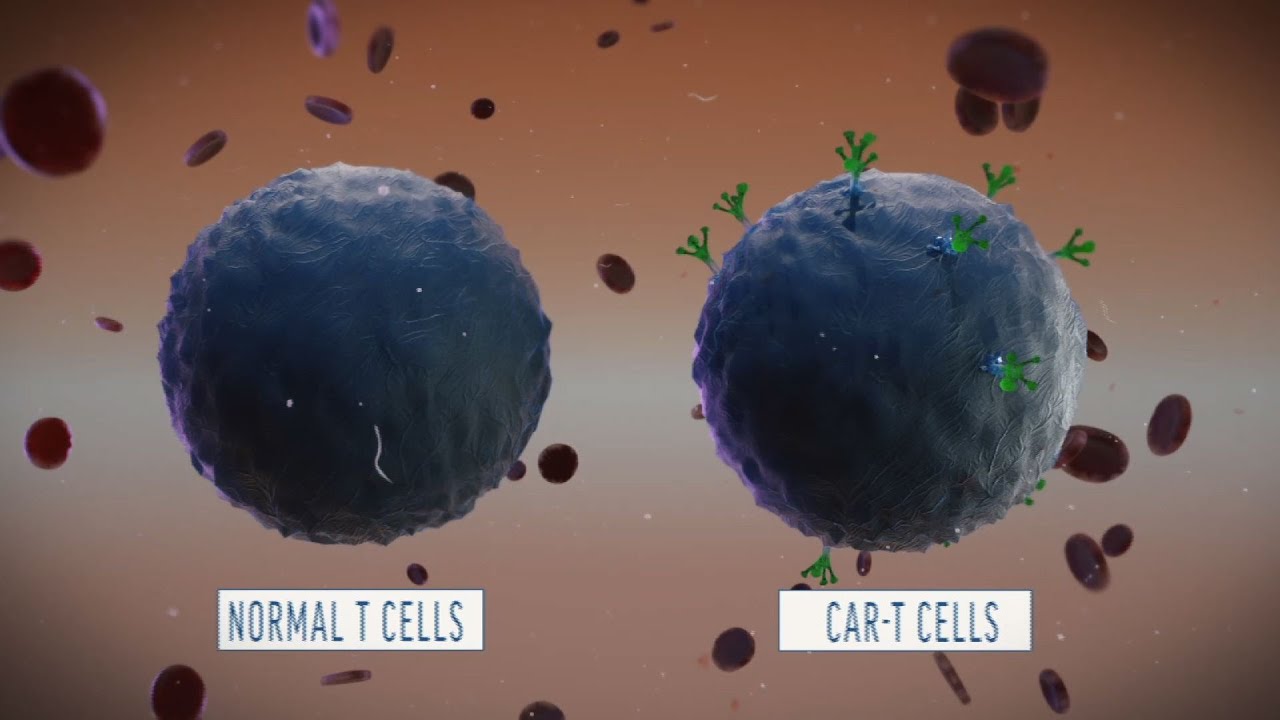
For example, if the goal is to enhance the tumor-killing ability of immune cells, researchers can take a sample of a person's immune cells and modify them to express a protein that specifically targets cancer cells. This mutated immune cell, called a CAR-T cell, thereby "gains the function" of being able to bind to cancerous cells and kill them. The advance of similar immunotherapies that help the immune system attack cancer cells is based on the exploratory research of scientists who synthesized such "Frankenstein" proteins in the 1980s. At that time, there was no way to know how useful these chimeric proteins would be to cancer treatment today, some 40 years later.
Similarly, by adding specific genes into rice, corn or wheat plants that increase their production in diverse climates, scientists have been able to produce plants that are able to grow and thrive in geographical regions they previously could not. This is a critical advance to maintain food supplies in the face of climate change. Well-known examples of food sources that have their origins in gain-of-function research include rice plants that can grow in high flood plains or in drought conditions or that contain vitamin A to reduce malnutrition.
Medical advances from gain-of-function research
Gain-of-function experiments are ingrained in the scientific process. In many instances, the benefits that stem from gain-of-function experiments are not immediately clear. Only decades later does the research bring a new treatment to the clinic or a new technology within reach.
The development of most antibiotics have relied on the manipulation of bacteria or mold in gain-of-function experiments. Alexander Fleming's initial discovery that the mold Penicillium rubens could produce a compound toxic to bacteria was a profound medical advance. But it wasn't until scientists experimented with growth conditions and mold strains that therapeutic use of penicillin became feasible. Using a specific growth medium allowed the mold to gain the function of increased penicillin production, which was essential for its mass production and widespread use as a drug.
Penicillin capsules being checked as they come off the production line at Beecham Research Laboratories, Worthing, Sussex.
(Image credit: Photo by Wesley/Getty Images)
Research on antibiotic resistance also relies heavily on gain-of-function approaches. Studying how bacteria gain resistance against drugs is essential to developing new treatments microbes are unable to evade quickly.
Gain-of-function research in virology has also been critical to the advancement of science and health. Oncolytic viruses are genetically modified in the laboratory to infect and kill cancerous cells like melanoma. Similarly, the Johnson & Johnson COVID-19 vaccine contains an adenovirus altered to produce the spike protein that helps the COVID-19 virus infect cells. Scientists developed live attenuated flu vaccines by adapting them to grow at low temperatures and thereby lose the ability to grow at human lung temperatures.
By giving viruses new functions, scientists were able to develop new tools to treat and prevent disease.
Nature's gain-of-function experiments
Gain-of-function approaches are needed to advance understanding of viruses in part because these processes already occur in nature.
Many viruses that infect such nonhuman animals as bats, pigs, birds and mice have the potential to spill over into people. Every time a virus copies its genome, it makes mistakes. Most of these mutations are detrimental — they reduce a virus' ability to replicate — but some may allow a virus to replicate faster or better in human cells. Variant viruses with these rare, beneficial mutations will spread better than other variants and therefore come to dominate the viral population — that is how natural selection works.
If these viruses can replicate even a little bit within people, they have the potential to adapt and thereby thrive in their new human hosts. That is nature's gain-of-function experiment, and it ishappening constantly.
Gain-of-function experiments in the lab can help scientists anticipate the changes viruses may undergo in nature by understanding what specific features allow them to transmit between people and infect them. In contrast to nature's experiments, these are conducted in highly controlled lab conditions designed to limit infection risk to laboratory personnel and others, including air flow control, personal protective equipment and waste sterilization.
It is important that researchers carefully observe lab safety to minimize the theoretical risk of infecting the general population. It is equally important that virologists continue to apply the tools of modern science to gauge the risk of natural viral spillovers before they become outbreaks.
Scientists have a better appreciation of the tangible risk of bird flu spillover because of gain-of-function experimentspublished a decade ago. Those lab studies showed that bird flu viruses could be transmitted through the air between ferrets within a few feet of one another. They also revealed multiple features of the evolutionary path the H5N1 virus would need to take before it becomes transmissible in mammals, informing what signatures researchers need to look out for during surveillance of the current outbreak.
Oversight on gain of function
Perhaps this sounds like a semantic argument, and in many respects it is. Many researchers would likely agree that gain of function as a general tool is an important way to study biology that should not be restricted, while also arguing that it should be curtailed for research on specific dangerous pathogens. The problem with this argument is that pathogen research needs to include gain-of-function approaches in order to be effective — just as in any area of biology.
Oversight of gain-of-function research on potential pandemic pathogens already exists. Multiple layers of safety measures at the institutional and national levels minimize the risks of virus research.
While updates to current oversight are not unreasonable, we believe that blanket bans or additional restrictions on gain-of-function research do not make society safer. They may instead slow research in areas ranging from cancer therapies to agriculture. Clarifying which specific research areas are of concern regarding gain-of-function approaches can help identify how the current oversight framework can be improved.
Associate Professor of Microbiology and Immunology at Emory University, University of Pittsburgh
Seema Lakdawala is an Assistant Professor in the Microbiology and Molecular Genetics Department at the University of Pittsburgh. The Lakdawala lab studies the molecular properties contributing to the epidemiological success of influenza A viruses to better predict future pandemics.
You must confirm your public display name before commenting
Please logout and then login again, you will then be prompted to enter your display name.

 Live Science Plus