













Experimental drug doubles one-year survival in pancreatic cancer
A new drug that works by making tumors more susceptible to chemotherapy and the immune system has increased survival in those with advanced pancreatic cancer in a trial.

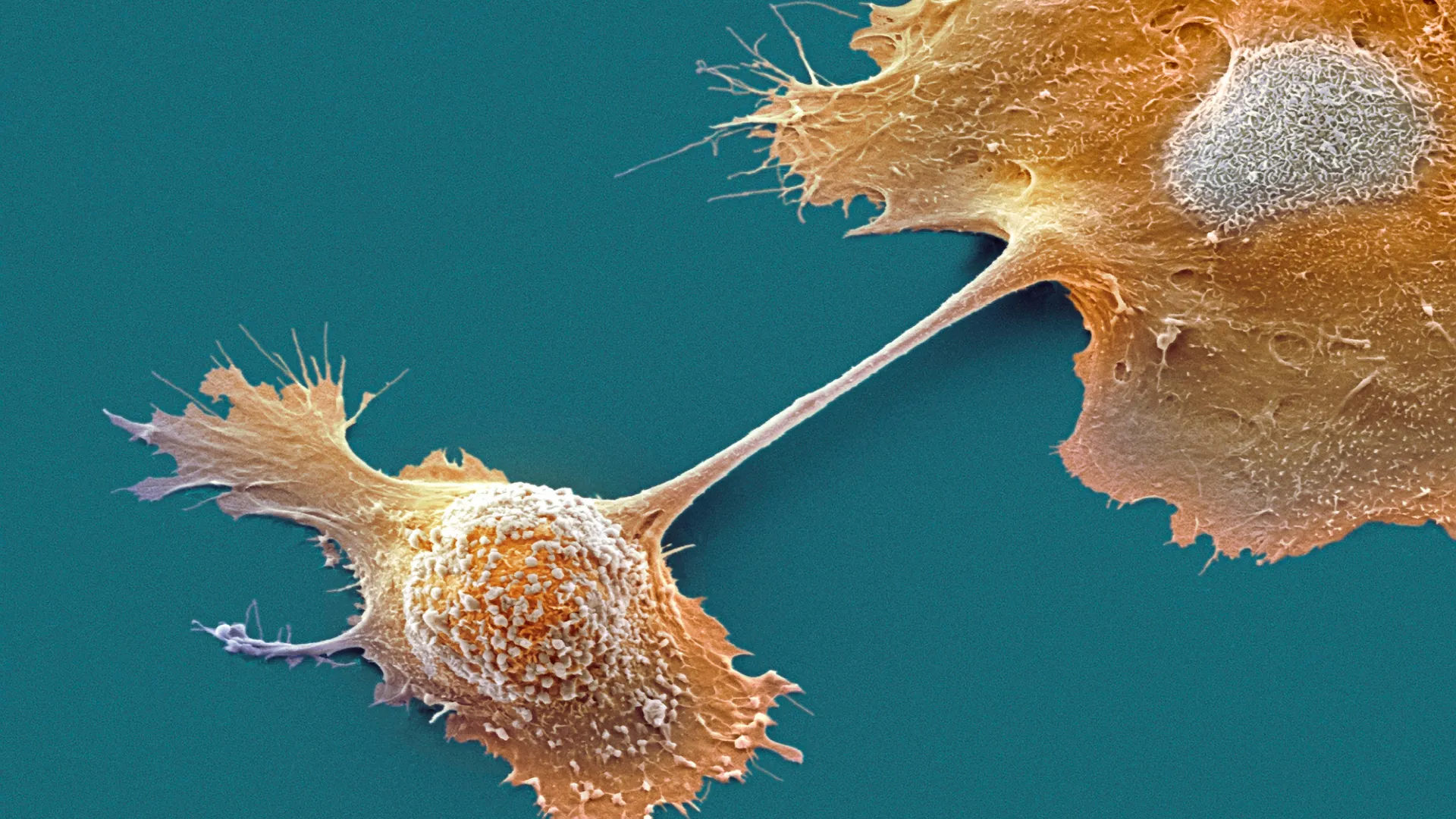
An experimental treatment has doubled one-year survival rates for pancreatic cancer, one of the deadliest types of cancer, a new study reports.
The drug, called elraglusib, targets the protective web that pancreatic tumors build around themselves, thus helping immune molecules and chemotherapy better penetrate the tumors. The results of the trial showing elraglusib's safety and efficacy were published April 14 in the journal Nature Medicine.
"We're starting to see, for the first time, drugs that are effective outside of the standard chemotherapy that we have used for pancreatic cancer for the last two decades," said study co-author Dr. Devalingam Mahalingam, an oncologist at Northwestern University Feinberg School of Medicine.
A rare win in pancreatic cancer treatment
Pancreatic cancer has one of the poorest prognoses of all cancers, with patients who are newly diagnosed having only a 13% chance of surviving five years with the disease. Often, the problem is that pancreatic cancer is not detected until it has progressed substantially,
"Most patients, unfortunately, present with advanced disease," Mahalingam told Live Science. "There are no screening tools to pick things up earlier."
In addition, the region surrounding the tumor, called the tumor microenvironment, poses problems for pancreatic cancer treatment. "It's very dense and fibrous," he said, which reduces the effectiveness of typical treatments for the condition, like chemotherapy.
Elraglusib addresses this problem by suppressing a protein called glycogen synthase kinase-3 beta (GSK-3 beta).
Get the world’s most fascinating discoveries delivered straight to your inbox.
Petri-dish studies had previously shown that GSK-3 beta helps keep pancreatic cancer cells alive by boosting the activity of a protein called nuclear factor κB, which helps pancreatic cells resist programmed cell death — essentially a cellular "self destruct" button. The drug also suppresses molecules that make the tumors resistant to the immune system.
Elraglusib boosts survival time
Past work showed that elraglusib was safe for patients with a range of cancers, but to see whether it improved pancreatic cancer outcomes, Mahalingam and his colleagues tested the drug in 286 people who had been recently diagnosed with pancreatic cancer. The patients received chemotherapy with or without elraglusib. Nearly all of the patients in the trial had advanced, metastatic disease, meaning the cancer had spread to other parts of the body beyond the pancreas.
Half of the patients given elraglusib and chemotherapy were still alive after 10.1 months, while half of the patients given chemotherapy alone were still alive after 7.2 months. Of the patients given elraglusib, 42% lived a year after their diagnosis, compared with 22% of those who received only chemotherapy.
It's never easy to develop a drug from an academic institution. It's nice to see some that come true.
Dr. Devalingam Mahalingam, oncologist at Northwestern University Feinberg School of Medicine
Although elraglusib increased overall survival time, it didn't lengthen the amount of time that patients lived without their cancer growing or spreading to new areas.
The trial's protocol required patients to stop receiving treatment if their disease progressed, and Mahalingam said the trial's extremely sick cohort meant the chances of progression were high. As a result, some patients were switched to palliative care before the drug's effects became obvious. These patients may have lived longer if they had stayed on the trial and received more doses of the drug, Mahalingam speculated.
Future treatment options
In lab-dish experiments and animal testing, elraglusib also made the environment surrounding the tumor more permeable to immune cells and chemotherapy, and it reduced tumor cells' ability to fight off immune cells once they infiltrated the tumor.
These abilities, combined with the drug's safety, could make it a useful complement to other pancreatic cancer therapies, such as immune checkpoint inhibitors, which enhance the immune system’s ability to recognize and kill tumor cells, or KRAS inhibitors, which stop mutant proteins that drive tumor growth, Mahalingam said.
Related stories
Elraglusib could potentially treat other types of cancer in combination with chemotherapy, Mahalingam noted. A decade ago, other GSK-3 beta-targeting drugs were tested against other solid tumor cancers but never made it past the early stages of clinical testing. But therapeutic doses of those drugs didn't reach the tumors — an obstacle elraglusib has overcome, Mahalingam said.
The new study is also notable because the drug was developed without the involvement of large pharmaceutical companies.
"It's never easy to develop a drug from an academic institution," he added. "It's nice to see some that come true."
This article is for informational purposes only and is not meant to offer medical advice.
Mahalingam, D., Shroff, R. T., Carneiro, B. A., Ji, Y., Coveler, A. L., Cervantes, A., Sahai, V., Ploquin, A., Hiret, S., LoConte, N. K., Percent, I. J., Lopez, C. D., Pernot, S., Kavan, P., Mulcahy, M., Carr, R., Giles, F. J., Seifarth, C., Ugolkov, A., . . . Bekaii-Saab, T. S. (2026). Elraglusib and chemotherapy in metastatic pancreatic ductal adenocarcinoma: a randomized controlled phase 2 trial. Nature Medicine. https://doi.org/10.1038/s41591-026-04327-4

RJ Mackenzie is an award-nominated science and health journalist. He has degrees in neuroscience from the University of Edinburgh and the University of Cambridge. He became a writer after deciding that the best way of contributing to science would be from behind a keyboard rather than a lab bench. He has reported on everything from brain-interface technology to shape-shifting materials science, and from the rise of predatory conferencing to the importance of newborn-screening programs. He is a former staff writer of Technology Networks.
You must confirm your public display name before commenting
Please logout and then login again, you will then be prompted to enter your display name.