













New AI model spots pancreatic cancer up to 3 years earlier than human doctors in test
A new AI tool finds early hints of pancreatic cancer in CT scans that doctors would otherwise miss, an early test found.

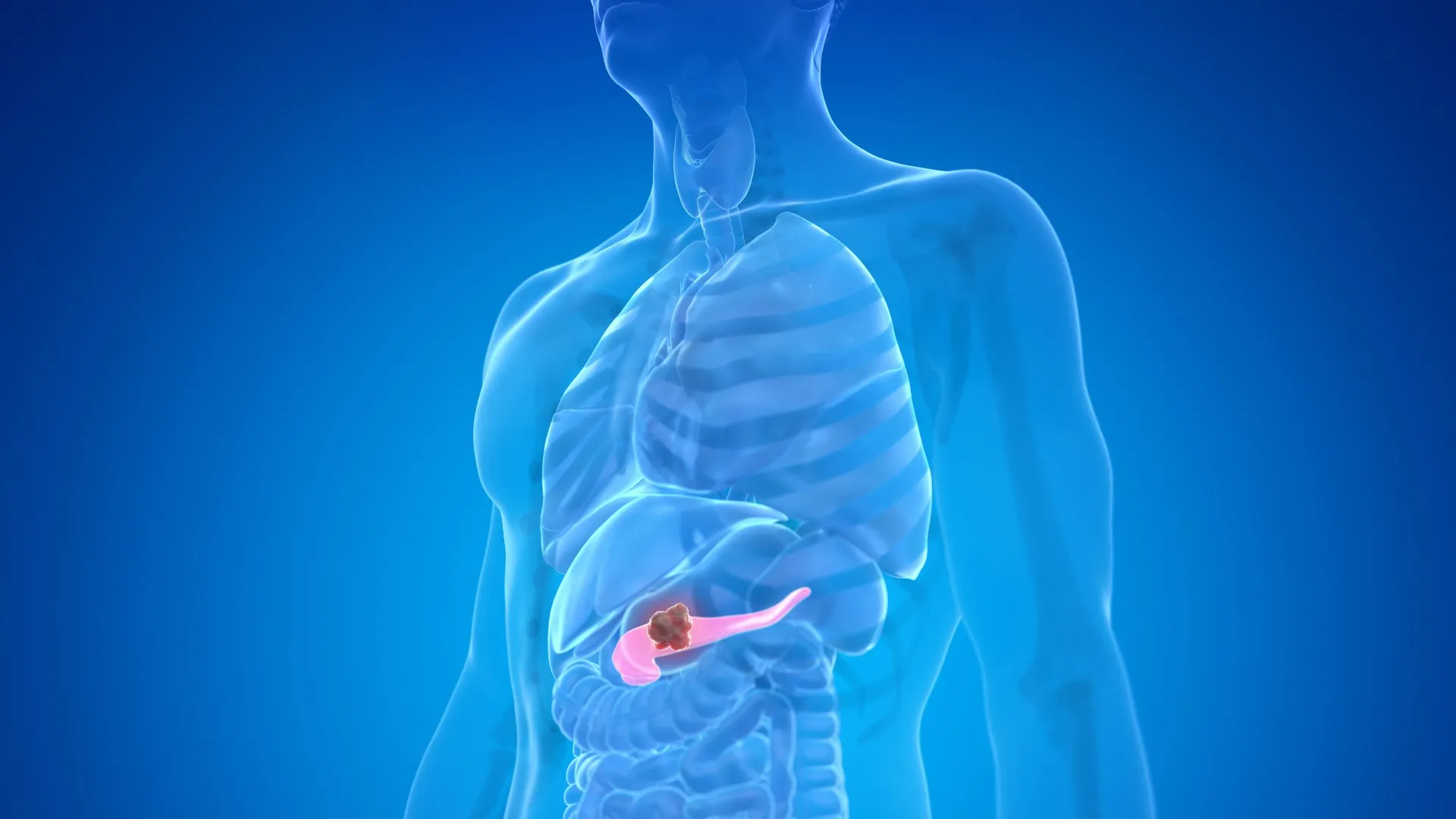
A new artificial intelligence (AI) model can help doctors detect pancreatic cancer up to three years before physicians typically spot tumors on CT scans, a new study suggests.
The program, described April 28 in the journal Gut, was used to analyze almost 2,000 CT scans that had been previously cleared as "normal," bearing no signs of disease. The tool identified tiny irregularities in the structure of the pancreas that later developed into tumor tissue.
Early detection is the single biggest factor in pancreatic cancer patients' survival. Therefore, the model could potentially enable physicians to begin effective treatment while the disease is still curable, the study authors said.
A chance to detect cancer early
Pancreatic cancer is one of the deadliest cancers.
"The five-year survival rate [in the U.S.] is about 12% to 13% because of our inability to detect it at a time when therapeutic options could work their magic," study co-author Dr. Ajit Goenka, a radiologist and nuclear medicine specialist at the Mayo Clinic in Rochester, Minnesota, told Live Science. The early stages of pancreatic cancer often don't trigger any symptoms, so the disease is often advanced at the point of diagnosis.
Although doctors' ability to catch and treat many other cancers has improved in recent decades, no corresponding breakthrough has been seen in pancreatic cancer. Diagnosis typically involves a combination of tissue sampling and imaging tests, including CT scans. But by the time tumors are visible via these methods, the cancer is often terminal.
However, there may be earlier markers of the disease.
Get the world’s most fascinating discoveries delivered straight to your inbox.
"The basic science research tells us that the process of cancer development is not something that starts six months earlier," Goenka said. "It starts 10 to 15 years earlier, which means that there was a signal in the pancreas and that signal was outside the purview of human detectability."
At the end of the day, it's mathematics. It converts that image into a mathematical representation and extracts those mathematical features.
Dr. Ajit Goenka, radiologist and nuclear medicine specialist at the Mayo Clinic in Rochester, Minnesota
Leveraging AI to recognize patterns that humans cannot, Goenka and colleagues developed a tool to amplify that existing signal and identify early signs of disease in CT scans.
The model, dubbed Radiomics-based Early Detection Model (REDMOD), essentially converts the CT scan image into a mathematical puzzle. It first segments the organ, building a 3D model of the pancreas from the 2D images captured by the CT machine. Then, it evaluates the resulting structure pixel by pixel.
"It's taking each and every pixel in that image and it is quantifying the degree to which it differs from the rest of the organ, and then it's comparing that against the controls where you don't expect that change to be present," Goenka explained. "At the end of the day, it's mathematics. It converts that image into a mathematical representation and extracts those mathematical features."
The team tested the model on a sample of 2,000 existing CT scans, which were previously collected for medical issues unrelated to cancer and had all been signed off as normal. About one-seventh of the scans belonged to patients who later went on to develop pancreatic cancer.
The model successfully identified 73% of these early-stage cases, and on average, the scans the model analyzed had been taken 16 months before the person's actual diagnosis.
"The sensitivity gain over radiologists was nearly twofold across the spectrum, and when you look at even earlier — more than two years prior to diagnosis — that sensitivity gain was almost threefold," Goenka said. In other words, the AI tool correctly identified cancer cases earlier than radiologists did, and the earlier in time you look, the greater that performance gap grew.
Next steps
That said, the AI tool has room for improvement. "The radiologist was less likely to flag a healthy patient incorrectly," Goenka noted. The model correctly identified disease-free patients 81.1% of the time, compared with an average of 92.2% for human radiologists. "So there is a complementary role for both of them, for physician expertise combined with AI augmentation."
The study was very well designed and produced some extremely promising results, said Tatjana Crnogorac-Jurcevic, a professor of molecular pathology and biomarkers at Queen Mary University of London who was not involved in the work.
"Such early detection would make a huge change in the clinical workup of the patients," she told Live Science. "Because pancreatic cancer is fairly uncommon, general screening as we have now for colon and breast is not going to be feasible, but there are defined high-risk groups for which surveillance will be possible — individuals with a family history of pancreatic cancer, those with other cancer mutations, and patients with new-onset diabetes."
Related stories
Goenka hopes the model could be routinely implemented in the clinic within the next five years, and the team is currently running clinical trials to further validate that this detection strategy works in practice.
Looking forward, combining this REDMOD with other diagnostic methods could yield even greater gains in early detection, Crnogorac-Jurcevic said.
"We are developing urine-based tests with exactly the same aim, and having an AI imaging tool to combine with our body fluid biomarkers would be fantastic," she said. "It's highly likely that they will be complementary, which would increase the sensitivity and accuracy of early detection massively."
This article is for informational purposes only and is not meant to offer medical advice.
Mukherjee S., Antony A., Patnam NG, et al. Next-generation AI for visually occult pancreatic cancer detection in a low-prevalence setting with longitudinal stability and multi-institutional generalisability. Gut (2026). https://doi.org/10.1136/gutjnl-2025-337266

Victoria Atkinson is a freelance science journalist, specializing in chemistry and its interface with the natural and human-made worlds. Currently based in York (UK), she formerly worked as a science content developer at the University of Oxford, and later as a member of the Chemistry World editorial team. Since becoming a freelancer, Victoria has expanded her focus to explore topics from across the sciences and has also worked with Chemistry Review, Neon Squid Publishing and the Open University, amongst others. She has a DPhil in organic chemistry from the University of Oxford.
You must confirm your public display name before commenting
Please logout and then login again, you will then be prompted to enter your display name.