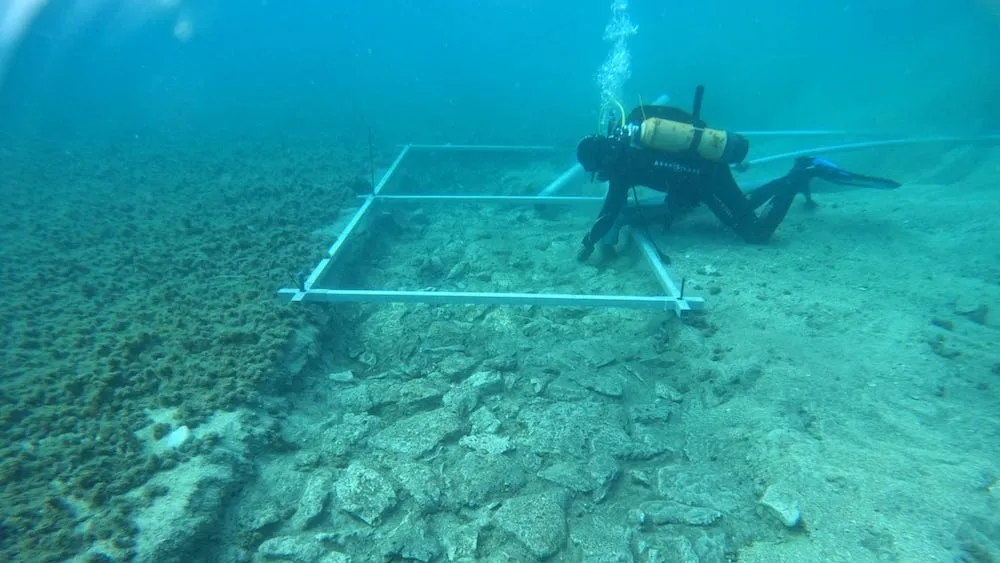
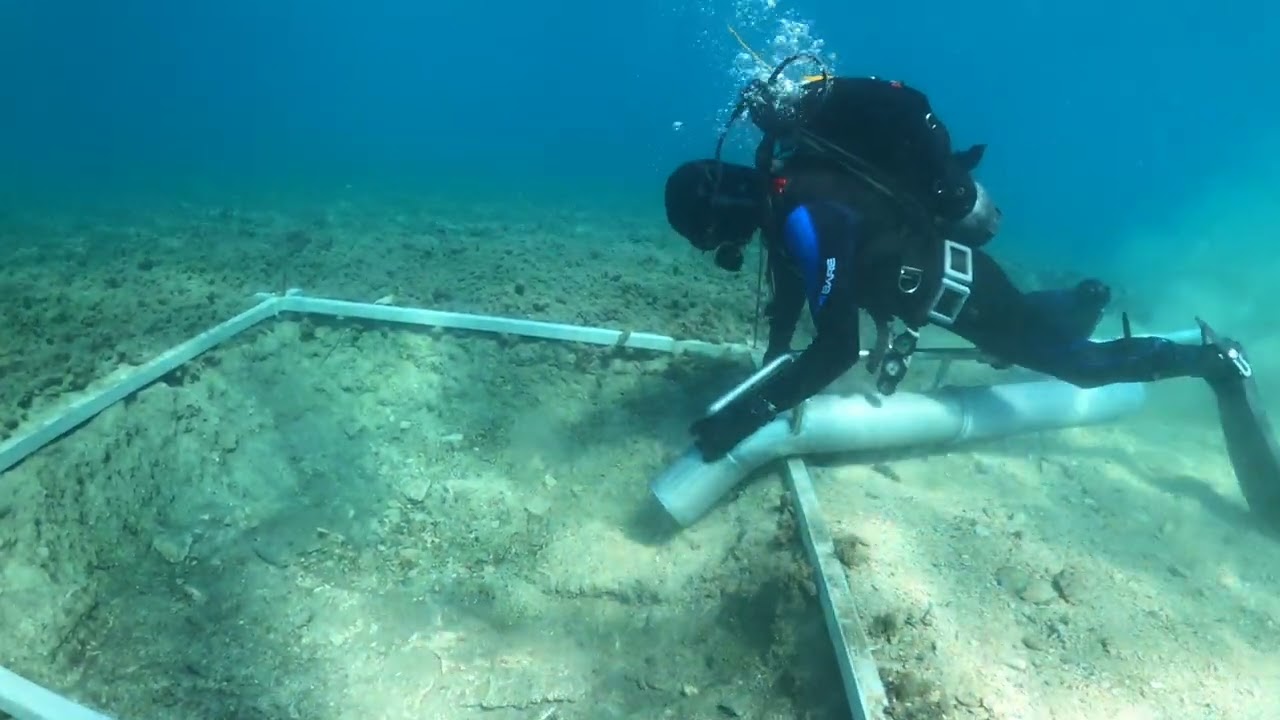
The submerged ruins of a 7,000-year-old road are hiding underwater off the coast of the Croatian island of Korčula. The Neolithic structure once connected the island to an ancient, artificial landmass.
Archaeologists announced the discovery of the "strange structures" in a May 6 post on Facebook, describing them as the remains of a roadway that are now submerged about 16 feet (5 meters) beneath the Adriatic Sea. The road consists of "carefully stacked stone plates" measuring roughly 13 feet (4 m) wide. The stone pavers had been buried by mud over the millennia. Archaeologists think the stone roadway was built by the Hvar, a lost maritime culture that resided in the area during the Neolithic period (6000 B.C. to circa 3000 B.C.).
Related: Eerie 'yellow brick road' to Atlantis discovered atop ancient undersea mountain
Latest Videos From
"We [also] found late-Neolithic ornamented pottery, [a] stone axe, bone artifacts, flint knives and arrowheads," Mate Parica, an assistant professor in the Department of Archaeology at the University of Zadar in Croatia who took part in the excavation, told Live Science in an email. "[The] pottery findings help[ed] us to attribute this site to [the] Hvar culture."
The archaeologists think the roadway once linked a nearby Hvar settlement, called Soline, to Korčula. Archaeologists discovered Soline, which is also submerged but once resided on an artificial landmass, in 2021 during a previous archaeological survey. By radiocarbon-dating wood found at the site, they determined that the settlement dates to roughly 4900 B.C., according to the translated statement.
"People walked on this [roadway] almost 7,000 years ago," Igor Borzić, an archaeologist at the University of Zadar who also took part in the underwater dig, said in the statement.
Because the settlement's remains are surrounded by several islands, it's protected from large ocean waves,” according to Reuters.

 Live Science Plus