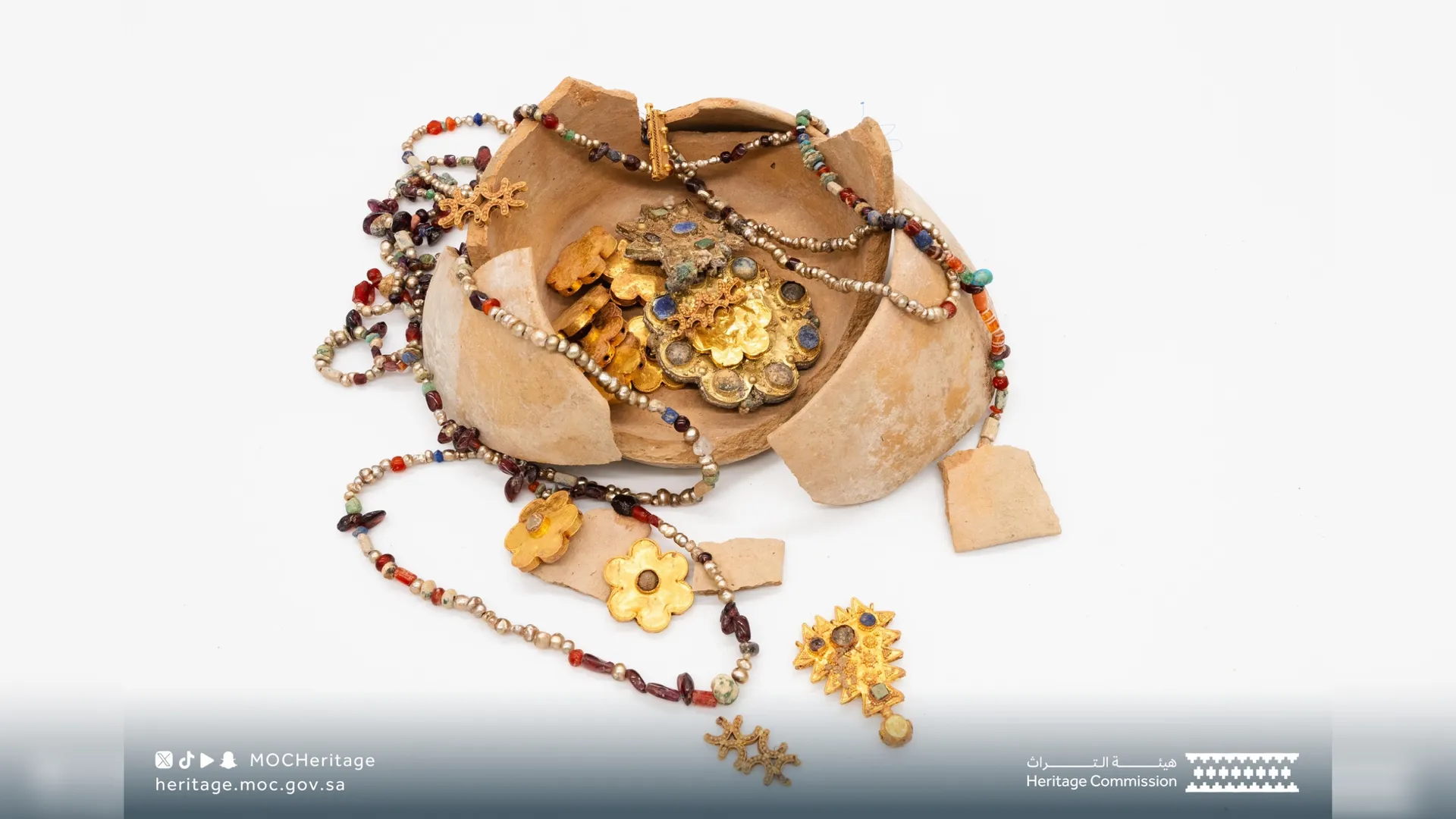
Archaeologists in Saudi Arabia have unearthed a clay pot full of gold, silver and gemstone-encrusted jewelry that may have been buried by an Islamic pilgrim en route to Mecca more than a millennium ago.
The team nicknamed the hoard the "Dhariyah Treasure" after the archaeological site where it was discovered. Located in the Al-Qassim region, Dhariyah was a key station on the Hajj route for Islamic pilgrims between Basra, Iraq, and Mecca, Saudi Arabia. According to archaeologists with the Saudi Heritage Commission who have been excavating Dhariyah for six years, radiocarbon analysis of organic remains puts the main settlement in the period of 743 to 753.
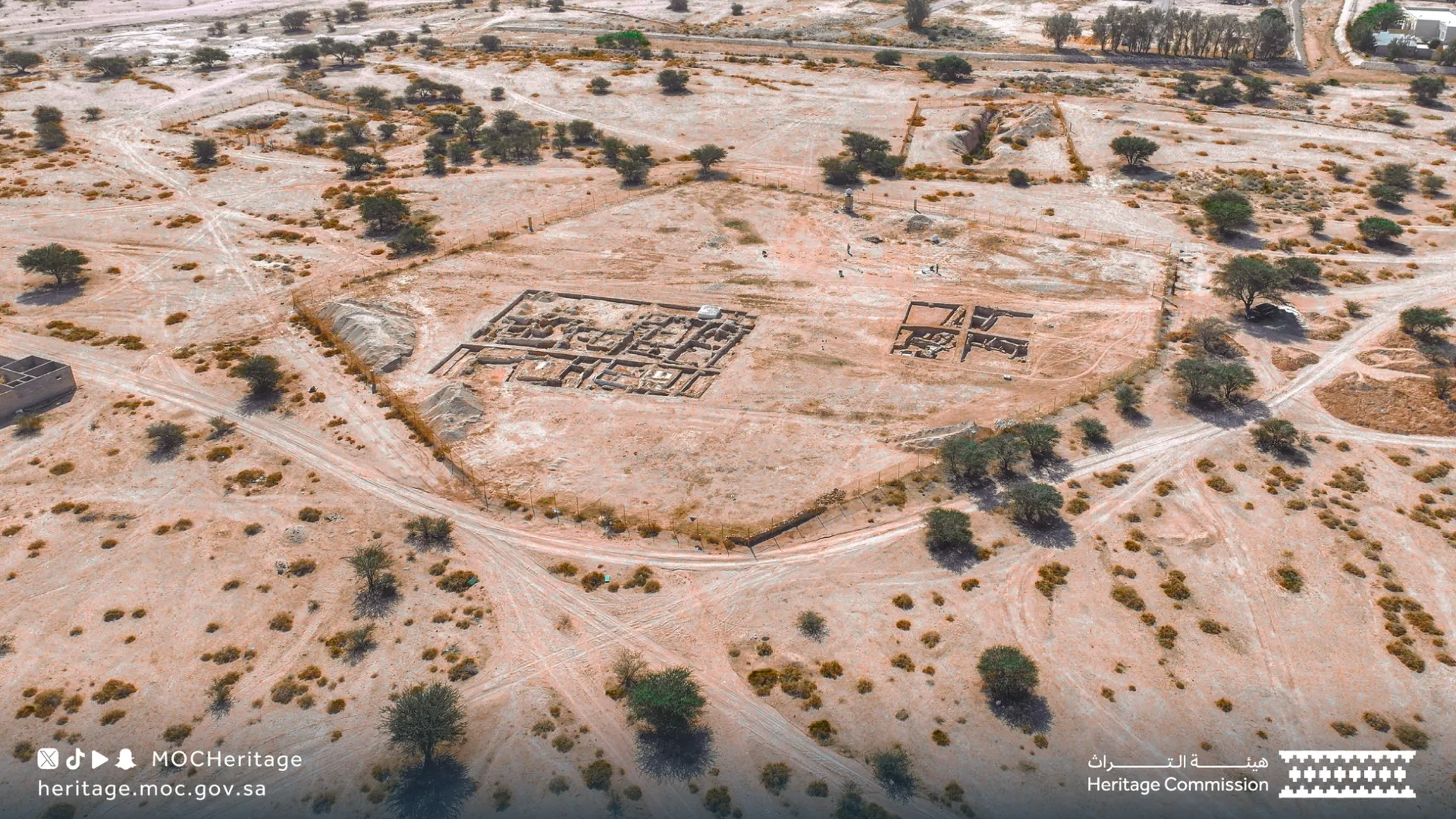
During the recent excavation season, archaeologists discovered gypsum water basins and the walls of several residential buildings. Inside the structures, they found fragments of pottery and glass — but the buried ceramic jar containing over 100 pieces of jewelry was a surprise.
"One of the most important discoveries of this sixth season was the uncovering of the 'Dhariyah Treasure,' which consists of a collection of gold pieces, gemstones and oxidized copper fragments," a laboratory expert with the Saudi Heritage Commission said in a translated video.
An aerial photograph of the archaeological excavations at Dhariyah.
The treasure hoard was likely buried during the early years of the Abbasid caliphate, which came to power in 750 and was destroyed by the Mongols in 1258. Named after one of Muhammad's uncles, the Abbasid caliphs helped usher in the Islamic Golden Age in which cultural and scientific activity flourished. Geographically, the Abbasid Empire stretched from North Africa to Iran but was concentrated primarily in the Arabian Peninsula and present-day Iraq, with its capital at Baghdad.
According to Islamic tradition, every adult who can afford it and is physically able to make it is supposed to make a pilgrimage — called the Hajj — to the holiest Islamic city, Mecca, at least once. During the Abbasid period, Dhariyah was an important stop on the pilgrimage route between Basra, a port city in southern Iraq near the Arabian Gulf, and Mecca on the west coast of Saudi Arabia.
Experts do not yet know why the jewelry decorated with floral patterns and geometric motifs was buried at Dhariyah or whether it belonged to a pilgrim. But it is clear that skilled metalworkers crafted the pieces, Gulf News reported, by shaping sheets of gold, embossing them, and inlaying semiprecious gems.
Additional archaeological excavation at Dhariyah is planned for the future.
Editor's note: This story was updated at 9:55 a.m. ET on June 1 to note that the discovery was made at the Dhariyah archaeological site in the Al-Qassim region rather than Diriyah located on the outskirts of Riyadh, as previously stated.
Kristina Killgrove is a staff writer at Live Science with a focus on archaeology and paleoanthropology news. Her articles have also appeared in venues such as Forbes, Smithsonian, and Mental Floss. Kristina holds a Ph.D. in biological anthropology and an M.A. in classical archaeology from the University of North Carolina, as well as a B.A. in Latin from the University of Virginia, and she was formerly a university professor and researcher. She has received awards from the Society for American Archaeology and the American Anthropological Association for her science writing.
You must confirm your public display name before commenting
Please logout and then login again, you will then be prompted to enter your display name.