













Centuries-old Christian Nubian murals inspire gorgeous fashion reconstructions
Stunning clothes from medieval Christian Nubia have been re-created and put on models, whose performance brought onlookers to tears.

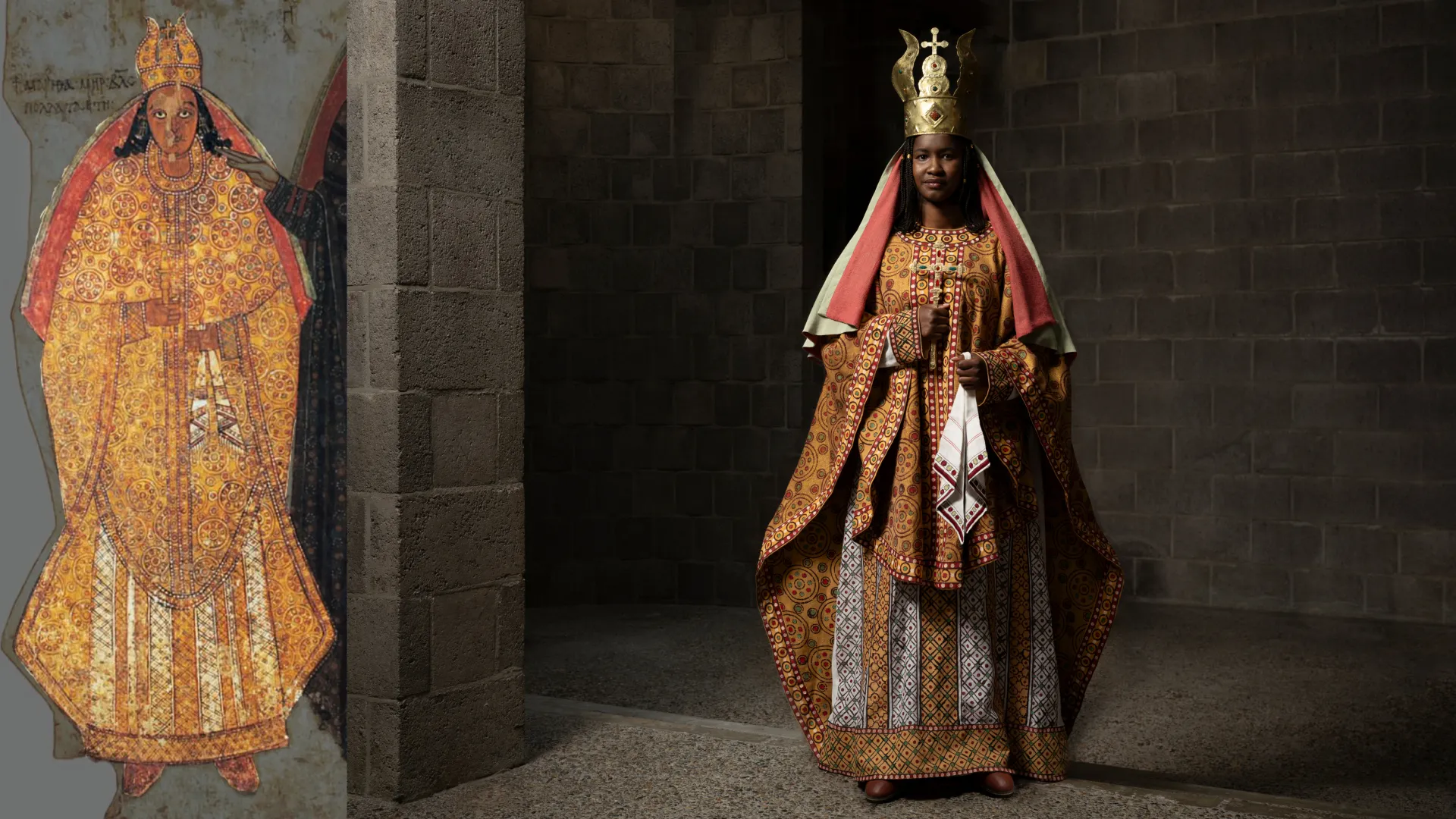
Lavish clothes worn by royalty and clergy in medieval Christian Nubia have been re-created based on 1,200-year-old murals of these elite people painted in a cathedral.
These costumes were made using only fabrics and dyes that were available in medieval, northeastern Africa; Nubia was located in what are now parts of Egypt and Sudan. The clothing then donned by models and presented in performances that brought onlookers to tears.
The live portrayals of these elite individuals — two kings, two royal mothers and one bishop — are a "powerful means of communication," Karel Innemée, an archaeologist at the University of Warsaw who co-authored a study about the re-created Nubian costumes, told Live Science in an email. The work was published March 30 in the journal Antiquity.
He recalled how, at a photo shoot at a church in The Hague, Netherlands, Sudanese models "assumed an aristocratic demeanour when they put on the costumes, while we, the audience, were literally moved to tears when we saw them. The reactions of the audiences of the shows in Paris, Berlin, and London only confirmed this result."
Christian cathedral
Researchers learned about the Nubian murals decades ago and by happy accident. In 1960, when construction of the Aswan High Dam started in Egypt, UNESCO launched an international campaign to find and rescue archaeological works that would soon be under the waters of the new artificial Lake Nasser.
During this campaign, Polish archaeologists went to Faras, an archaeological site that was once a capital of the northern Nubian kingdom Nobadia, expecting to find a temple there. Instead, "they discovered a Christian cathedral, in good state of preservation and decorated with more than 150 mural paintings, covering a period of the 8th to the 14th centuries," Innemée said.
Most of these paintings were then removed from the cathedral and sent to national museums in Sudan and Warsaw.
Get the world’s most fascinating discoveries delivered straight to your inbox.
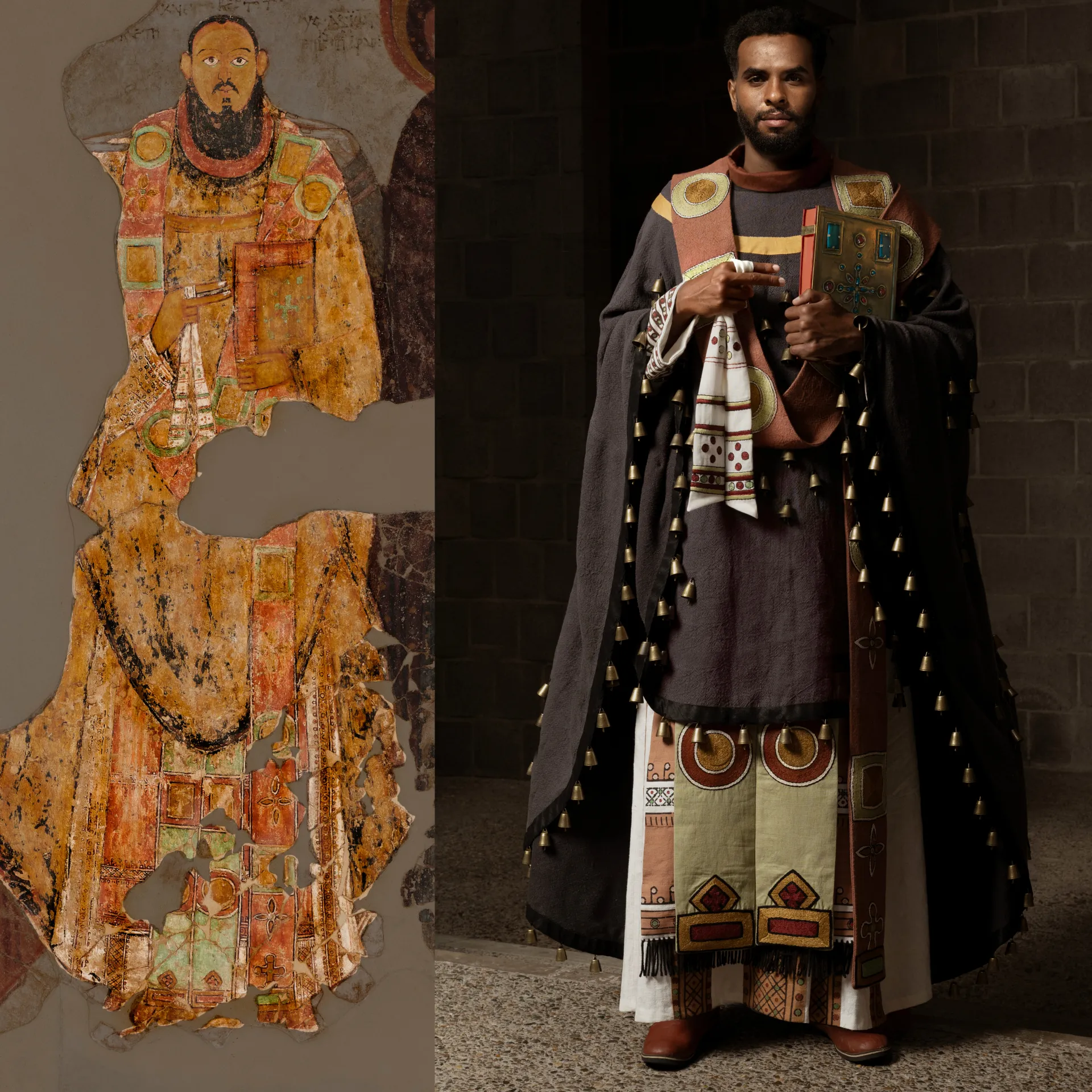
An 11th-century mural of Bishop Marianos from Faras Cathedral next to the reconstructed costume on a model. Notice the bells that were attached to his clothes to announce his presence.
Discovering a cathedral at Faras wasn't completely unexpected. Nubia became Christian in the mid-sixth century. While the details of the transition remain debated, it appears that the Christian Byzantine imperial court made an alliance with Nubian rulers, who converted and took on roles as religious leaders as they "gained a powerful northern ally," the researchers wrote in the study.
The iconographic murals in the cathedral were likely created to cement the authority of the church and state, which were "considered to have originated from God and that kings and bishops held their offices on his behalf," Innemée said.
The murals of the clergy and royalty showcased their closeness with religious figures. "Several of them were represented with Christ and/or the Virgin Mary standing behind or next to them with hands on their shoulders in a gesture of presentation or protection," he added.
In Nubia, the line of succession was matrilineal, meaning that the king's sister would birth the male heir to the throne.
The murals also highlight the role of the "royal mother." In Nubia, the line of succession was matrilineal, "in the sense that not the son of the ruling king would be his successor, but the son of his sister," Innemée said. However, the Nubians adopted a patrilinear system, likely from the Byzantines, for four centuries, before reestablishing the matrilineal one in the 12th century.
The murals likely helped to promote the royal mothers. "In their portraits these royal mothers were depicted as the earthly counterpart of the Virgin Mary, mother of the heavenly king," Innemée said.
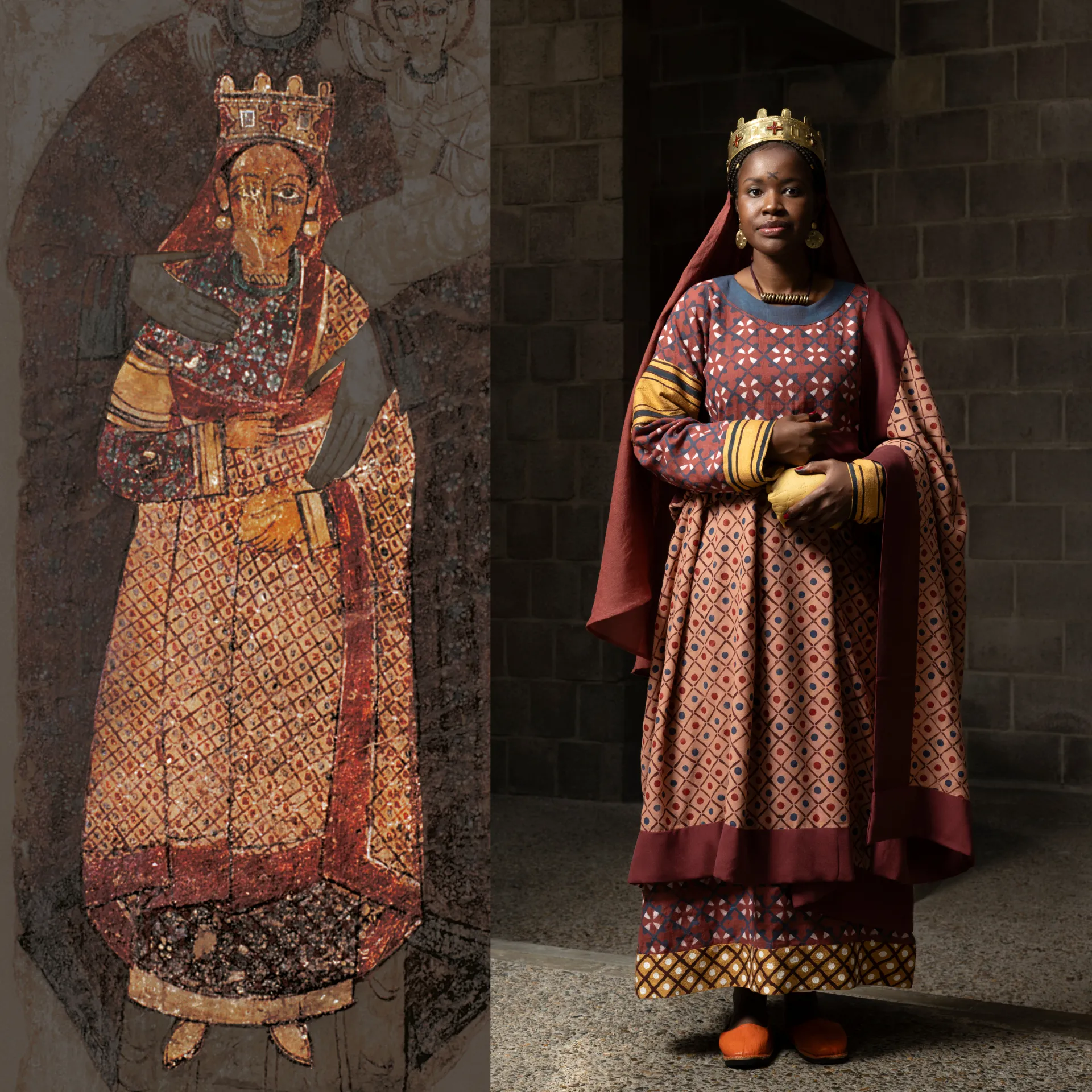
A 12th- to 13th-century painting from Faras Cathedral of an anonymous royal mother next to a model dressed just like her.
From static murals to wearable garments
The murals at Faras Cathedral were painted over the centuries, unlike other Byzantine churches whose art was painted all at once, Innemée said. This passage of time showed trends.
"Initially, the costumes depicted were virtually exact replicas of Byzantine clothing," he noted. "Over time, certain changes took place in the episcopal vestments familiar to us from Byzantine depictions, and these developments are reflected in Nubian iconography, where they were immediately adopted."
Around A.D. 1000, Indigenous elements, such as people carrying bows, show up in the artwork alongside contemporary garments, such as sashes and trousers, from the Islamic world. At that time, though, the Nubian Church remained under the authority of the Coptic Patriarchate of Alexandria, the church that oversaw the region.
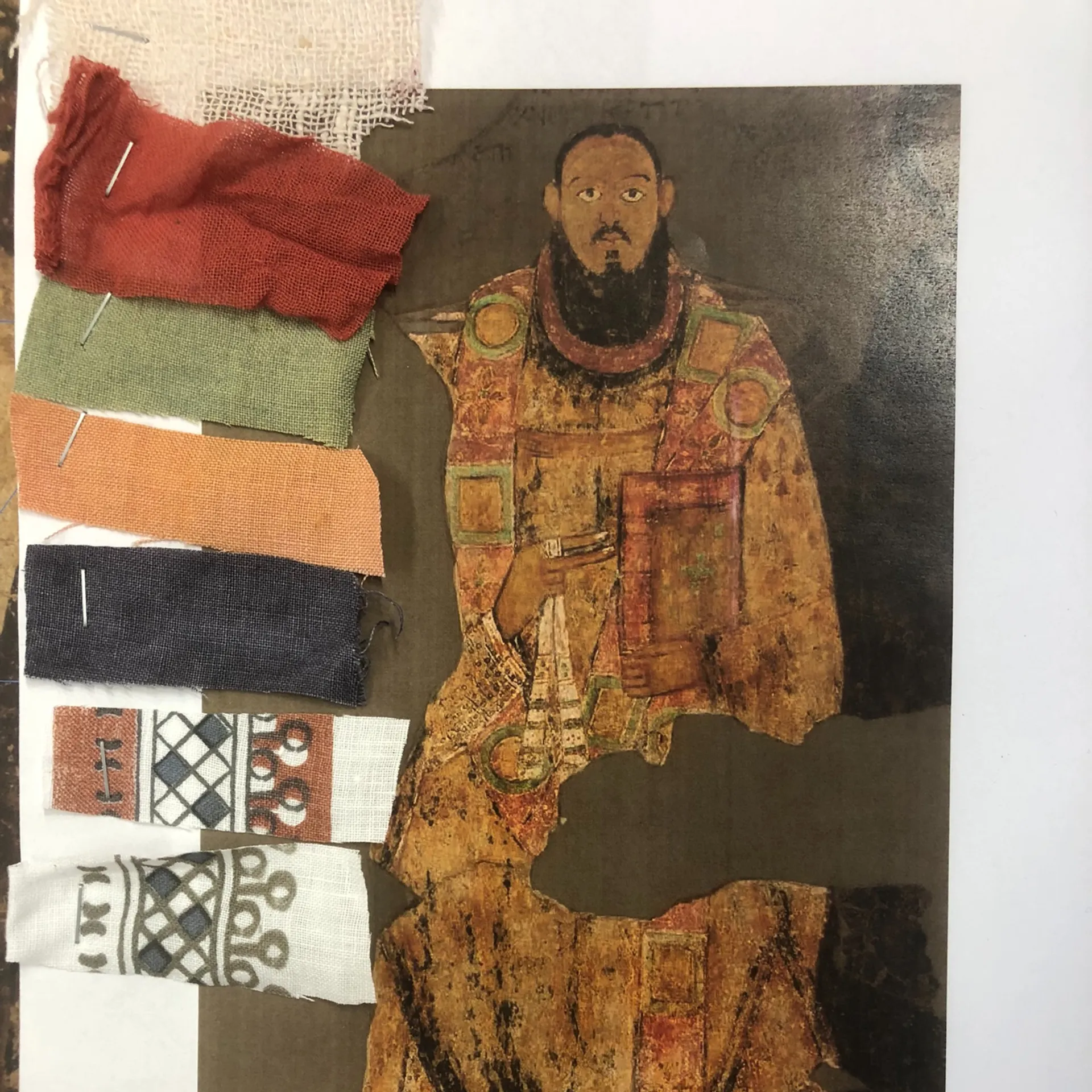
Different fabric samples used to make the re-created costumes for the University of Warsaw's Costumes of Authority project.
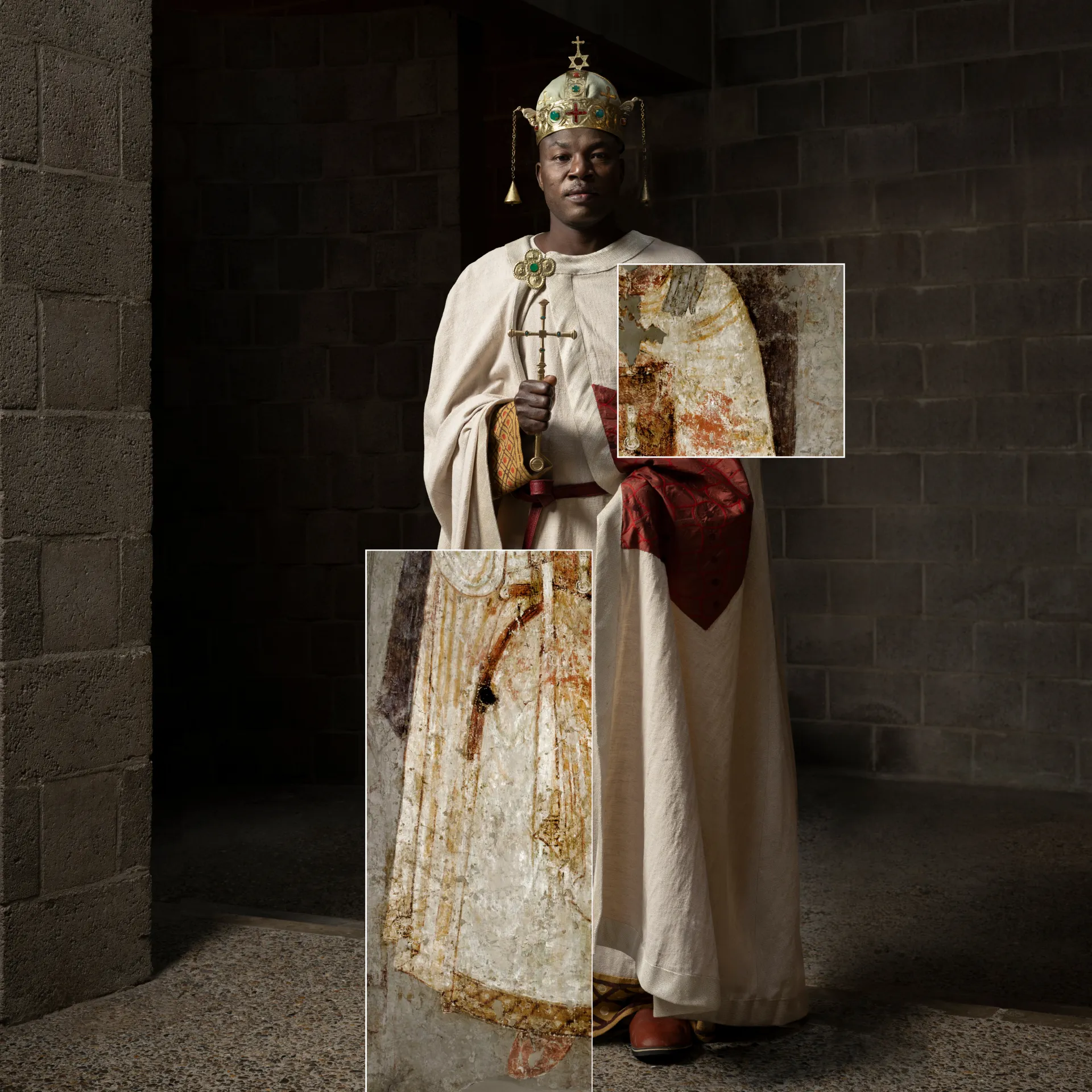
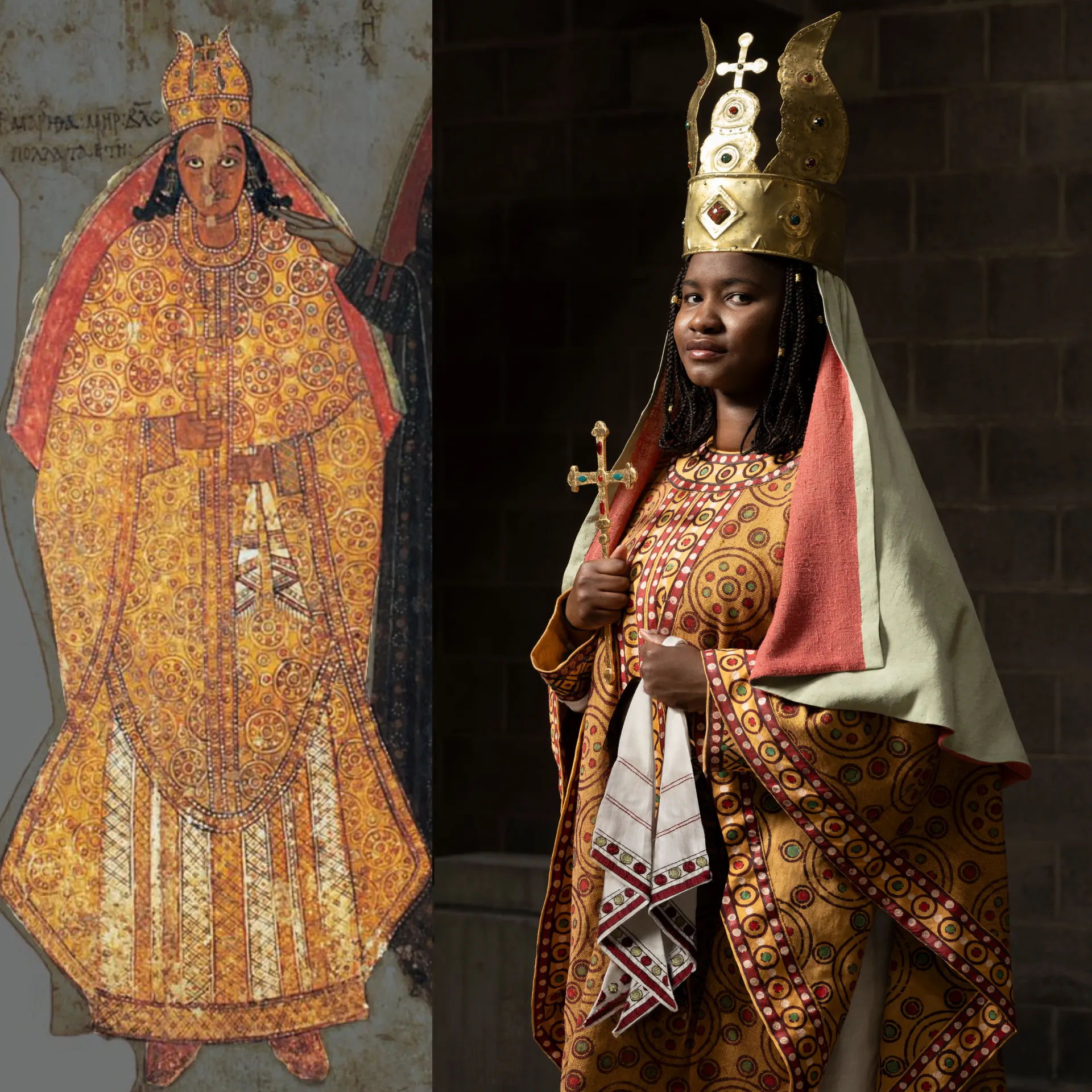
A composite image showing the mural and the reconstructed outfit of an anonymous king. "In medieval Christian Nubia, the Church and state were inextricably linked," the authors wrote in the study, which explains the many crosses in this image.
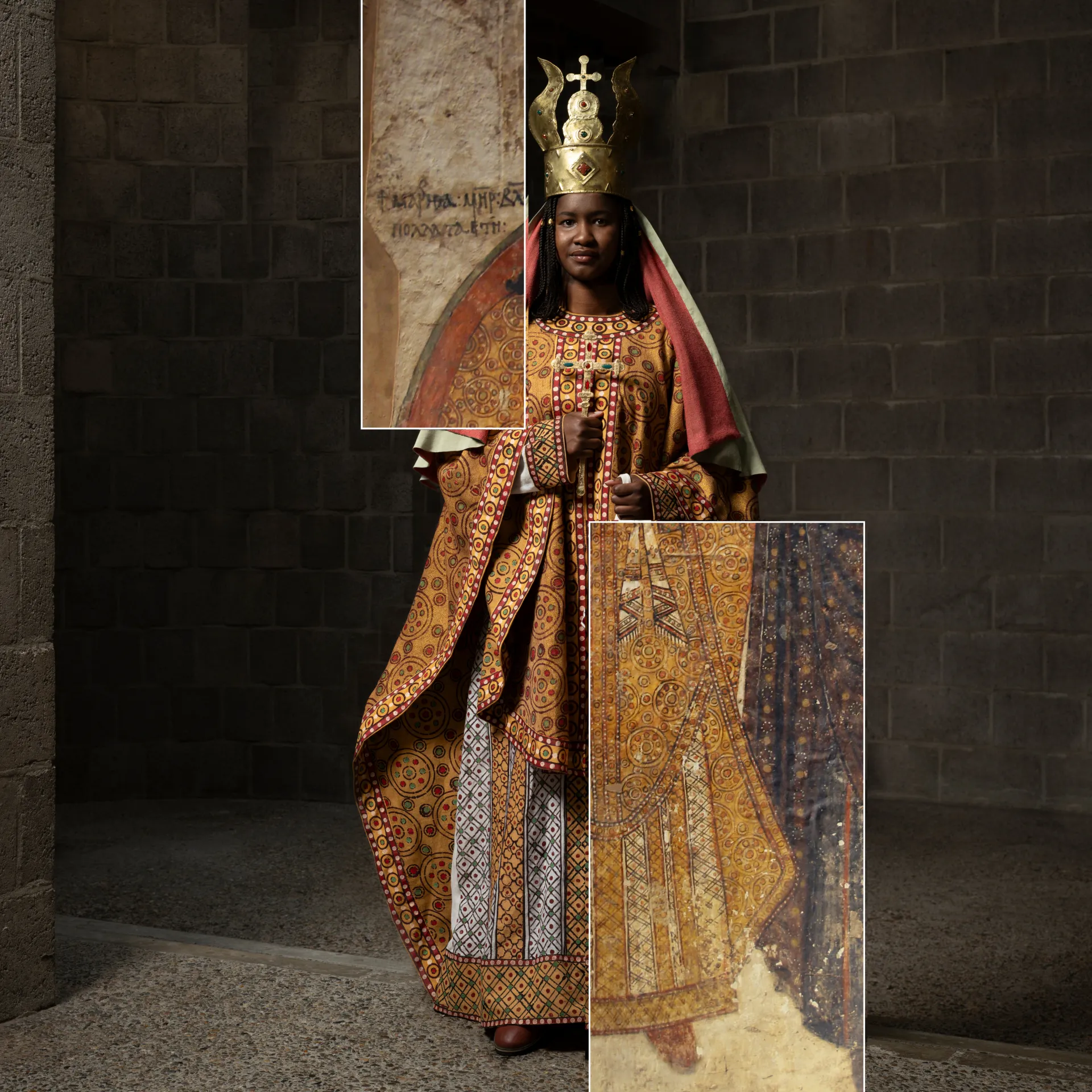
A composite image showing the mural and the reconstructed outfit of the Royal Mother Martha. Her image "visually parallels divine motherhood with royal motherhood, emphasising the profound connection between royal and divine authority," the authors wrote in the study.
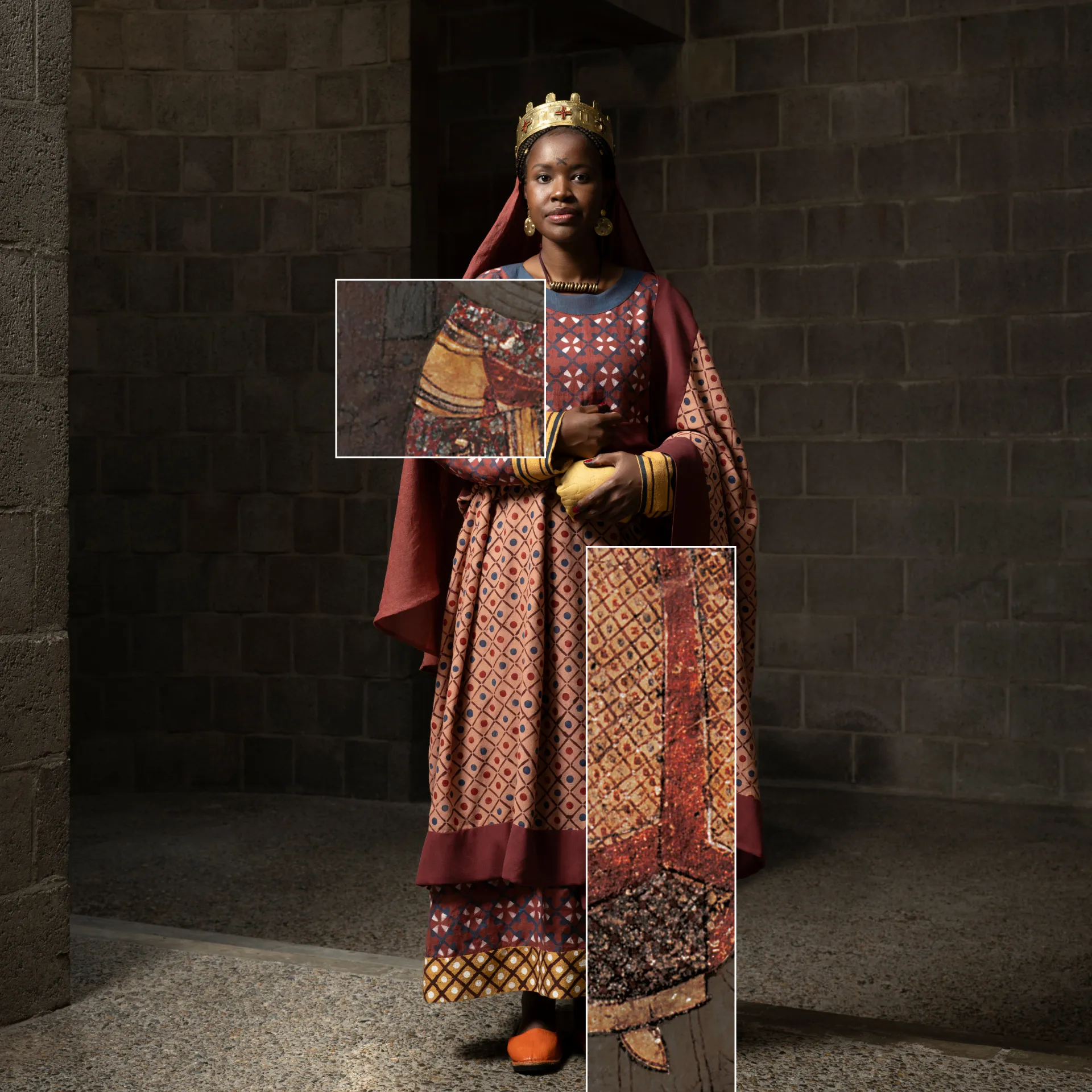
A composite image showing the mural and the reconstructed outfit.
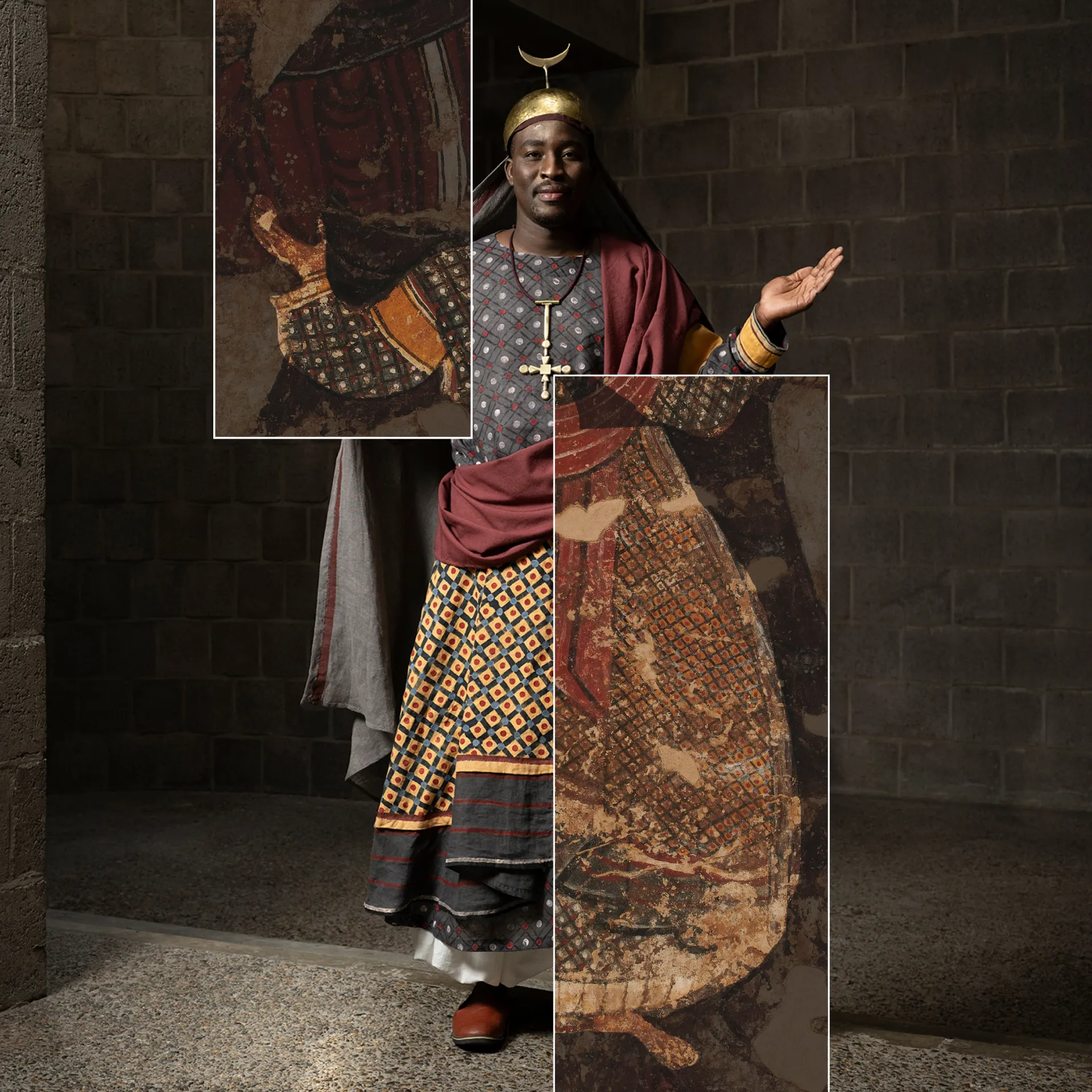
A composite image showing the mural and the reconstructed outfit of an anonymous king. This image and others shows the relationship of the church and state in the Makurian kingdom (ninth to 14th centuries).
View Original
View Original
View Original
View Original
View Original
"This seems to indicate a growing cultural self-confidence and a shift away from Byzantium as a role model," Innemée said.
The murals are a "form of non-verbal communication," but they're stuck in 2D; "we wanted to see what effect the costumes would have on the wearers' movements and postures and what the visual and acoustic effect would be on the (unprepared) beholders," Innemée said.
However, making the costumes was challenging. It was unclear which fabrics had been used in the original outfits. The team agreed they would use only the dyes used in textiles from that time and region that were known from texts and archaeological discoveries.
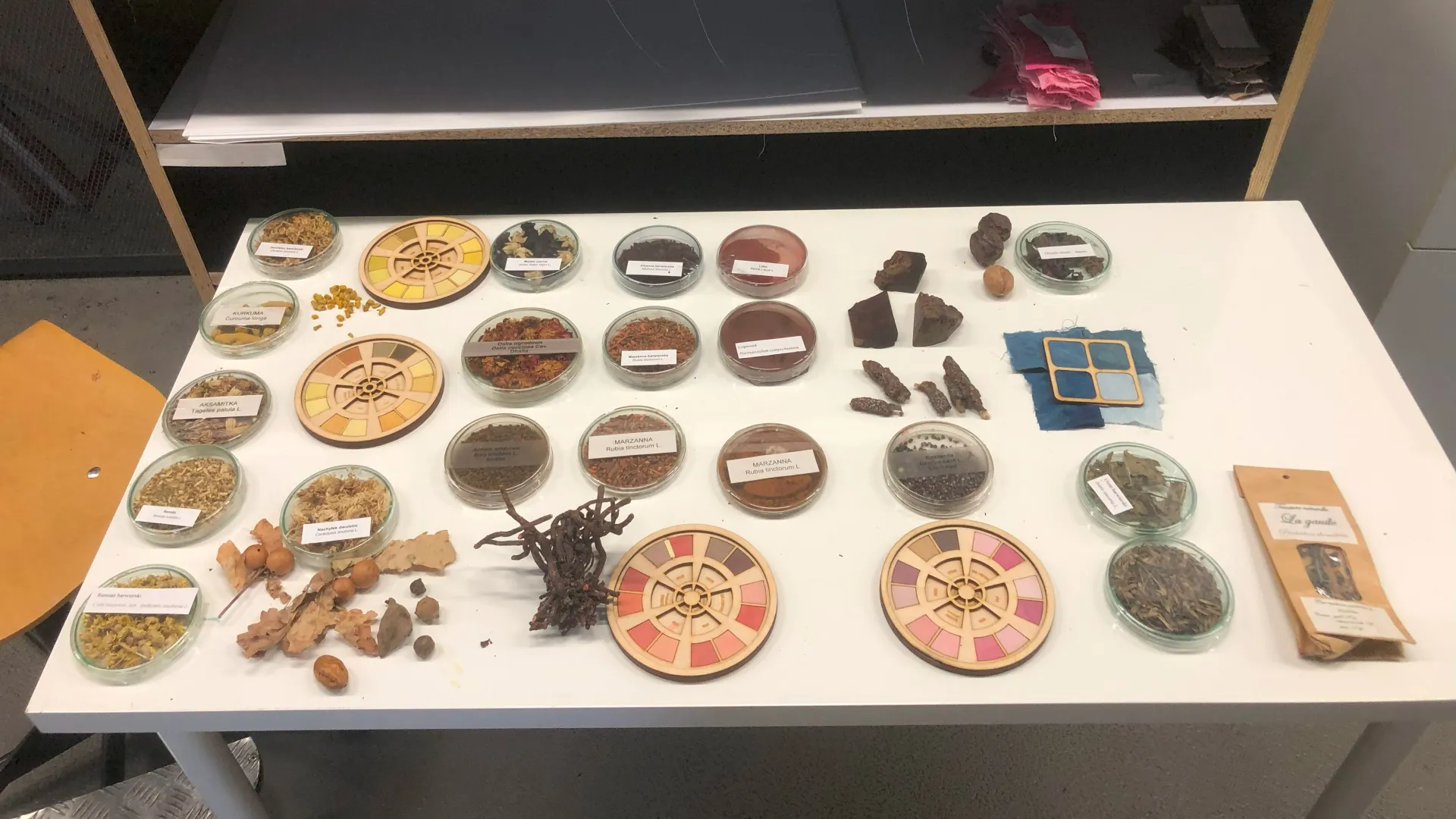
A sample of the fabrics, such as contemporary linen, silk and wool dyed using natural plants and mordants, which are substances used to fix colors.
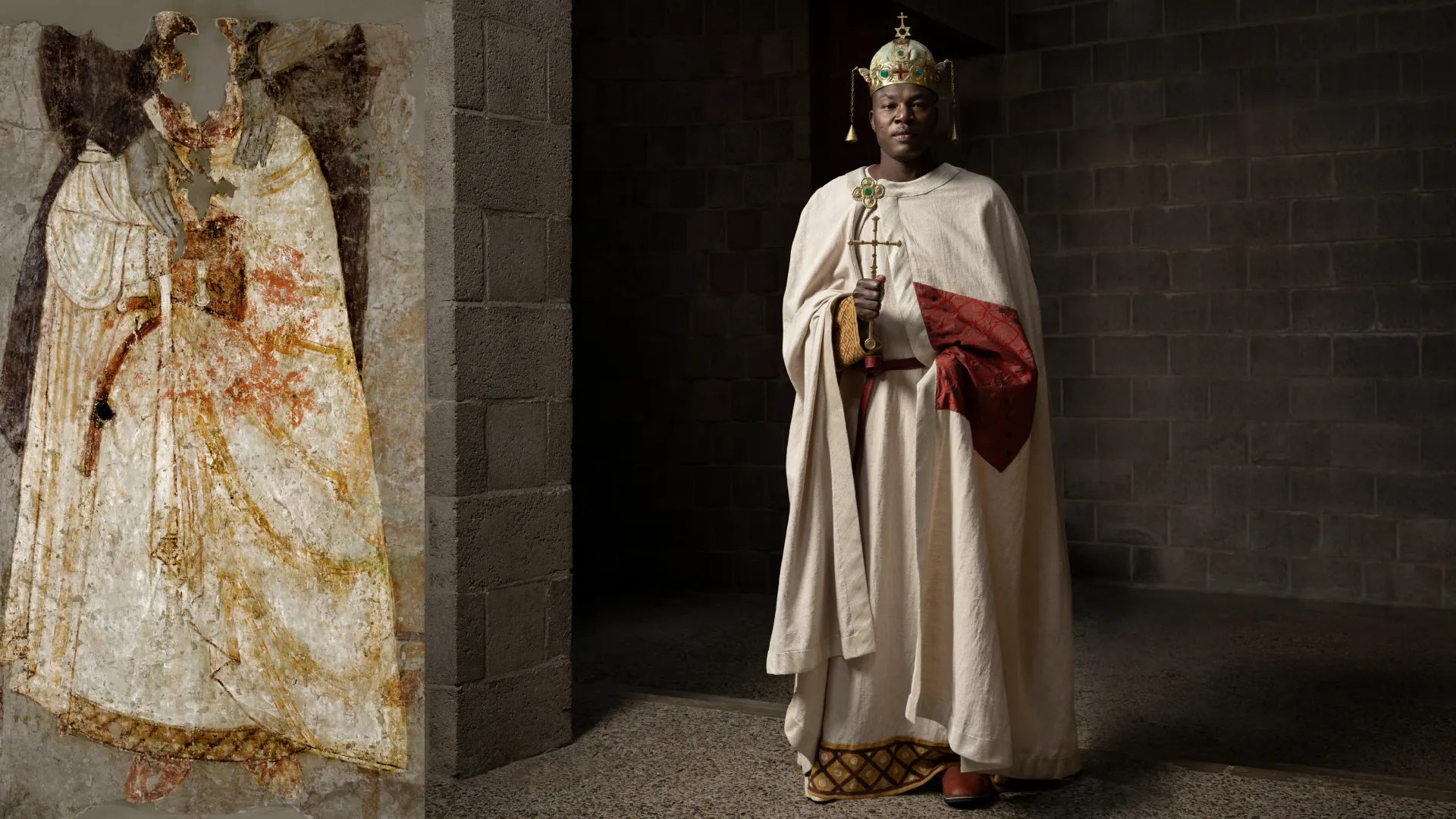
A 10th-century painting of an anonymous king from Fara Cathedral next to the re-created outfit.
View Original
View Original
"With these (plant based) dyes countless experiments were made on various fabrics: cotton, linen, silk, and wool," Innemée said. They also paid attention to decorations in block print, embroidery and appliqué.
"From hundreds of samples a choice was made on the basis of comparison with the paintings in the National Museum in Warsaw," he said.
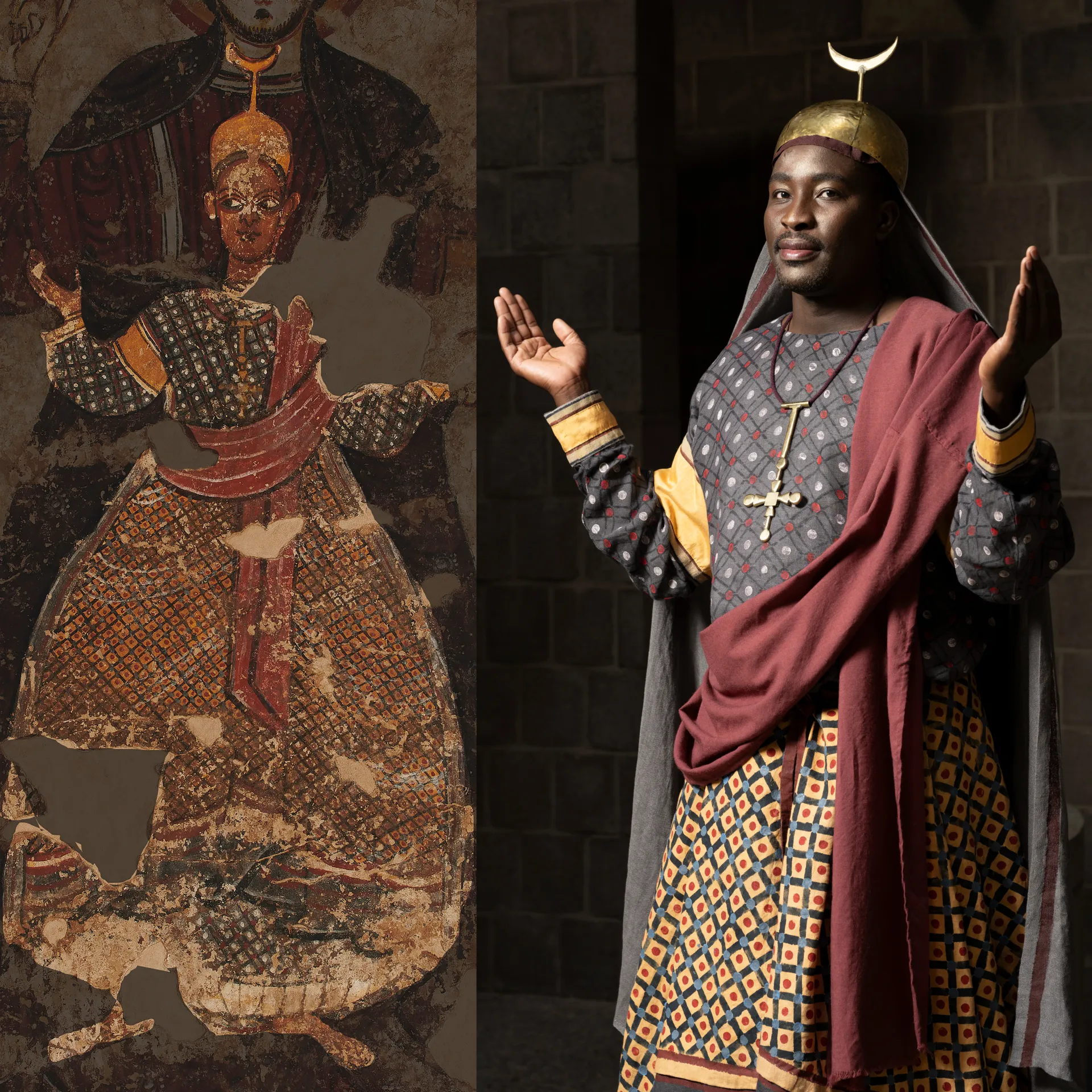
A mural of an anonymous king from the 12th to 13th centuries next to a model wearing a reconstructed costume.
Related stories
Dorothée Roqueplo, a professional film and theatrical costume designer, worked with the researchers to pick the best-matched fabrics by examining their textures and how they were draped in the paintings.
The project is not only useful for scholars, Innemée said; it shows "a wider audience how in medieval Nubia costumes illustrate how elements of various cultures and periods were merged."
Innemée, K. C., Jacobson-Cielecka, A., Wozniak, M., & Zielińska, D. (2026). Costumes of prestige and authority in Christian Nubia: insights from archaeological reconstruction. Antiquity, 1–7. https://doi.org/10.15184/aqy.2026.10324
See if you know what these mysterious artifacts are with our archaeological fragments quiz!

Laura is the managing editor at Live Science. She also runs the archaeology section and the Life's Little Mysteries series. Her work has appeared in The New York Times, Scholastic, Popular Science and Spectrum, a site on autism research. She has won multiple awards from the Society of Professional Journalists and the Washington Newspaper Publishers Association for her reporting at a weekly newspaper near Seattle. Laura holds a bachelor's degree in English literature and psychology from Washington University in St. Louis and a master's degree in science writing from NYU.
You must confirm your public display name before commenting
Please logout and then login again, you will then be prompted to enter your display name.