













'Tetris' Game Quells Bad Flashbacks

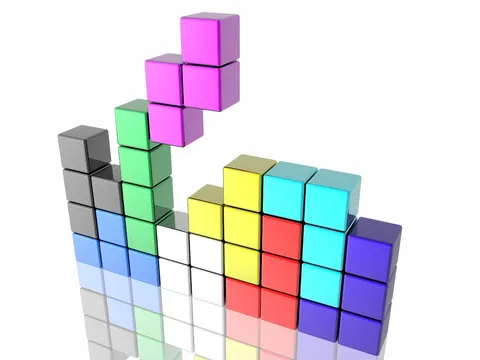
Tetris, one of the most popular video games ever, could help reduce flashbacks among people with post-traumatic stress disorder. A study of healthy volunteers who played the falling-blocks game for 10 minutes a half hour after viewing traumatic images of injury, including advertisements highlighting the dangers of drunk driving, showed that 20 game-playing subjects had significantly fewer flashbacks to those scenes in the following week than the 20 subjects who saw the images but didn't play the game. The game may disrupt the memories that are retained of the sights and sounds witnessed at the time, and which are later re-experienced through involuntary, distressing flashbacks of that moment, the Oxford University researchers say. No conclusions can be drawn more generally for computer gaming and its effects, they said. But other research has shown other benefits of playing video games: Playing action video games can improve your eyesight. Also, some teachers are using the video game "World of Warcraft" to help challenging students improve their communication skills. The finding could help clinicians find ways to intervene right after trauma to prevent or lessen the flashbacks that are the hallmark of PTSD. Currently, treatments are only provided once PTSD has become established. The study results are detailed in the online, peer-reviewed journal PLoS ONE. "This is only a first step in showing that this might be a viable approach to preventing PTSD," said Dr. Emily Holmes of the Department of Psychiatry at Oxford University, who led the work. "This was a pure science experiment about how the mind works from which we can try to understand the bigger picture. There is a lot to be done to translate this experimental science result into a potential treatment." How memories are retained The Tetris approach relies on three elements, Holmes said. First, the mind is considered to have two separate channels of thought: one is sensory and deals with our direct perceptual experience of the world; the other is conceptual and draws meaning and narrative from our experiences to give them context. For example, we would use one channel to see and hear someone talk and the other to comprehend the meaning of what they were saying. Second, there appear to be limits to our abilities in each stream: it is difficult to hold a conversation while doing math problems, for example. And third, there is a short time after an event in which it is possible to interfere with the way our memories are retained in the brain. The Oxford team reasoned that recognizing the shapes and moving the colored building blocks around in Tetris soon after seeing traumatic events should compete with the visions of trauma to be retained in the sensory part of the brain. The narrative and meaning of the events should be unaffected. Six-hour window There is a period of up to six hours in which it is possible to affect certain types of memories that are laid down in the human mind, said Holmes' colleague Dr. Catherine Deeprose. "We have shown that in healthy volunteers, playing Tetris in this time window can reduce flashback-type memories without wiping out the ability to make sense of the event," she said. The goal was to dampen down flashbacks, that is, the raw sensory images of trauma that are over-represented in the memories of those with PTSD, Holmes said. "Tetris may work by competing for the brain's resources for sensory information," she said. "We suggest it specifically interferes with the way sensory memories are laid down in the period after trauma and thus reduces the number of flashbacks that are experienced afterwards." The group hopes to develop this approach further as a potential intervention to reduce the flashbacks experienced in PTSD, but the researchers emphasize that these are only preliminary results.
- Video - Entering the World of Warcraft
- 10 Technologies That Will Transform Your Life
- Great Inventions: Quiz Yourself
Get the world’s most fascinating discoveries delivered straight to your inbox.
