















Strange New Microbe Harvests Sunlight
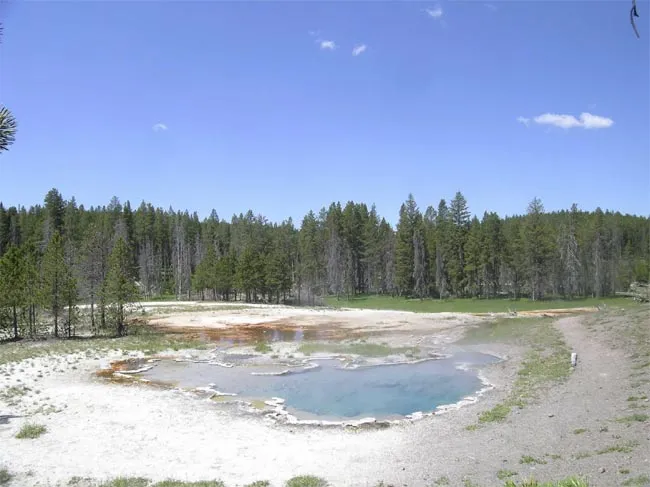
Yellowstone's hot springs are known to harbor extreme creatures that paint the water shades of red, orange and green. Now scientists have discovered a new type of bacteria with light-harvesting antennae.
The oddity among oddities adds to a short list of microbes that can transform light into chemical energy, a process called photosynthesis that's usually attributed to green plants and their chlorophyll.
The finding is detailed in the July 27 issue of the journal Science.
The bacteria, Candidatus Chloracidobacterium (Cab.) thermophilum, belong to the Acidobacteria phylum, which until now was not known to include any chlorophyll-producers. The addition means that six of 25 bacteria phyla now contain light-harvesting members.
"Finding a previously unknown, chlorophyll-producing microbe is the discovery of a lifetime for someone who has studied bacterial photosynthesis for as long as I have (35 years)," said lead study author Don Bryant of Penn State University.
Bryant and his colleagues spotted the bacteria in three hot springs in Yellowstone National Park—Mushroom Spring, Octopus Spring and Green Finger Pool—which are located not far from the Old Faithful Geyser.
Along with fellow light-harvesting microbes called cyanobacteria, the newbies dwell near the surface of bacterial mats, where light and oxygen are plentiful. Temperatures there soar from 122 to 151 degrees Fahrenheit (50 to 66 degrees Celsius).
Get the world’s most fascinating discoveries delivered straight to your inbox.
The scientists sequenced DNA from the cells of the bacteria, focusing on two genes, one a crucial component of the protein-making machinery and the other a gene essential for converting light energy into chemical energy.
The bacteria sport light-harvesting antennae called chlorosomes, which each contain about 250,000 pigments. Until now, the chlorophyll-packed structures haven't been found in any aerobic, or oxygen-tolerant, microbes.
The team found the bacterium makes two types of chlorophyll, explaining how it can thrive alongside other species in microbial mats and compete for light with cyanobacteria.
"The closest relatives of Cab. thermophilum are found around Mammoth Hot Springs in Yellowstone and hot springs in Tibet and Thailand," Bryant said. "As we look more closely, we may find relatives of Cab. thermophilum in the microbial mats of thermal sites worldwide."
- VIDEO: The Sights and Sounds of Yellowstone National Park
- Photosynthesis Found Where the Sun Don't Shine
- Wild Things: The Most Extreme Creatures
Jeanna Bryner is managing editor of Scientific American. Previously she was editor in chief of Live Science and, prior to that, an editor at Scholastic's Science World magazine. Bryner has an English degree from Salisbury University, a master's degree in biogeochemistry and environmental sciences from the University of Maryland and a graduate science journalism degree from New York University. She has worked as a biologist in Florida, where she monitored wetlands and did field surveys for endangered species, including the gorgeous Florida Scrub Jay. She also received an ocean sciences journalism fellowship from the Woods Hole Oceanographic Institution. She is a firm believer that science is for everyone and that just about everything can be viewed through the lens of science.