













Flocking to the Coast: World's Population Migrating into Danger

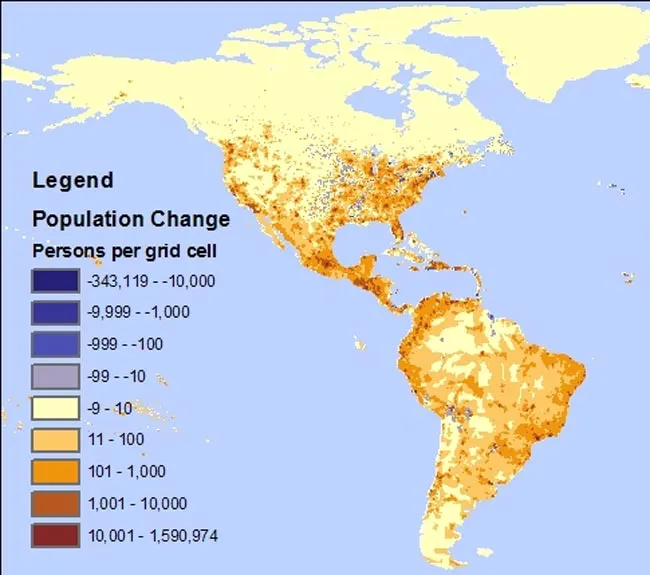
New maps developed by investigating the relationship between human population and natural resources shows where people will most likely settle through 2025.
Population will grow along various coastlines and in already densely populated developing countries.
[Maps: The Americas | Africa, Asia & Europe]
The number of people living within 60 miles of coastlines will increase by about 35 percent compared to 1995, the mapmakers say.
This type of migration will expose 2.75 billion people to coastal threats from global warming such as sea level rise and stronger hurricanes in addition to other natural disasters like tsunamis. A reminder of the risks of seaside living came this week in the form of a tsunami that killed at least 350 people and devastated many on Indonesia's Java Island.
The Earth is home to some 6.5 billion people and is projected to have 9 billion by 2050.
With more than half of Americans currently living on or close to the coast, the new map could become a useful tool for future urban planning and emergency forecasting.
Get the world’s most fascinating discoveries delivered straight to your inbox.
The map was developed by scientists at the Center for Climate Systems Research (CCSR) of the Earth Institute at Columbia University.
"By bridging these two areas of demography—mapping and long-range, aggregate projections—we're getting a better idea of where people are likely to live in the future and why," said Stuart Gaffin, associate research scientist at CCSR and lead scientist on the project. "Hopefully, work like ours will play a central role in improving environmental policies around the world and in reducing natural hazard risks faced by the most vulnerable parts of society."
Gaffin and colleagues predict that by 2025, fewer people will live in southern Eastern Europe and Japan and other regions whose inhabitants will head for places that provide them with better resources.
Other areas expected to show declines: sub-Saharan Africa, Central and South America, the Philippines, Nepal, Turkey, Cambodia, Myanmar (Burma), and Indonesia.
- Natural Disasters: Top 10 US Threats
- Global Disaster Hotspots: Who Gets Pummeled
- Disaster Worries Grow as More Americans Live Near Coasts
- Global Warming or Just Hot Air? A Dozen Different Views
- Group Warns on Consumption of Earth's Resources
- Cities Cover More of Earth than Realized
