













Poisonous 'Golden Frog' Discovered

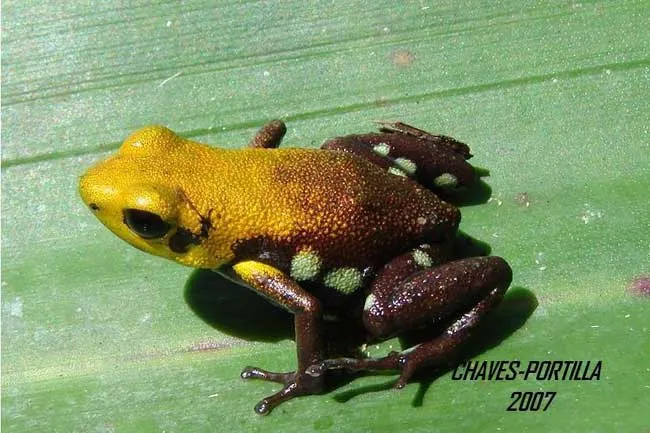
A new poisonous frog has been discovered by scientists in a remote mountainous region of Colombia.
The new frog, which measures almost 0.8 inches (2 centimeters) in length and has yellowish skin, was named the "golden frog of Supatá."
The scientists who discovered the tiny frog saw that it was similar to several other common species in the area. However, further review by experts at Conservation International, a nonprofit group aimed at protecting Earth's biodiversity, showed that the golden frog of Supatá is unique and found only within a 20-hectare area in Colombia's Cundinamarca region.
Colombia is one of the world's richest countries in terms of amphibian diversity, with more than 583 species.
Because the frog is only found in such a small area, very little is known about it. So far, scientists say it belongs to a group called poison dart frogs, known for toxins sequestered in their skin.
Study leader Oswaldo Cortes, a graduate student at La Universidad Distrital in Colombia, says the discovery highlights how little is known about the biodiversity of Earth and how many species are left undiscovered.
Many frog species in Central and South America have likely died out before they could even be discovered, as a result of the chytrid fungus that has been decimating amphibian populations all over the world.
Get the world’s most fascinating discoveries delivered straight to your inbox.
The finding was made as part of a survey supported by the Conservation Leadership Programme, a joint effort by BP, Birdlife International, Fauna & Flora International, Conservation International and the Wildlife Conservation Society.
- Amazing Animal Abilities
- Snakes, Frogs and Lizards: The Best of Your Images
- Images: New Amphibian Tree of Life
