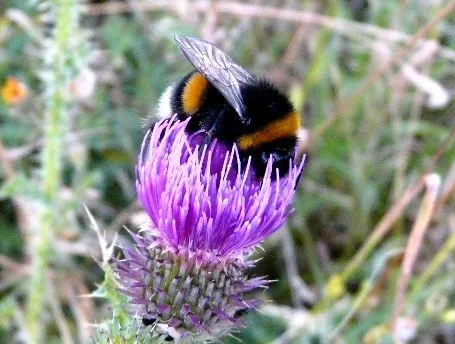
Bumblebee Training Reveals Males to Be Surprisingly Smart
Get the world’s most fascinating discoveries delivered straight to your inbox.
You are now subscribed
Your newsletter sign-up was successful
Want to add more newsletters?
Delivered Daily
Daily Newsletter
Sign up for the latest discoveries, groundbreaking research and fascinating breakthroughs that impact you and the wider world direct to your inbox.
Once a week
Life's Little Mysteries
Feed your curiosity with an exclusive mystery every week, solved with science and delivered direct to your inbox before it's seen anywhere else.
Once a week
How It Works
Sign up to our free science & technology newsletter for your weekly fix of fascinating articles, quick quizzes, amazing images, and more
Delivered daily
Space.com Newsletter
Breaking space news, the latest updates on rocket launches, skywatching events and more!
Once a month
Watch This Space
Sign up to our monthly entertainment newsletter to keep up with all our coverage of the latest sci-fi and space movies, tv shows, games and books.
Once a week
Night Sky This Week
Discover this week's must-see night sky events, moon phases, and stunning astrophotos. Sign up for our skywatching newsletter and explore the universe with us!
Join the club
Get full access to premium articles, exclusive features and a growing list of member rewards.
Male bumblebees are thought to be dim-witted — a bit bumbling, you might say — compared to females. See, female bumblebees do all the work, from fetching the nectar to feeding the kids to cleaning the hive. Males are thought to be good for pretty much one thing: helping to make baby bees. They're otherwise not known to have much aptitude.
But when scientists trained bumblebees to recognize fake flowers containing food versus fake flowers with no food, the males did as well as the females.
Wait. They trained bumblebees? Yep. And it isn't the first time — past research showed bees could learn to associate two things they'd never spotted before. For the new study, researchers used different colored flowers to signal food or no food. As the bees got used to a color, the scientists would swap things around so the bees had to figure out, again, which color signaled a meal. The females, as expected, figured it out just fine. A bee expert would expect the females to be good at this; they're used to recognizing flowers by color in the wild. But the males passed the tests, too. [See Amazing Images of Bumblebees]
"Despite fundamental differences in the daily habits between male and female bees, this work illustrates that male bees can be clever shoppers in the flower supermarket even when their main interest is in mating," said Stephan Wolf, a scientist at Queen Mary University of London and lead author of the study, which is detailed today (Nov. 13) in the journal Animal Behaviour.
Follow Live Science @livescience, Facebook & Google+.
Get the world’s most fascinating discoveries delivered straight to your inbox.
Robert is an independent health and science journalist and writer based in Phoenix, Arizona. He is a former editor-in-chief of Live Science with over 20 years of experience as a reporter and editor. He has worked on websites such as Space.com and Tom's Guide, and is a contributor on Medium, covering how we age and how to optimize the mind and body through time. He has a journalism degree from Humboldt State University in California.