













Clues to Alzheimer's Risk Seen in Babies' Brains

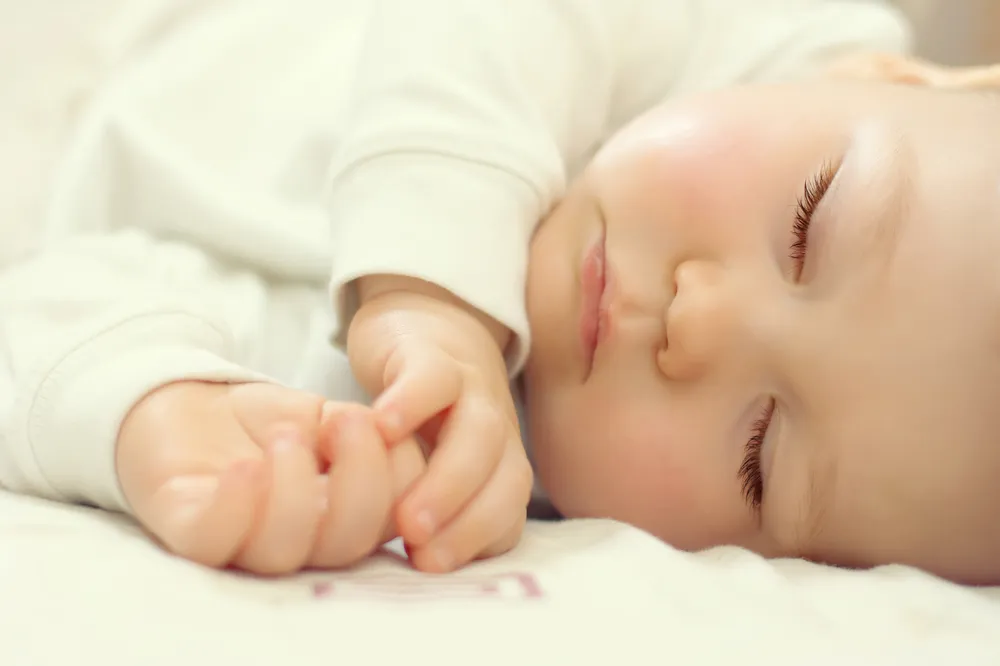
People who are genetically predisposed to Alzheimer's disease may have differences in their brains that can be detected as early as infancy, a new study suggests.
Researchers scanned the brains of 162 healthy babies, including 60 who had inherited a gene called APOE-e4, which increases the risk of developing Alzheimer's after age 65.
Compared to babies without the APOE-e4 gene, babies with APOE-e4 had less brain growth in several areas in the middle and back of the brain, the same regions that tend to be affected in older people with Alzheimer's. Babies with APOE-e4 also tended to have more brain growth in areas in the front part of the brain. [6 Foods That Are Good for Your Brain]
The researchers stress the findings are preliminary, and the brain changes detected in babies with APOE-e4 are not necessarily the first "signs" of Alzheimer's. In addition, the brain differences seen in the study do not mean these babies are destined to develop Alzheimer's, the researchers said.
But the study does show some of the earliest brain changes linked with the APOE-e4 gene, the researchers said. The work also raises questions about the role of this gene in brain development, how the brain changes might relate to later Alzheimer's development, and whether early therapies that target these changes might prevent the disease.
"These results do not establish a direct link to the changes seen in Alzheimer's patients," study researcher Sean Deoni, who oversees the Advanced Baby Imaging Lab at Brown University, said in a statement. "But with more research, they may tell us something about how the gene contributes to Alzheimer's risk later in life," Deoni said.
About 25 percent of the U.S. population has the APOE-e4 gene, but not everyone with the gene will go on to develop Alzheimer's. The more copies of the APOE-e4 gene a person has, the greater their Alzheimer's risk. Among people with Alzheimer's, 60 percent have at least one copy of APOE-e4.
Get the world’s most fascinating discoveries delivered straight to your inbox.
It's not clear how APOE-e4 increases Alzheimer's risk, but it's likely that other factors, including other genes and exposures in the environment, work together to produce the brain changes that lead to Alzheimer's.
There is currently no evidence that children with APOE-e4 experience cognitive problems, the researchers said.
The study involved infants ages 2 months to 2 years, who did not have a family history of Alzheimer's disease (AD) or psychiatric disorders. The babies had their brains scanned in a special magnetic resonance imaging (MRI) machine that is quiet enough to use on babies while they are sleeping.
The parents were not told whether their child carries the APOE-e4 gene.
The results "raise intriguing questions" about when the brain alternations linked with Alzheimer's might start, Dr. John Growdon and Dr. Bradley Hyman, of Massachusetts General Hospital in Boston, wrote in an editorial accompanying the study.
Still, the nature of the study, including the types of measurements made (which are extremely difficult to carry out from a technical perspective), and the way the measurements were analyzed, means the findings are more "hypothesis-generating" rather than confirmed observations, Growdon and Hyman said.
The percentage of babes in the study with the APOE-e4 gene was also greater than would be expected in the general population, Growdon and Hyman noted.
The study and editorial are published today (Nov. 25) in the journal JAMA Neurology.
Follow Rachael Rettner @RachaelRettner. Follow LiveScience@livescience, Facebook & Google+. Original article on LiveScience.

Rachael is a Live Science contributor, and was a former channel editor and senior writer for Live Science between 2010 and 2022. She has a master's degree in journalism from New York University's Science, Health and Environmental Reporting Program. She also holds a B.S. in molecular biology and an M.S. in biology from the University of California, San Diego. Her work has appeared in Scienceline, The Washington Post and Scientific American.