













Fallout from Strike on Syrian Reactor 'Could be Catastrophic'

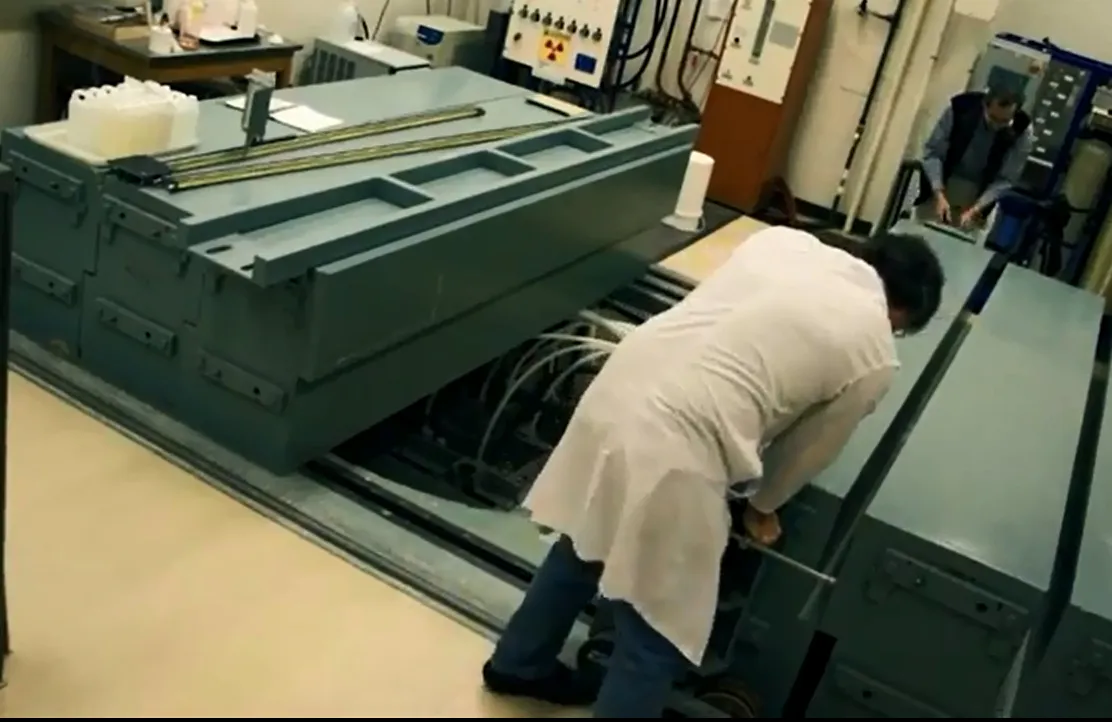
In the event of a military strike against Syria, there's a chance that a missile could hit a Miniature Neutron Source Reactor (MNSR) outside the capital city of Damascus, Russia has warned.
"If a warhead, by design or by chance, were to hit the Miniature Neutron Source Reactor near Damascus, the consequences could be catastrophic," according to a statement from the Russian Foreign Ministry, as quoted by Reuters.
The MNSR in Syria is a Chinese-designed nuclear reactor that's modeled on a small Canadian reactor built in the early 1970s. These fission reactors were designed as research tools for neutron activation analysis (which identifies the elemental composition of materials), medical isotope production, neutron radiography (a nuclear imaging technique) and scientific training — they're not powerful enough to provide regional electrical power or other utility needs. [The Top 10 Largest Nuclear Tests]
MNSRs and most other research reactors have a nuclear core consisting of about 2 lbs. (900 grams) of highly enriched uranium; generally, the core consists of uranium-235 that's been 90 percent enriched, according to the International Atomic Energy Agency (IAEA). The core is cooled in a pool of water and is surrounded by a casing of about 4-inch-thick (10 centimeters) beryllium.
Since the first Chinese MNSR was started up in 1984, the reactor design has proven to be safe, reliable and simple to operate. In addition to two MNSRs in China, the Chinese government has facilitated the sale and construction of five additional MNSRs in Syria, Pakistan, Ghana, Iran and Nigeria.
There have been ongoing concerns, however, about the use of highly enriched uranium-235 in these reactors. Though only a small amount of U235 is needed by MNSRs, at 90 percent enrichment, it's potent enough to be referred to as "weapons-grade" uranium.
Since the 1970s, the United States and other countries have investigated the feasibility of converting research reactors to safer low-enriched uranium. The process of converting these small reactors to low-enriched uranium has been implemented successfully, according to the IAEA website: "It is generally accepted that conversion of the MNSRs [to low-enriched uranium] is feasible and it is likely that China or other fuel fabricators will be able to produce LEU cores for the MNSR reactors in the near future."
Get the world’s most fascinating discoveries delivered straight to your inbox.
But not all research reactors have converted to low-enriched uranium, and the Syrian MNSR still uses highly enriched uranium-235. This has prompted some concern among nuclear experts: There could be "a serious local radiation hazard" if the nuclear material in the reactor were dispersed by a missile strike or some other attack, Mark Hibbs of the Carnegie Endowment told Reuters.
Former IAEA chief inspector Olli Heinonen told Reuters that the reactor has far less nuclear material than would be needed to build a nuclear bomb. "Thus, for nuclear explosive purposes, it is of a limited value," he said. Any radioactive contamination, he added, "would be a local problem."
Nonetheless, the Russian Foreign Ministry is urging the IAEA to provide its members with "an analysis of the risks linked to possible American strikes on the MNSR and other facilities in Syria."
Follow Marc Lallanilla on Twitter and Google+. Follow us @livescience, Facebook & Google+. Original article on LiveScience.
