Should You Eat Shellfish Only in Months with an 'R'?

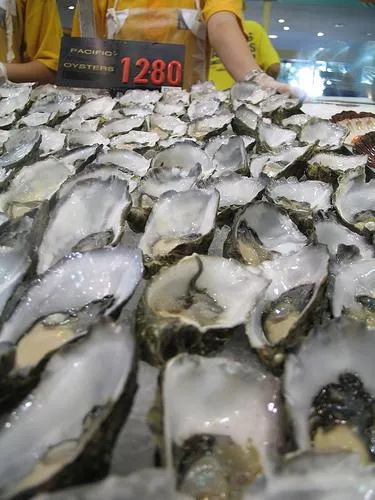
"Only eat oysters in months with an 'R.'" This little pearl of folk wisdom carries more truth than you might expect, since the months without the letter "R" in their names (May through August) coincide with summer in the Northern Hemisphere.
The advice dates back at least to 1599, when it appeared in Englishman Henry Buttes' cookbook, "Dyets Dry Dinner," though some historians trace it to an ancient Latin saying.
Warm months, historically, made for bad or even toxic oysters for a number of reasons: First, in the days before refrigeration, shellfish were more likely to spoil in the heat. Second, the summer months mark spawning season for oysters. Since most of their energy goes toward reproduction, the oysters' meat can become unpleasantly thin and milky.
Article continues belowThird, the toxins that cause seafood sickness multiply rapidly in warmer summer waters, making their way into the plankton that oysters and other shellfish eat. (Many people associate this with red tides, massive blooms of plankton that discolor the water. However, the toxic infections can happen without red tides, and vice versa, so they're not a good indicator of water safety or shellfish health.)
This warning, however, applies only to oysters and shellfish you might harvest on your own. Commercial oyster farms employ enough safeguards that oysters you buy at the supermarket or in restaurants usually stay safe year-round.
Combined with modern refrigeration, and the use of non-spawning oysters in farms, the old reasoning behind the R-month advice mostly falls apart today — as long as you refrain from amateur oystering when it's hot. Because once an oyster goes bad, no amount of cooking will make it safe.
Follow Michael Dhar @mid1980. Follow LiveScience @livescience. We're also on Facebook & Google+.
Get the world’s most fascinating discoveries delivered straight to your inbox.

Michael Dhar is a science editor and writer based in Chicago. He has an MS in bioinformatics from NYU Tandon School of Engineering, an MA in English literature from Columbia University and a BA in English from the University of Iowa. He has written about health and science for Live Science, Scientific American, Space.com, The Fix, Earth.com and others and has edited for the American Medical Association and other organizations.