

-
 When did the Isthmus of Panama form between North and South America?
The linkage of the Americas had outsize impacts globally, and its controversial timing has similarly large implications for science.
americas -
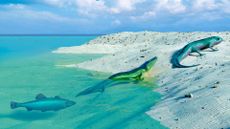 Does evolution ever go backward?
In regressive evolution, organisms lose complex features and can appear to evolve "in reverse." But evolution doesn't retrace its steps, experts said.
evolution -
 What does it mean for a disease to be 'endemic'?
In the context of a disease, the transition from "epidemic" to "endemic" means a pathogen is no longer causing outbreaks but isn't disappearing.
coronavirus -
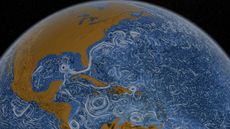 Where did ocean currents come from?
Billions of years ago, wind, heat and the rotating Earth formed currents just as they're produced today — but their paths would have been wildly different.
rivers-oceans -
 Climate summit agrees to 'historic' loss-and-damage fund — but misses warming goals
New fund would aid responses to floods, fires and storms. But a failure to address warming and greenhouse gas emissions undercuts the funding success, critics say.
climate-change -
 Glaciers in Yellowstone and Yosemite on track to vanish within decades, UN report warns
A United Nations report warns of imperiled glaciers at iconic World Heritage sites — but climate action could save most of them.
climate-change -
 What was Earth's biggest explosion?
The biggest blasts come from above, while volcanic eruptions and human-caused detonations have also unleashed incredible levels of energy.
planet-earth -
 Which hurricane caused the most damage?
Hurricane Katrina was the most expensive hurricane in history, while a 1780 storm killed the most people of any hurricane.
weather -
 How long do new species take to evolve?
Organisms that reproduce quickly can quickly evolve into new species, while geographic barriers can lead to new species formation over tens of millions of years.
bacterial-fungal -
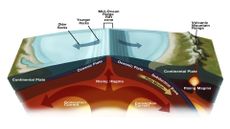 What is a subduction zone?
A subduction zone is a collision between two of Earth's tectonic plates, where one plate sinks into the mantle underneath the other plate.
geology -
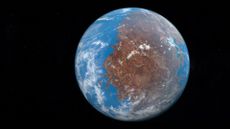 What's the largest ocean that ever existed on Earth?
Panthalassa, a single world ocean surrounding the supercontinent Pangaea, would have stretched at least 1,800 miles (3,000 kilometers) wider than the Pacific.
rivers-oceans -
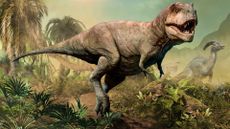 Cretaceous period: Animals, plants and extinction event
The Cretaceous period lasted approximately 79 million years, and ended with a major extinction event about 66 million years ago.
dinosaurs -
 When did Earth's first forests emerge?
Forests took millions of years to evolve after the first land plants arrived, waiting for precursors to roots and branches to arrive and for CO2 levels to get just right.
plants -
 Why don't we have many giant animals anymore?
The reasons for prehistory's roster of bigger animals range from dinosaur physiology to mammalian social groups.
animals -
 The weird reason dolphins drink each other’s pee
Dolphins can recognize each other by the taste of their pee, and urine-tasting behavior is also linked to "name" recognition.
dolphins -
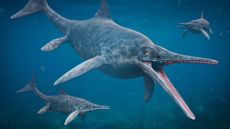 Ichthyosaur: Apex predator of the dinosaur-era seas
Reference Ichthyosaurs, marine reptiles that resembled dolphins and could rival blue whales in size, coexisted with dinosaurs.
Reference -
 What is vodka?
To produce vodka, you must first ferment a foodstuff that contains sugar or starch, then distill the product to increase its alcohol content. But what is vodka made from?
food-drink -
 How do solar panels work?
Reference Solar panels convert sunlight into electricity, providing an alternative, renewable energy source
Reference -
 What is RNA?
RNA keeps some of life's most important processes humming, from building your body's proteins to silencing genes.
genetics -
 What is taxonomy?
Taxonomy is the science of naming, defining and classifying organisms into evolutionarily related groups. It gives biologists a common language.
birds -
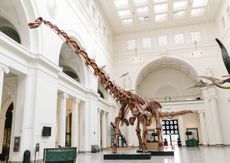 The Biggest Dinosaur to Ever Walk the Earth Just Wants to Text You
Máximo the titanosaur wishes you'd drop him a line.
dinosaurs -
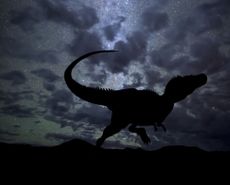 Stargazing T. Rex Gets a 67-Million-Year-Old View of the Night Sky
Even an extremely dead apex predator deserves a beautiful view of the night sky — particularly one that reminds them of home.
dinosaurs -
 Scientists Across the Globe Are Hunting for Pure Randomness
Quantum weirdness and Twitter feeds add to the entropy in these public randomness beacons.
physics-mathematics -
 Hey, Congress: Scientists Are Coming for Your Seats
From a nuclear commander to a Harvard-educated refugee, STEM-trained candidates are shaking up politics.
human-behavior


