
 Live Science Plus


Preserved Pompeii: Photos Reveal City in Ash

Ruins of Pompeii
Pompeii Tomb

A tomb in Pompeii covered in red graffiti. Wall scribblings were common all over the city, both on public buildings and inside and outside private homes. Research presented in 2012 at the annual meeting of the Archaeological Institute of America suggests tombs were no different.
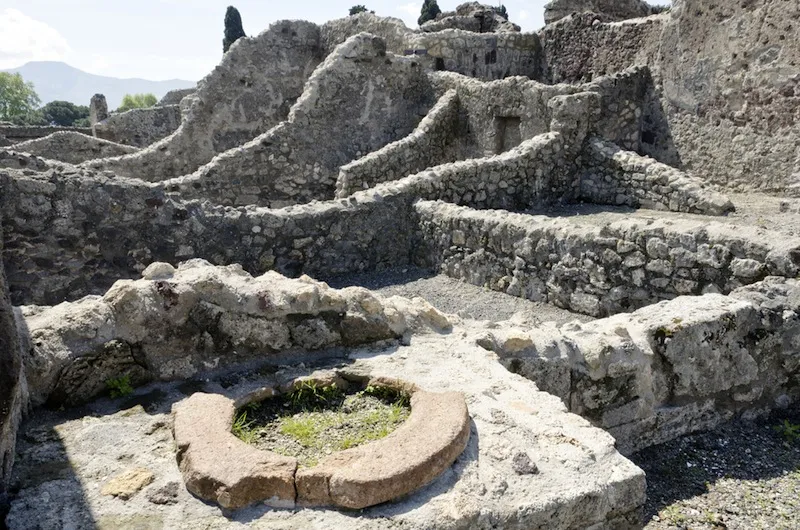
Pompeii Sanitation

Pompeii is known for its sanitation system, which included waste pits and cisterns like this one, as well as toilets in homes and public fountains where water was pumped for household use.

Death in Pompeii

The eruption of Vesuvius buried the dead where they fell. After the bodies decomposed, they left human-shaped pockets in the hardened layers of ash. Pouring plaster in these pockets creates sculptures of death like this one.
Pompeii Baths

This vintage photograph shows the stucco details of the baths in Pompeii's forum.
Tombs of Pompeii

This photomechanical print from between 1890 and 1900 shows the Street of the Tombs in Pompeii.
Vesuvius Victim

A plaster cast of a victim of Mount Vesuvius' eruption displayed in Pompeii.
Painted Pompeii

A partially preserved fresco gives a hint of the color of ancient Pompeii.
Art in Pompeii

A bronze relief of actors with theatrical masks from Pompeii.
Pompeii's Destruction

This undated vintage photograph from the Brooklyn Museum Archives shows a smoking Vesuvius looming behind the ruins of Pompeii's forum.
Modern-Day Pompeii
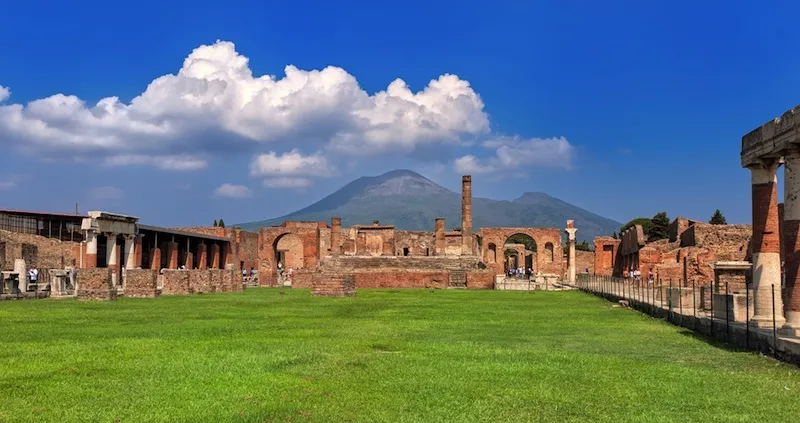
A look at Pompeii and Vesuvius today.
