













How City Birds Adapt to Fight off Cats

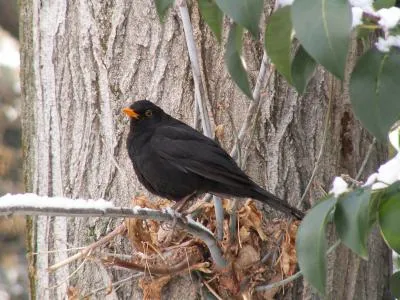
Humans aren't the only ones who get street smarts from living in cities. A new study suggests birds gain survival savvy in urban environments, picking up new techniques to flee predators, namely cats, in a departure from country birds' strategies to wriggle away from raptors.
A group of researchers from the University of Granada in Spain and Paris-Sud University in France captured 1,132 birds in different rural and urban areas across Denmark and Spain between 2009 and 2011. Their sample involved 15 species, including European greenfinches, house sparrows and common blackbirds.
The team graded each bird on its escape behavior when snatched by a human, recording the bird's squirming, biting, feather loss and distress calls. They also measured how long each bird stayed in a state of "tonic immobility" — a fear-induced fake death — when laid flat on the palm of its human captor's hand.
The team found that city birds put up less of a fight. They were more likely to become paralyzed with fear, shedding their feathers and letting out alarm calls and screams. But if that sounds like city life makes birds soft, the researchers note that such strategies are most effective for fleeing cats, birds' main predator in urban areas.
The researchers say the city birds' adaptations are necessary adjustments to the strategies used by country birds to evade traditional enemies, including bigger birds such as the sparrowhawk. And as sprawling urban areas continue to expand, birds will need to keep changing their escape techniques in order to survive.
"Predation change caused by city growth is serious," researcher Juan Diego Ibáñez-Álamo, of the University of Granada, explained to SINC, a Spanish news agency. "Birds should modify their behaviour to be able to survive in cities because if not, they will become extinct at the mercy of urban growth."
The research appears in the journal Animal Behaviour.
Get the world’s most fascinating discoveries delivered straight to your inbox.
Follow LiveScience on Twitter @livescience. We're also on Facebook & Google+.
