
 Live Science Plus


Google's AI 'co-scientist' cracked 10-year superbug problem in just 2 days
Scientists took 10 years to figure out how one type of superbug gains its ability to infect diverse bacterial species. When prompted, Google's new AI "co-scientist" gave them the answer in two days.

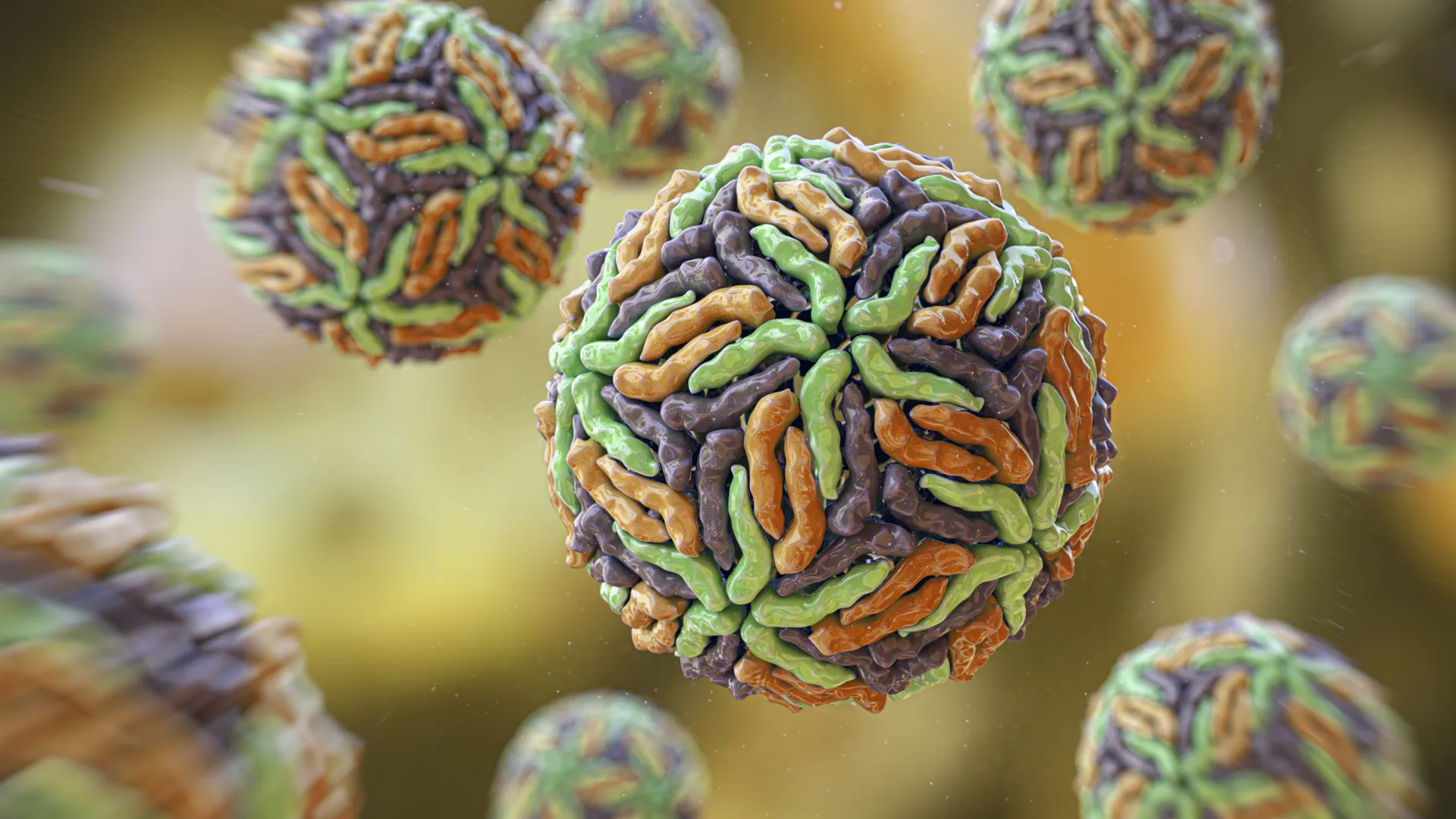
Google's new artificial intelligence (AI) tool has cracked a problem that took scientists a decade to solve in just two days.
José Penadés and his colleagues at Imperial College London spent 10 years figuring out how some superbugs gain resistance to antibiotics — a growing threat that claims millions of lives each year.
But when the team gave Google's "co-scientist" — an AI tool designed to collaborate with researchers — this question in a short prompt, the AI's response produced the same answer as their then-unpublished findings in just two days.
Astonished, Penadés emailed Google to check if they had access to his research. The company responded that it didn't. The researchers published their findings Feb. 19 on the preprint server bioRxiv, so they have not been peer reviewed yet.
"What our findings show is that AI has the potential to synthesise all the available evidence and direct us to the most important questions and experimental designs," co-author Tiago Dias da Costa, a lecturer in bacterial pathogenesis at Imperial College London, said in a statement. "If the system works as well as we hope it could, this could be game-changing; ruling out 'dead ends' and effectively enabling us to progress at an extraordinary pace."
Using AI to fight superbugs
Antimicrobial resistance (AMR) occurs when infectious microbes — such as bacteria, viruses, fungi and parasites — gain resistance to antibiotics, rendering essential drugs ineffective. Dubbed a "silent pandemic," AMR represents one of the biggest health threats facing humanity as the overuse and misuse of antibiotics in both medicine and agriculture accelerate its prevalence.
According to a 2019 report by the Centers for Disease Control and Prevention (CDC), drug-resistant bacteria killed at least 1.27 million people globally that year. About 35,000 of those deaths were in the U.S. alone, meaning that U.S. fatalities from the issue had spiked by 52% since the CDC's last AMR report, in 2013.
Get the world’s most fascinating discoveries delivered straight to your inbox.
To investigate the problem, Penadés and his team began searching for ways one type of superbug — a family of bacteria-infecting viruses known as capsid-forming phage-inducible chromosomal islands (cf-PICIs) — acquire their ability to infect diverse species of bacteria.
Related: Dangerous 'superbugs' are a growing threat, and antibiotics can't stop their rise. What can?
The scientists hypothesized that these viruses did this by taking tails, which are used to inject the viral genome into the host bacterial cell, from different bacteria-infecting viruses. Experiments proved their hunch to be correct, revealing a breakthrough mechanism in horizontal gene transfer that the scientific community was previously unaware of.
RELATED STORIES
Before anyone on the team shared their findings publicly, the researchers posed this same question to Google's AI co-scientist tool. After two days, the AI returned suggestions, one being what they knew to be the correct answer.
"This effectively meant that the algorithm was able to look at the available evidence, analyse the possibilities, ask questions, design experiments and propose the very same hypothesis that we arrived at through years of painstaking scientific research, but in a fraction of the time," Penadés, a professor of microbiology at Imperial College London, said in the statement.
The researchers noted that using the AI from the start wouldn't have removed the need to conduct experiments but that it would have helped them come up with the hypothesis much sooner, thus saving them years of work.
Despite these promising findings and others, the use of AI in science remains controversial. A growing body of AI-assisted research, for example, has been shown to be irreproducible or even outright fraudulent. To minimize these problems and maximize the benefits AI could bring to research, scientists are proposing tools to detect AI misconduct and establishing ethical frameworks to assess the accuracy of findings.

Ben Turner is a U.K. based writer and editor at Live Science. He covers physics and astronomy, tech and climate change. He graduated from University College London with a degree in particle physics before training as a journalist. When he's not writing, Ben enjoys reading literature, playing the guitar and embarrassing himself with chess.
You must confirm your public display name before commenting
Please logout and then login again, you will then be prompted to enter your display name.