How to see and photograph the partial lunar eclipse on August 27-28

It may not be a 'blood moon' total lunar eclipse, but with more than 96% of the moon immersed in Earth's shadow, it promises a fine lunar observing and photography opportunity. Here's what to know.

lunar eclipse against a black sky
Aug. 27-28 will see a very deep partial lunar eclipse.
(Image credit: Giovanni Bertolani via Getty Images)

Just over two weeks after the total solar eclipse on Aug. 12 comes an encore. On the night of Aug. 27–28, a very deep partial lunar eclipse will see Earth's shadow cover more than 96% of the full moon. Although it falls just short of becoming a total lunar eclipse — and therefore isn't technically a "blood moon" — much of the lunar surface will turn a coppery red to cameras. It will also be the deepest lunar eclipse anywhere in the world until the next total lunar eclipse on Dec. 31, 2028.

Unlike a solar eclipse, a lunar eclipse is completely safe to observe with the naked eye and unfolds slowly over several hours, giving observers and photographers plenty of time to enjoy it. Whether you're using binoculars, a telescope, a mirrorless camera or a smart telescope, it will be one of the best lunar photography opportunities for years.

Solar and lunar eclipses often come in pairs because they occur during the same eclipse season — a period of about 34 days when the sun, Earth and moon line up closely enough for eclipses to occur. A solar eclipse happens at new moon, when the moon passes between Earth and the sun. Then, about two weeks later, at full moon, the alignment can produce a lunar eclipse as the moon passes through Earth's shadow.

This eclipse will favor observers in North and South America, where every stage will be visible high in the night sky. Europe gets a different, but equally photogenic experience, with the eclipse occurring before dawn as the moon sinks toward the western horizon.

Whatever equipment you use, the biggest challenge for most people won't be finding the eclipse, but deciding how to see and photograph it. Here's some gear worth considering.

Best binoculars for the Aug. 27-28 lunar eclipse

Woman using binoculars to look at the sky

Large binoculars are a fine way to enjoy a lunar eclipse.
(Image credit: Jase Parnell-Brookes)
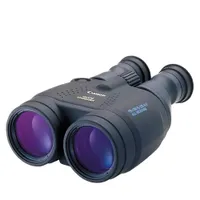
Canon 15x50 IS all-weather binoculars
Best overall
Canon 15x50 IS all-weather binoculars: $1,249 at BHPhoto

Canon's image-stabilized binoculars remove hand shake, making it easy to enjoy steady, detailed views of the eclipsed moon without a tripod, with 15x magnification revealing craters and the advancing edge of Earth's shadow. They're expensive, but among the best binoculars available for lunar observing.

Read: Canon 15x50 IS all-weather binoculars review

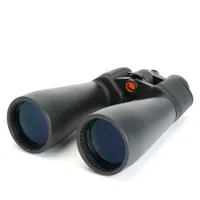
Celestron SkyMaster 15x70 binoculars
Best budget
Celestron SkyMaster 15x70 binoculars: $99.99 at BHPhoto

If image stabilization isn't in your budget, the SkyMaster 15x70 offers excellent value. Its large 70mm objectives gather plenty of light, while 15x magnification reveals impressive lunar detail. For the best results, mount it on a tripod to minimize vibration.

Read: Celestron SkyMaster 15x70 review

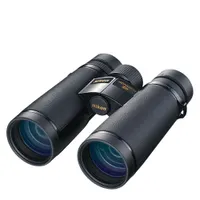
Nikon Monarch HG 10x42
Best premium option
Nikon Monarch HG 10x42: $1,096.95 at BHPhoto

The Nikon Monarch HG 10x42 combines superb optics with a lightweight, waterproof design that's equally suited to lunar eclipses, stargazing and birdwatching. Its wide, sharp field of view makes it easy to follow Earth's shadow across the moon, while the lower 10x magnification makes it relatively easy to hold steady.

Read: Nikon Monarch HG 10x42 review

Best telescopes for the Aug. 27-28 lunar eclipse

woman in a white top looking through the Celestron StarSense Explorer LT 70AZ

The StarSense Explorer LT 70AZ is an ideal first telescope for viewing a lunar eclipse.
(Image credit: Kimberley Lane)
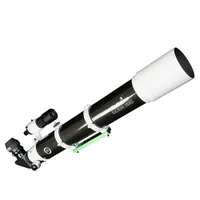
Sky-Watcher Evostar 100ED
Best refractor
Sky-Watcher Evostar 100ED: $1,255 at BHPhoto

The Sky-Watcher Evostar 100ED delivers crisp, high-contrast views of the moon, revealing craters and the curved edge of Earth's shadow in exceptional detail. Add a tracking mount and the moon remains centered for hours, making both observing and photography much easier.

Read: Best telescopes

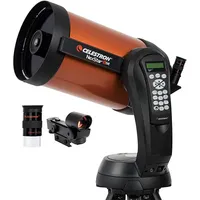
Celestron NexStar 8SE
Best telescope for close up photography
Celestron NexStar 8SE: $1,699 at Adorama

If your goal is detailed lunar photography, the NexStar 8SE is hard to beat. Its long focal length produces big images of the moon, while the computerized GoTo mount automatically tracks it throughout the eclipse. Pair it with a planetary camera for impressive close-ups.

Read: Celestron NexStar 8SE review

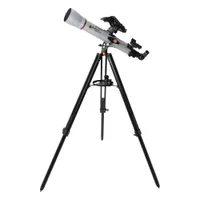
Celestron StarSense Explorer LT 70AZ
Great for beginners
Celestron StarSense Explorer LT 70AZ: was $249.95 now $229.99 at Amazon

The StarSense Explorer LT 70AZ is an affordable, portable refractor that is great for beginners and produces impressive views of the moon's craters and maria (dark spots). Its standout feature is the StarSense smartphone app, which helps beginners find objects without any prior astronomy knowledge. However, it requires care — it's a touch wobbly on its tripod.

Read: Celestron StarSense Explorer LT 70AZ review

Best smart telescopes for the Aug. 27-28 lunar eclipse
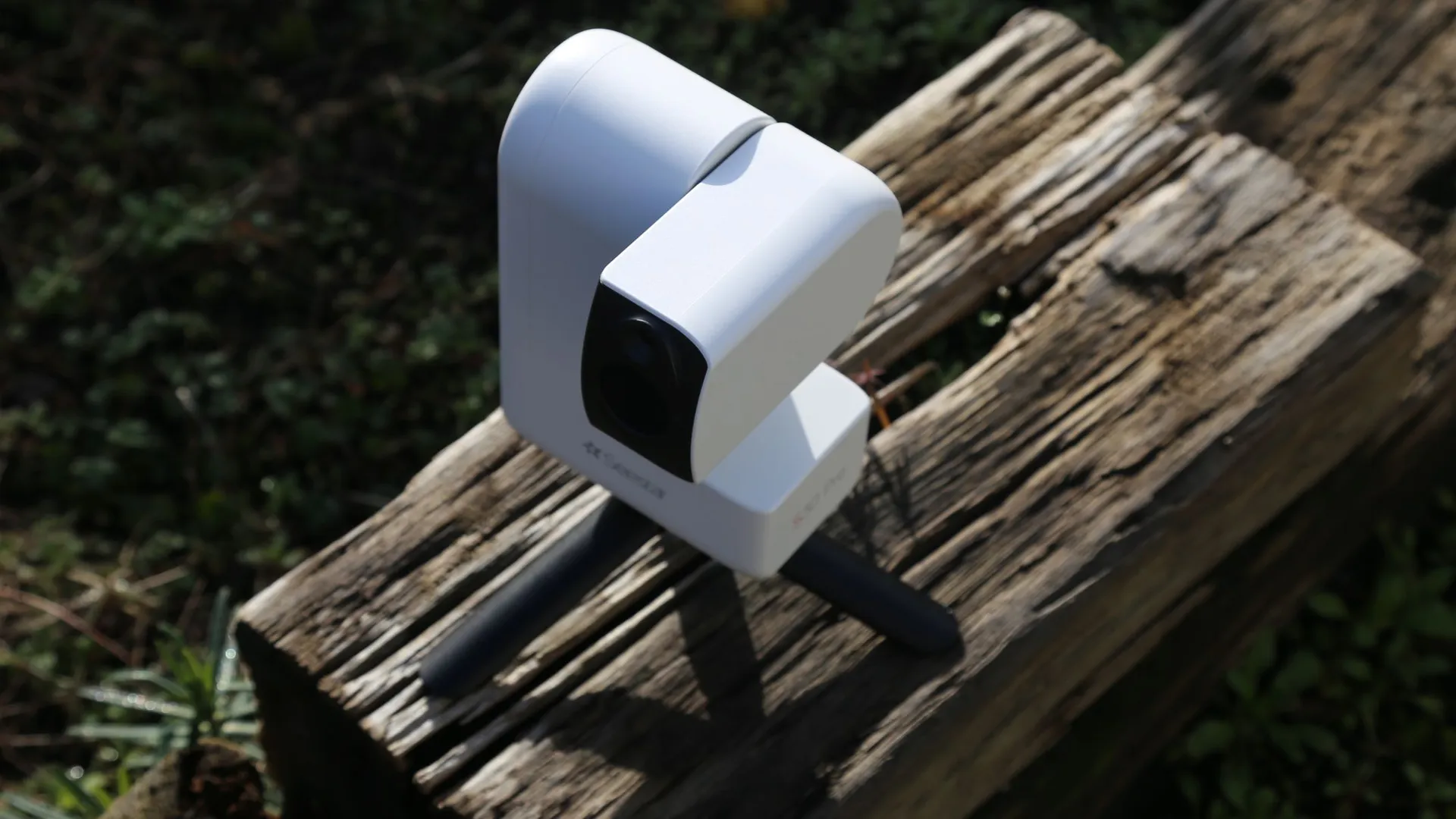
ZWO SeeStar S30 Pro outside on a wooden surface

The Seestar S30 Pro can automatically track and photograph the eclipsed moon.
(Image credit: Jamie Carter)
ZWO Seestar S30 Pro
Best smart telescope
ZWO Seestar S30 Pro: $699 at BHPhoto

The Seestar S30 Pro makes lunar eclipse photography almost effortless. It automatically tracks the moon and captures images using a smartphone app, leaving you free to enjoy the eclipse. Lightweight and battery-powered, it's an ideal choice for first-time eclipse photographers.

Read: ZWO Seestar S30 Pro review

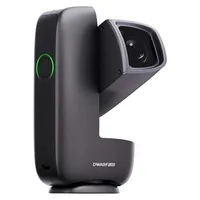
DwarfLab Dwarf Mini
Best budget
DwarfLab Dwarf Mini: $419 at BHPhoto

Compact and easy to use, the Dwarf Mini automatically tracks the moon and captures sharp close-ups. It also excels at creating time-lapse sequences showing Earth's shadow gradually crossing the lunar surface. It's also the most travel-friendly size.

Read: DwarfLab Dwarf Mini review

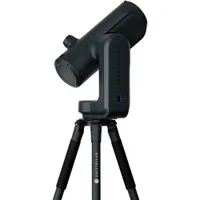
Unistellar Odyssey Pro
Best premium option
Unistellar Odyssey Pro: $4,599 at BHPhoto

The Odyssey Pro combines lunar tracking and image processing to produce detailed images with minimal effort. Although designed primarily for deep-sky observing, it handles the moon beautifully and is one of the most capable smart telescopes available — but it comes with a premium price tag.

Read: Unistellar Odyssey Pro review

Best cameras for the Aug. 27-28 lunar eclipse

Sony A7R V on a tripod with the screen flipped out

Sony's high-resolution mirrorless camera captures exceptional lunar detail.
(Image credit: Kimberley Lane)
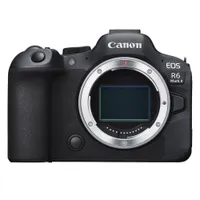
Canon EOS R6 Mark II
Best Canon
Canon EOS R6 Mark II: $2,099 at Adorama

The moon's brightness differs dramatically on its lit and unlit sides during a lunar eclipse, demanding a camera with excellent dynamic range. The Canon EOS R6 Mark II handles that superbly and can be paired with a long telephoto lens or telescope for great images.

Read: Canon EOS R6 Mark II review

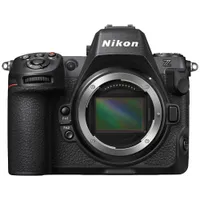
Nikon Z8
Best Nikon
Nikon Z8: $3,395.96 at Adorama

The Nikon Z8's 45.7MP full-frame sensor combines superb dynamic range with excellent high-ISO performance, making it ideal for photographing the moon as it fades into Earth's shadow. Astrophotographers will also appreciate its Night Vision mode, which preserves dark adaptation by switching the screen and viewfinder to a dim red display.

Read: Nikon Z8 review

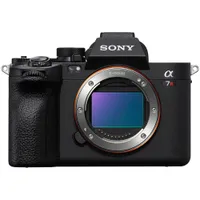
Sony A7R V
Best Sony
Sony A7R V: $3,498 at Adorama

With its 61MP full-frame sensor, the Sony A7R V captures extraordinary detail across the lunar surface, giving photographers plenty of scope to crop tightly into the eclipsed moon without sacrificing image quality. Combined with excellent image stabilization and impressive low-light performance, it's an outstanding choice for anyone pairing it with a long telephoto lens or telescope.

Read: Sony A7R V review

Best lenses for the Aug. 27-28 lunar eclipse

Sony FE 200-600 f/5.6-6.3 G OSS on a tripod in a field

A lightweight telephoto zoom is ideal for photographers traveling for an eclipse.
(Image credit: Kimberley Lane)
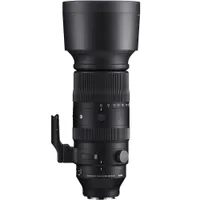
Sigma 60-600mm f/4.5-6.3 DG DN OS Sport
Best all-rounder
Sigma 60-600mm f/4.5-6.3 DG DN OS Sport: $2,199 at BHPhoto

The Sigma 60-600mm's huge zoom range lets you switch from landscape shots to frame-filling lunar portraits without changing lenses. It's impressively sharp throughout most of the range, particularly at 600mm, where it captures fine lunar detail. At 5.5 pounds (2.5 kilograms), it's heavy, but its versatility is hard to beat.

Read: Sigma 60-600mm f/4.5-6.3 DG DN OS Sport review

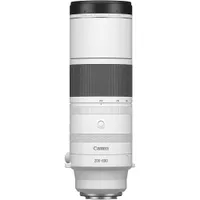
Canon RF 200-800mm F6.3-9 IS USM
Best for close-ups
Canon RF 200-800mm F6.3-9 IS USM: $2,149 at BHPhoto

If you want frame-filling images of the eclipsed moon, Canon's RF 200-800mm delivers outstanding reach. It resolves fine crater detail and the subtle copper tones of Earth's shadow, though, like any super-telephoto, it performs best on a sturdy tripod.

Read: Canon RF 200-800mm F6.3-9 IS USM review

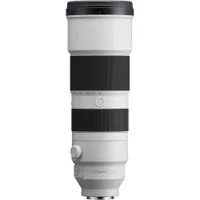
Sony FE 200-600mm f/5.6-6.3 G OSS
Best Sony
Sony FE 200-600mm f/5.6-6.3 G OSS: $1,998 at BHPhoto

Sony's 200-600mm offers excellent sharpness, great optical stabilization and is lighter than Sigma's 60-600mm. At 600mm, it captures beautifully detailed lunar close-ups while remaining versatile enough for wildlife and sports photography between eclipses.

Read: Sony FE 200-600mm f/5.6-6.3 G OSS review

Essential accessories for the Aug. 27-28 lunar eclipse

woman holding the folded benro rhino

A sturdy tripod becomes increasingly important as the eclipsed moon grows darker.
(Image credit: Jase Parnell-Brookes)
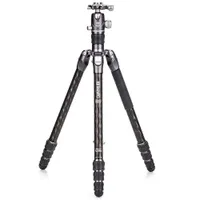
Benro Rhino Carbon Fiber Series Two tripod
Best tripod
Benro Rhino Carbon Fiber Series Two tripod: $254.95 at BHPhoto

As the moon darkens, longer exposures become essential, making a sturdy tripod a must. The Benro Rhino Carbon Fiber Series Two combines lightweight carbon fiber construction with excellent stability and a 40-pound (18-kilogram) payload, easily supporting cameras, long telephoto lenses and astronomy binoculars. It's a dependable choice for eclipse photography.

Read: Benro Rhino Carbon Fiber Series Two tripod review

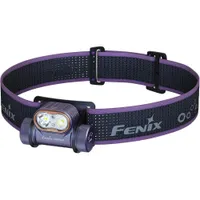
Fenix HM55R headlamp
Best headlamp
Fenix HM55R headlamp: $74.95 at Amazon

The lightweight, USB-C rechargeable Fenix HM55R features a red-light mode that preserves night vision while providing enough illumination to operate cameras and telescopes. Is that vital for a lunar eclipse? No — but since the Milky Way may emerge as the sky darkens close to maximum eclipse, it's wise to be ready.

Read: Fenix HM55R headlamp review

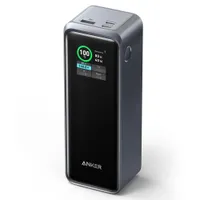
Anker Prime 27,650mAh Power Bank
Best power bank
Anker Prime 27,650mAh Power Bank: $179.99 at Walmart

A lunar eclipse lasts for hours, and cameras, smart telescopes and smartphones can quickly run low on power. The Anker Prime 27,650 mAh Power Bank (250 W) has enough capacity to keep multiple devices charged throughout the eclipse, making it a worthwhile addition to any observing kit.

Read: Anker Prime 27,650mAh Power Bank (250W) review

FAQs

Do I need eclipse glasses to watch a lunar eclipse?

No. Unlike a solar eclipse, a lunar eclipse is completely safe to observe with the naked eye, binoculars or a telescope. No solar filters or special eye protection are ever required.

Will this be a 'blood moon'?

No. A "blood moon" refers to a total lunar eclipse, when the entire moon passes into Earth's umbra. During the Aug. 27-28 eclipse, about 96% of the moon will enter the umbra, leaving a thin sunlit sliver visible throughout the event. However, most of the lunar surface is still likely to appear reddish.

Can I photograph it with a smartphone?

Yes. Smartphones can be used to capture wide-angle landscape images showing the eclipsed moon above buildings or mountains, although a tripod is advisable. However, for detailed close-ups of the moon itself, you'll need binoculars, a telephoto lens or a telescope.

What camera settings should I use?

Start with the settings you would normally use for a full moon — ISO 100, f/8-f/11 and 1/100-1/125 seconds — then gradually lengthen the exposure as the eclipse progresses and the moon dims. Shooting in RAW format and using exposure bracketing will give you the greatest flexibility when processing your images later.

Jamie Carter
Live Science contributor

Jamie Carter is a Cardiff, U.K.-based freelance science journalist and a regular contributor to Live Science. He is the author of A Stargazing Program For Beginners and co-author of The Eclipse Effect, and leads international stargazing and eclipse-chasing tours. His work appears regularly in Space.com, Forbes, New Scientist, BBC Sky at Night, Sky & Telescope, and other major science and astronomy publications. He is also the editor of WhenIsTheNextEclipse.com.

You must confirm your public display name before commenting

Please logout and then login again, you will then be prompted to enter your display name.