Sony A7R V review: A 61-megapixel giant
This mirrorless camera is an absolute beast, with a massive 61MP resolution, AI-powered autofocus and 8K video shooting — but is the Sony A7R V still worth buying in 2025?

Outstanding autofocus, beautifully detailed 61MP resolution and out-of-this-world images for professionals who want the best. One of the best cameras we've ever used, but its Achilles heel limits it for wildlife photography.
-
+
Accurate AI-powered autofocus with Deep Learning
-
+
Stunningly detailed 61MP resolution
-
+
8K video
-
-
Can't shoot 8K in S&Q mode (nitpicky, sure)
-
-
Large files need faster cards
-
-
10FPS burst rate could be faster for wildlife
Why you can trust Live Science Our expert reviewers spend hours testing and comparing products and services so you can choose the best ones for you. Find out more about how we test.

Specifications
Sensor: 61MP full frame BSI CMOS
EVF resolution: 9.44M dots
Monitor: 3.2-inch touchscreen, 2.09M dots
Image stabilization: Five-axis, eight stops
Weather-sealed: Yes
Autofocus detection range: -4 to +20EV
ISO Range: 100–32,000 (expandable to 50–102,400)
Minimum shutter speed: 30 seconds
Burst rate: Up to 10 FPS*
RAW buffer: Up to 583 RAW files*
Video: Up to 8K 25p*
Battery life: 440 shots (EVF) / 530 shots (LCD)
Storage: 2 slots (both SD and CFexpress A compatible)
Dimensions (in): 5.16 x 3.82 x 3.23
Dimensions (cm): 13.1 x 9.7 x 8.2
Weight: 1 lb 10oz (723g) with battery & card
The Sony A7R V was revolutionary when it was released back in October 2022, but is it still worth buying in 2025? We've put it to the test for astrophotography, wildlife photography and everything in-between to see whether it's still worth its price tag.
Its still unbeaten in terms of resolution — the whopping 61MP sensor is still at the top of the pyramid, but with Sony's new generation A1 Mark II now capable of faster burst rates and boasting a pre-capture buffer, the A7R V perhaps might not be the weapon of choice for wildlife photography any longer.
A successor hasn't been confirmed by Sony yet, but rumors are circulating that an 80MP beast could be announced in 2025. If this turns out to be true, the Sony A7R VI could blow the V out of the water, especially if it has a higher burst rate.
Sony A7R V review
Sony A7R V: Design and comfort

The button layout is intuitive and easy to operate.
- Slightly bigger and heavier than the A7R IV
- Overall what you'd expect from a Sony camera
- Crafted to fit in the hand perfectly
The design of the Sony A7R V is generally what we expect from Sony at this price point. In terms of button layout, it's identical to the A7 IV, but it has some welcome improvements over its predecessor, the A7R IV. There's a separate sub-dial to choose between photo, video and S&Q (Slow & Quick – AKA slow motion and timelapse) modes, and the placement of the video record button is a thousand times better and easier to press on the A7R V.
If we were to change anything, we'd like the option to turn the main dial lock on and off, as you can with the exposure compensation dial. It can get a little annoying and fiddly having to press and hold the button in order to move the dial to change modes.
It is one of the heavier Sony models, at 1 lb 10oz (723g) with the battery and a card, but we thought it fit nicely in the hand. The grip, finger and thumb placement line up perfectly to allow you to hold the camera easily in one hand, and it only felt heavy when we paired it with a long telephoto lens to photograph some wildlife.


As expected, the camera is weather-sealed so you should be good to use it in light to medium rain, and the anti-dust system should protect you against sand and dirt out in the field. We took it to a beach to shoot animal photography without any problems whatsoever. The ports are well-located and both card slots are SD- and CFexpress A-compatible.
Get the world’s most fascinating discoveries delivered straight to your inbox.
The menu system is perfectly fine if you're used to Sony cameras, but taking a leaf out of OM System's book and providing a short explanation with each option/setting would be a welcome move — this is something we loved about the OM-1 Mark II when we reviewed it. This would make life easier for those who aren't so technically minded.
Sony A7R V: Electronic viewfinder and LCD screen

The screen can tilt up, flip out and fully articulate independently.
- Beautiful 9.44M dot EVF
- LCD screen can flip out and rotate in every direction
- No rolling shutter, but it's not blackout-free
The EVF boasts a stunning 9.44M dot resolution, the same as the A1, with 0.9x magnification. The refresh rate is up to 120 FPS, so a downside of the A7R V is that it doesn't offer blackout-free shooting. That said, it's not designed for speed, nor can it even shoot that fast, so this won't hamper your shooting as much as it would on a faster camera. On the plus side, we didn't see any rolling shutter when looking through the viewfinder.
But one of the more practical tricks this camera has up its sleeves is the gymnast-like flexibility of the LCD screen. The four-axis screen can tilt up and down, as well as flip out and fully articulate independently, meaning you can view the screen at quite literally any angle you like. As some photographers prefer tilt screens and others favor flip-out, this camera will cater to everyone in this regard. The 3.2-inch LCD screen is also the joint-largest alongside the new A1 II, and it has the highest resolution (albeit only just) at 2.1M dots.
Sony A7R V: Image quality and dynamic range

The Sony A7R V produces vibrant, rich colors.
- Insanely detailed 61MP images
- Beautiful color rendition
- Good dynamic range
While image quality is partly determined by the quality of the lens, we have never been disappointed by the images we've taken on the Sony A7R V. The images are sharp, with rich color and astounding detail.
Even in low light, we were easily able to retain detail in the shadows and bring back details from the highlights in our images.


View Original

View Original

View Original

View Original

View Original

View Original

We took the Sony A7R V to shoot the colorful buildings of Copenhagen, and even on a dull, overcast day it captured the colors and detail exceptionally well. At dusk, the balance between the highlights and shadows was effortlessly rendered and brilliantly balanced throughout the image.
This was also the case when we tested it on a sunny July afternoon in the Lake District — the harsh shadows from the trees were no match for the A7R V.
Sony A7R V: Autofocus and subject detection


View Original

View Original

- AI autofocus doesn't miss a beat
- Tracks subjects that aren't looking at the camera
- Good range of subject recognition targets
The Sony A7R V has seven subject detection modes — Human, Animal/Bird, Animal, Bird, Insect, Car/Train and Airplane. Insect mode is a great addition for macro photography, plus having both combined and separate animal and bird modes is useful for accuracy when photographing wildlife.
Due to its slower 10 FPS burst rate (more on that later), it's not suited for really fast-moving animals, which is a shame because the AI-powered autofocus and Deep Learning technology would really be able to spread its wings when coupled with a fast camera, like the 30 FPS burst rate in the new A1 II. We thought the autofocus earned the A7R V a position as one of the best cameras for wildlife photography, but the burst rate lets it down in comparison to its competitors.


View Original

View Original

We took the Sony A7R V to a nature reserve to photograph wildlife, and we were very impressed with the subject detection and tracking, particularly in Animal/Bird mode. It did struggle to lock onto a camouflaged heron in the distance, but it tracked a bird in flight around 100 feet (30 meters) above us easily and the eye detection worked really well on a particularly camera-friendly Robin. The eyes were pin-sharp, and the 61MP sensor produced unreal detail — we could even see the robin's pupils.
Sony A7R V: Astro and low light performance

- Very detailed astro images
- ...but images are noisy due to 61MP
- Image stabilization enables slower shutter speeds in low light
We weren't expecting much from this camera when it came to astrophotography, due to the 61MP sensor. But color us incredibly surprised, as the amount of detail we managed to capture took our breath away.
Yes, there obviously was more noise than there was when we compared the images to the ones we took on the less-detailed Sony A7 IV, but overall we were expecting the A7R V to be a lot less capable for astrophotography than it actually was. If you shoot primarily astro, then you'll want to shoot with less resolution to avoid the need to use a denoise tool on every single shot when editing, but for those of you who only shoot astro occasionally, the Sony A7R V is fantastic.


View Original

View Original

We took the Sony A7R V to the dark skies of the Brecon Beacons in South Wales to shoot the aurora borealis during the week of the new moon. We'd have liked some dedicated astro features like illuminated buttons or night vision mode to make astroshooting a bit easier. We used Bright Monitoring, which helps if you're in a more light-polluted areas and want to better fine-tune your composition on the screen.
Due to its high (and noisy) 61MP resolution we wouldn't necessarily call it one of the best astrophotography cameras, but it's certainly very capable for occasional astro shooting.


View Original

View Original

For low-light photography, however, it's much more capable. The above images were taken at ISO 12,800 and although the noise is visible, it doesn't ruin the photo completely. Plus, the eight stops of image stabilization mean you can shoot handheld at slower shutter speeds — we were able to shoot light trails from cars handheld at 1 second while leaning against a wall for support.
For general low-light photography, such as wildlife photography during dusk and dawn hours, this image stabilization could prove invaluable.
Sony A7R V: Burst rate, buffer and battery life
- Burst rate is underwhelming, but not dealbreaking
- Decent battery life
- Buffer requires faster cards
On paper, Sony claims the A7R V can shoot 440 shots using the electronic viewfinder or 530 shots using the LCD screen. During the course of a two-day shoot, we took over 1,200 images using a mixture of the EVF and LCD, without needing to charge or change batteries whatsoever.
We had mixed experiences regarding the buffer capacity depending on what kind of card we were using. Sony states the buffer capacity of the A7R V is 1,000 JPEGs, 583 compressed RAWs or 547 lossless RAWs. Unsurprisingly, the buffer took a lot longer to clear when we used a SanDisk Ultra with speeds of up to 140MB/s then it did when we used a more expensive Lexar card with a write speed of up to 210MB/s. With the Lexar, we found that we never had to stop shooting due to the buffer, whereas that was a common occurence with the SanDisk. It's also compatible with faster CFexpress cards, a huge plus for professional photographers.
But on to the Achilles heel of the Sony A7R V — the burst rate. In higher quality RAW modes this maxes out at a pitiful 7 FPS, and only increases to 10 FPS if your'e using JPEG — and why would you? For a camera of this calibre, we find this disappointing, though we do have to cut it a little slack due to the particularly big file sizes.
But that said, we don't find this to be a dealbreaker for wildlife photography unless you're photographing super fast-moving subjects. The autofocus is so good that it kind of makes up for the low burst rate, because you're still just as likely to nail your shot — there will just be less shots to choose from.
Sony A7R V: Lens compatibility

When it comes to compatible lenses, Sony is hard to beat.
Sony seems to have put a lot of thought into its lens lineup, providing an appropriate lens for every type of user, for any type of photography, making the A7R V an easy camera to recommend. With updated versions of all three "holy trinity" lenses, the company is constantly improving its catalog and we've been astounded by every lens we've used.
Astro shooters will love the Sony FE 14mm f/1.8 GM and Sony FE 12-24 f/2.8 GM, and wildlife wizards will get some killer shots with the Sony FE 200-600 f/5.6-6.3 G or the Sony FE 100-400 f/4.5-5.6 GM lens. There's a really good mix of primes and zoom lenses, plus a focal length to cover all bases. Even the APS-C range is impressive.
One downside is that there are limited third-party lenses available, which means to get the best lenses, you'll have to spend a lot of cash.
Sony A7R V: What's new?
With just a $400 price difference, anyone thinking of going for the previous model, the Sony A7R IV, would do well to consider upgrading to the V.
Some of the biggest differences between the two are:
- The A7R V features a new BIONZ XR processor (as opposed to the IV's BIONZ X) that allows the camera to fully use the sensor's capabilities in a way that the IV couldn't. Sony claims it has up to eight times the processing power.
- The A7R V now supports lossless RAW format, and the IV only supports compressed RAW, uncompressed RAW or JPEG.
- The IV has 5.5 stops of image stabilization, whereas the V has eight.
- Perhaps the biggest change is the addition of AI-powered autofocus, Real-Time recognition and Deep Learning in the A7R V.
- The A7R V is the first Sony camera to have focus bracketing built-in.
- You can shoot in 8K 24p/25p on the A7R V, as opposed to 4K 30p on the IV.
- The EVF resolution on the V is now 9.44 million dots, whereas the resolution on the IV's EVF is 5.76 million dots. The fully articulating screen is also a huge improvement over the IV.
Verdict

The Sony A7R V is intuitive and a pleasure to use.
What we liked:
- Stunning image quality
- Surprisingly good at astro
- Autofocus sticks to subjects like glue
- Real-time eye AF never misses
- Incredibly detailed EVF and LCD screen
- Screen can flip and rotate any which way
- The buttons are pronounced and easy to press
- Comfortable to use and solid in the hand
- Both card slots are CFexpress-compatible
- Ports are easily accessible when the screen is flipped out
What we didn't like:
- Large file sizes require faster, more expensive cards.
- Can't shoot 8K video in S&Q mode
- Continuous shooting is not blackout-free
- Burst rate is a little low for such a premium camera
Buy it if:
✅ You want excellent subject recognition for portraits: With its lower burst rate, the A7R V would be well-suited for portraits of people with its AI autofocus, subject and face recognition settings.
✅ You want lots of detail: The 61MP sensor captures an abundance of detail.
Don't buy it if:
❌ You want a lightweight camera: This is one of Sony's heavier cameras, so if you favor a small, lightweight camera, you might want to consider more travel-friendly models, like the Sony A7C II or even a crop sensor.
❌ You primarily shoot astro: Although we were pleasantly surprised by its astro images, you'll want a camera with less resolution for dedicated astrophotography.
This camera isn't perfect, but boy, it's not far off! There are no major faults that would stop us from buying it, although photographers who are deeply invested in a particular niche will need to determine if it's right for them. It's good at astro — although the images are noisy, and it's great for wildlife — although the burst rate could be better. While calling it a "jack of all trades, master of none" seems a little harsh, it can do most photographic styles exceptionally well, but sometimes it falls a little short of being perfect.
Our reviewer, Kimberley Lane, said "My heart really wants to give it 5 stars because it truly is an incredible camera, and I loved it so much I even bought one for myself after reviewing it on Space.com back in 2023. But my rule is that if I can find something wrong with it other than 'it's heavy' or 'it's expensive', then I can't give it full marks. So perhaps this camera earns a 4.9/5 from me".
If the Sony A7R V isn't for you
While we'd recommend the Sony A7R V for most photographers, we wouldn't recommend it for everyone. Here are some alternative options to consider if the A7R V didn't quite hit the mark.
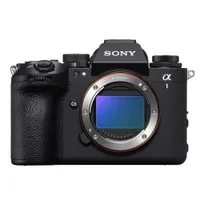
Sony A1 II
If you're a professional photographer who makes money in the industry, you can't do much better than the Sony A1 II right now — if you can get your hands on it (it's currently on backorder). With a stacked sensor, 30FPS burst rate and pre-shooting buffer (hello best wildlife cameras), this thing will be able to handle pretty much anything you throw at it.
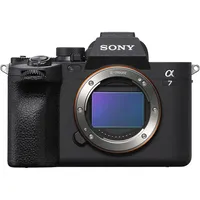
Sony A7 IV
If you want a better high ISO performance, the Sony A7 IV is the one to get. Its 33MP sensor produces much less noise than the 61MP on the A7R V, and it's one of the best astrophotography cameras we've ever used, as we stated in our full Sony A7 IV review. Plus, it's a lot cheaper than the A7R V.
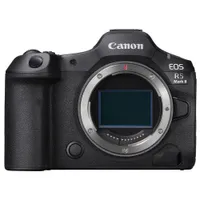
Canon EOS R5 II
If you don't want a Sony, the Canon EOS R5 II would be an incredible alternative. It is more expensive, but it's an absolute wildlife wonder and even has eye control autofocus, something we've only seen in the EOS R3 before.
How we tested the Sony A7R V


After reviewing the Sony A7R V for our sister site Space.com, our reviewer, Kimberley Lane, loved it so much she actually bought one for herself the following year.
Related articles
We took the A7R V everywhere from the dark skies of the Brecon Beacons (to shoot astro) and coastal Wales (to shoot landscapes) to nature reserves (to photograph wildlife). We tested different autofocus subject detection modes and shot in various lighting conditions to get a feel for how the camera handles different shooting situations.
We also tested the camera with a variety of lenses, including the Sony FE 70-200mm f/2.8 GM OSS II, Sony FE 35mm f/1.8 and Sony FE 85mm f/1.8.

Kimberley Lane, E-commerce writer for Live Science, has tested a wide range of optical equipment, reviewing camera gear from Sony, Canon, OM System and more. With over 6 years of photography experience, her skills span across landscape and seascape photography, wildlife, astrophotography and portrait work. Her photos have been featured in a number of national magazines, including Digital Camera World and Cosmopolitan. She has also contributed to our sister site Space.com and Tech Radar, and she regularly uses binoculars and telescopes to stargaze in the dark skies of South Wales.
You must confirm your public display name before commenting
Please logout and then login again, you will then be prompted to enter your display name.