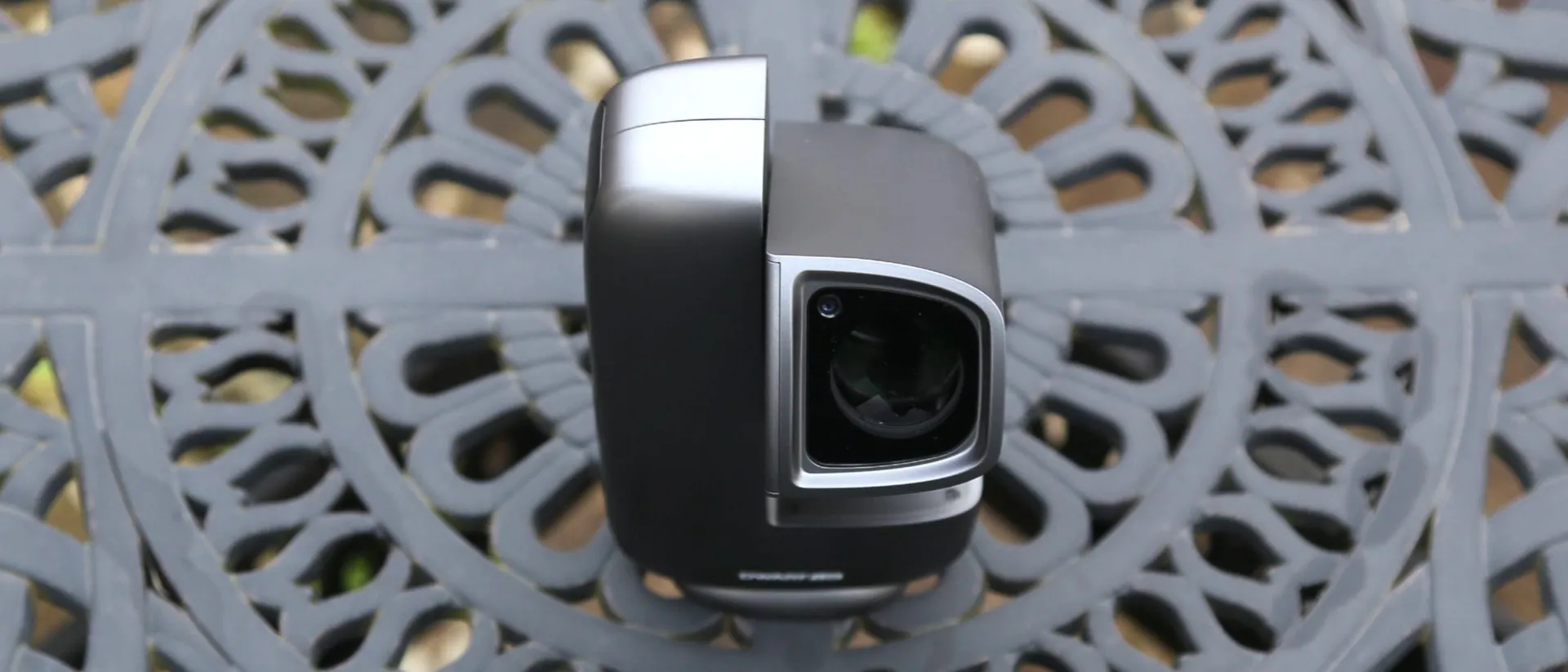
The DwarfLab Dwarf Mini delivers surprisingly capable astrophotography in an exceptionally small package, but its true value lies in its urban usability. With automated alignment and in-app stacking, it captures the moon, the sun and bright deep-sky objects in minutes. While its 2MP sensor limits image quality, it excels in light-polluted cities, making it ideal for beginners, educators and anyone traveling to dark skies.
Reasons to buy
+
Compact and lightweight design
+
Automated alignment and stacking
+
Excellent solar and lunar imaging
+
Stellar Studio image processing
Reasons to avoid
-
Limited image resolution
-
Tripod not included
-
Planetary images are disappointing
-
Four-hour battery life
Why you can trust Live Science
Our expert reviewers spend hours testing and comparing products and services so you can choose the best ones for you. Find out more about how we test.
The DwarfLab Dwarf Mini is a compact, beginner-friendly smart telescope that takes direct aim at competitors like the ZWO Seestar S30. It’s essentially a very small 1.2-inch/30 mm refractor telescope controlled by a smartphone, but instead of the user looking through an eyepiece, it takes images of the night sky.
It does that with an image sensor, using its onboard computer and software to first automatically align itself with the night sky to identify objects, and then capture short-exposure images which it stacks into a single, ever-improving image. Impressively, this enables it to capture star clusters, galaxies and even faint nebulae from the middle of a city — something no optical telescope will get you a view of in such a light-polluted environment.
Specifications
Image resolution: 2 MP Aperture: 1.18 inches (30 mm) Focal length: 150 mm Storage: 64 GB Field of view: 2.45 x 2.14 degrees (telephoto) Mount: Alt-azimuth and EQ mode Battery: 4 hours Weight: 1.8 lbs (840 g)
The Dwarf Mini is smaller, lighter and more affordable than its competitors, so not surprisingly, it comes with one significant drawback: it produces only 2 MP images. But these are still plenty good enough for viewing on a smartphone and sharing online, and despite its basic resolution, it adds equatorial (EQ) tracking — an advanced mode, typically found in larger or pricier instruments, that allows the Dwarf Mini to follow Earth’s rotation during longer exposures, reducing star trails and enhancing images.
It may be mostly about the compact design and affordable price, but the Dwarf Mini is adaptable and future-proof enough to appeal to a wide range of amateur astronomers who are in search of a simple-to-use imaging tool.
DwarfLab Dwarf Mini review
DwarfLab Dwarf Mini: Design
Image 1 of 3
The Dwarf Mini is a 1.2-inch/30 mm refractor telescope.
(Image credit: Jamie Carter)
The Dwarf Mini can be used with any tabletop tripod.
(Image credit: Jamie Carter)
The Dwarf Mini is a pint-sized portable telescope.
(Image credit: Jamie Carter)
Straight out of the box, the Dwarf Mini surprises with its scale. It's just 8 inches (204 mm) long and weighs a mere 1.8 lbs, (840 g), yet it feels just solid enough when in hand. The lens arm pivots smoothly through 225 degrees, while the base rotates a full 360 degrees, providing flexible sky coverage even when used on a tabletop. This wide range of movement is key to its functionality; the Dwarf Mini has no manual knobs or adjustments. Aiming and tracking are controlled through the DwarfLab app.
The internal optics include a 5.91-inch (150 mm) focal length (f/5 focal ratio) refractor lens and a Sony IMX662 CMOS sensor, the latter known for its strong low-light performance but low resolution. It's also got a motorized filter wheel offering dark-frame, astro (anti-light pollution) and dual-band (nebulae) filters that you can switch between depending on your target.
It’s also got two modes — a wide-angle mode, largely for orienting, and a zoom mode for taking images of deep-sky objects, the sun and the moon. However, the wide-angle imager can also capture constellations, and to some extent, the Milky Way (when it’s in season, which it wasn't during this test) as well as take a basic star trail image.
Sign up for the Live Science daily newsletter now
Get the world’s most fascinating discoveries delivered straight to your inbox.
Image 1 of 2
The Dwarf Mini has a wide-angle and a telephoto mode
(Image credit: Jamie Carter)
DwarfLab logo on the Dwarf Mini.
(Image credit: Jamie Carter)
One standout design element for advanced users is the EQ mode. While not physically resembling an equatorial mount, the Dwarf Mini can simulate equatorial tracking once aligned with Polaris, the North Star (in the Northern Hemisphere), using a step-by-step guide in the app. It's a clever solution that makes it technically possible to capture superior images, particularly of faint objects, by enabling long exposures — though for that an equatorial wedge is required (DwarfLab sells its Mini Hydraulic Tripod Head for this purpose, but we didn’t have a chance to review it).
The included solar filter attaches magnetically, covering the lens securely for daytime imaging of sunspots (and the occasional partial or annular solar eclipse). A USB-C charging cable and a basic cleaning cloth are also included — but there is no tripod in the box.
DwarfLab Dwarf Mini: Performance
Image 1 of 2
The Pleaides (M45) as seen by Dwarf Mini
(Image credit: Jamie Carter)
The Beehive Cluster (M44) through the Dwarf Mini.
(Image credit: Jamie Carter)
Real-time stacking works well in light-polluted cities
Captures sunspots using included solar filter
The Dwarf Mini is ridiculously easy to use. Power on the scope, launch the app, connect your smartphone to its Wi-Fi and select a target from its built-in sky atlas. It then plate-solves the sky to align with the stars, self-correcting itself as it goes.
Used in standard alt-az mode, the Dwarf Mini performs well. When slewed to a faint deep-sky object — a galaxy, a nebula or a cluster of stars — it captures and stacks short exposures (typically 10-15 seconds) to gradually build up an image. If it’s bright, like the Orion Nebula (M42), you can get a decent image in a few minutes. However, the longer you wait, the better the image will be. With a fainter nebula, it’s necessary to wait a long time — an hour or so — before you get anything impressive. Usually, patience is rewarded (the exception being the sun and moon, which can be found and imaged in seconds).
Image 1 of 2
The Orion Nebula (M42) looks colorful via Dwarf Mini.
(Image credit: Jamie Carter)
Sunspots on the sun using the magnetic solar filter.
(Image credit: Jamie Carter)
That a device this small can capture the light from a faint nebula in light-polluted urban skies is highly impressive. Stacked images are saved in JPG, TIFF or FITS formats and look great on a phone screen. You can export the files for post-processing in tools like PixInsight or Photoshop, but the built-in Stellar Studio app will be good enough for most users. Its Star Correction tool, in particular, is highly effective, restacking the individual images to align perfectly to create a significantly sharper image.
The moon can be imaged easily, either by selecting it in the app or by using an onscreen virtual joystick. Ditto the sun, which requires the magnetic solar filter to be attached. Once pointing at the sun, the Dawf Mini takes 20 short exposures and stacks them into an image that shows sunspots on the solar surface. The Dwarf Mini also captures 1080p video and time-lapse footage, offering extra value for wildlife and landscape photographers.
DwarfLab Dwarf Mini: Functionality
Image 1 of 2
Dwarf Mini stacked 15-second exposures of M42 to create 1920x1080 images.
(Image credit: Jamie Carter)
Sky alignment is almost instant.
(Image credit: Jamie Carter)
The DwarfLab app controls everything: target selection, exposure settings, alignment, stacking, file saving and more. Just tap your target and the scope centers, tracks and begins imaging.
The star atlas is a wonderful addition, but it does require a little foresight. It’s not uncommon for it to need a significant data download, so it’s recommended to check the app before attaching to the Dwarf Mini — and certainly before leaving for a remote dark area with no mobile data signal — to make sure it’s up to date.
Image 1 of 2
The Dwarf Mini comes with a solar filter and finds the sun easily.
(Image credit: Jamie Carter)
Each image can be inspected, processed, downloaded and shared from the app.
(Image credit: Jamie Carter)
Stellar Studio, while impressive and definitely worth getting to know well, is rather fiddly. You need to be connected to the Dwarf Mini — and to create an account — to use this simple image processing software, and tweaking images can take some time. It also involves a workflow that’s a little repetitive and attention-hungry. However it works well, with Star Correction mode in particular worth using.
Mega Stack is another useful option to have in the app. It allows the bundling of frames from multiple sessions to create an ever-evolving image. For example, you could shoot a faint nebula from your light-polluted backyard over several nights or short sessions, and combine the new and old frames at any time. For some really faint objects, you could arguably have the Dwarf Mini observe for hundreds of hours over a long period of time, or take it to a Dark Sky park to get the best data.
If that sounds tedious, note that the app comes with a scheduler, so you can pre-program what you want it to observe and, in theory, go to bed. However, note that its four-hour battery life means you should consider attaching it to a portable battery if you have grand ambitions during long, clear nights.
Should you buy the DwarfLab Dwarf Mini?
The Dwarf Mini’s green LEDS can be deactiviated.
(Image credit: Jamie Carter)
Buy it if:
✅ You want to tackle deep-sky astronomy and astrophotography from a light-polluted city.
✅ You travel to dark-sky destinations but don’t want to carry bulky or expensive gear.
Don't buy it if:
❌ You want high-resolution images for large-format printing
❌ You prefer to see the universe with your own eyes, not through images.
If you're looking for a compact scope that gets around the problem of light pollution and you want to try casual deep-sky astrophotography, the Dwarf Mini is a standout choice. Despite the small sensor size (2 MP), images appear sharp and vibrant on mobile devices.
Serious astrophotographers may hit the ceiling of what this tiny scope can deliver in terms of resolution and dynamic range, but that’s not the audience the Dwarf Mini primarily serves. Although it’s an ideal secondary imaging rig for those who want a compact, travel-friendly package for dark-sky locations, it’s primarily for anyone who wants consistent, enjoyable imaging from anywhere — including light-polluted backyards.
Whether you're an urban astronomer, an educator or simply someone looking for a convenient way to see and share the wonders of the night sky, the DwarfLab Dwarf Mini is a compelling choice — and a valuable addition to any astrophotography setup.
If this product isn't for you
If you want higher resolution
ZWO Seestar S50
If you want higher resolution images, the portable ZWO Seestar S50 has a 50 mm aperture and more onboard memory, though at a higher price.
A premium option
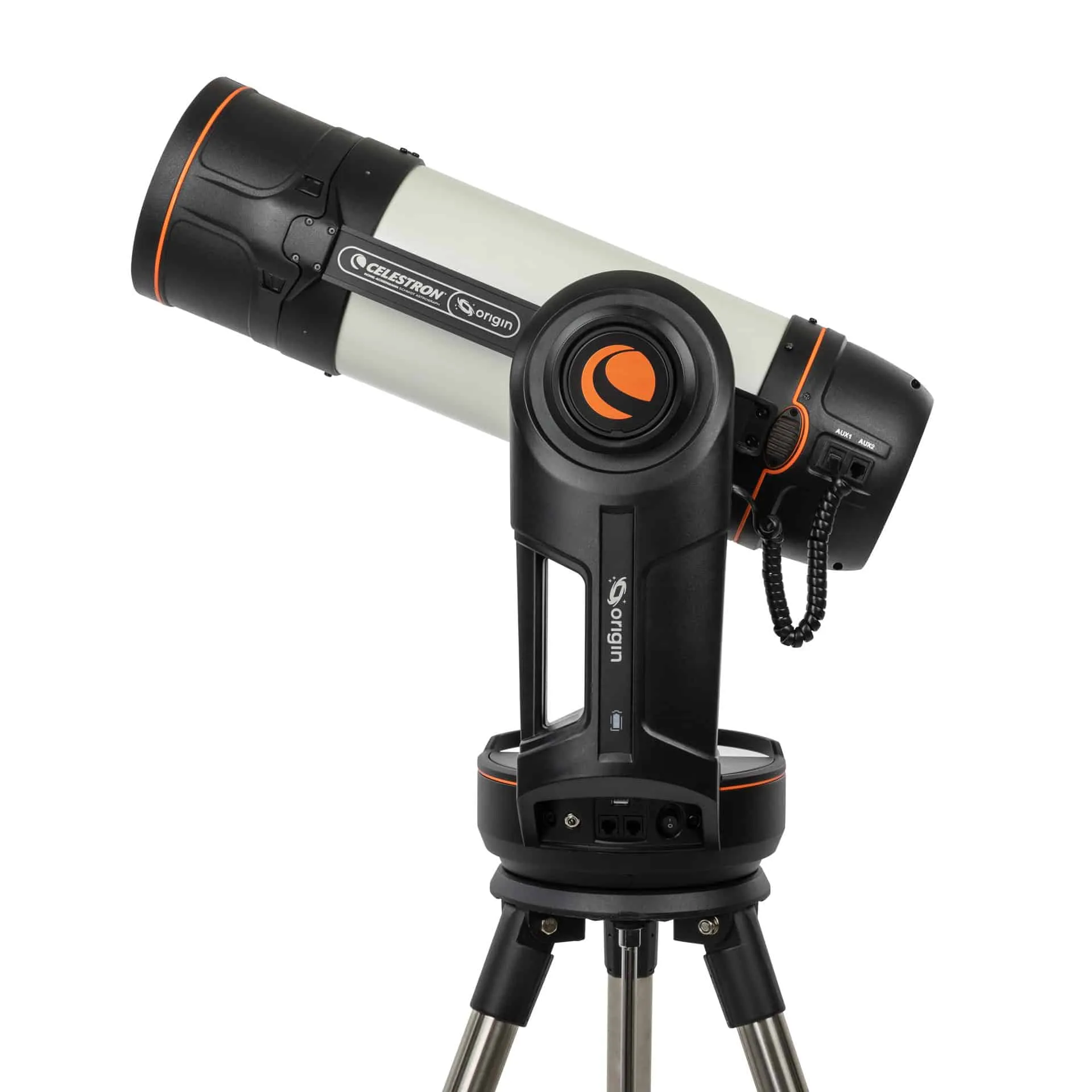
Celestron Origin Intelligent Home Observatory
For something high-end and definitely not portable, the bulky Celestron Origin Intelligent Home Observatory smart telescope (a reflector) offers 6.4 MP images in a fully automated all-in-one unit.
A more traditional telescope
Celestron NexStar 8SE
Those after a more traditional experience should consider theCelestron NexStar 8SE, an affordable optical telescope with a traditional eyepiece, but useful computerized and motorized capabilities.
Jamie Carter is a Cardiff, U.K.-based freelance science journalist and a regular contributor to Live Science. He is the author of A Stargazing Program For Beginners and co-author of The Eclipse Effect, and leads international stargazing and eclipse-chasing tours. His work appears regularly in Space.com, Forbes, New Scientist, BBC Sky at Night, Sky & Telescope, and other major science and astronomy publications. He is also the editor of WhenIsTheNextEclipse.com.
You must confirm your public display name before commenting
Please logout and then login again, you will then be prompted to enter your display name.