

-
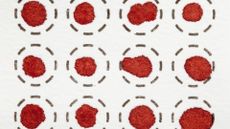 Detecting cancer in minutes possible with just a drop of dried blood and new test, study hints
Early tests suggest that a new tool that requires only a single drop of blood could detect three of the deadliest forms of cancer.
cancer -
 Cancer patients can now be 'matched' to best treatment with DNA and lab-dish experiments
Identifying the most effective cancer treatment for a given patient from the get-go can help improve outcomes.
cancer -
 Catherine, Princess of Wales, announces cancer diagnosis
The Princess of Wales, whose health status has recently been questioned by the media and public, has announced that she has cancer.
cancer -
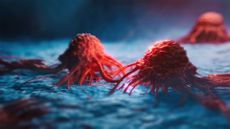 'Very concerning': Microplastics can accumulate in cancer cells and may help them spread, study hints
An early lab-dish study in cancer cells suggests microplastics can persist through cell division and may contribute to cancer spread, when they're in tumors.
cancer -
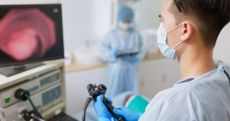 Gut bacteria linked to colorectal cancer in young people
Certain gut bacteria reside in colorectal tumors, but the species differ depending on a patient's age, offering hope that our gut tenants could serve as early warning signs of cancer in young people.
cancer -
 New mRNA 'cancer vaccine' trial launches in UK
The first U.K. patient has received a dose of "cancer vaccine" in a new trial.
cancer -
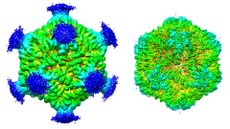 Cancer sometimes triggers sudden memory loss — now we might know why
A virus-like protein made by some tumors may be the culprit behind an enigmatic neurological syndrome in cancer patients.
cancer -
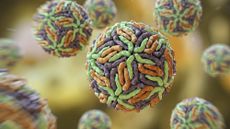 Zika virus could potentially treat cancer, another early study hints
The Zika virus can target and eradicate human neuroblastoma tumors in a mouse model, a study shows. But how soon could such a treatment be used in people?
cancer -
 'Bionic breast' could restore sensation for cancer survivors
Scientists are developing a new device that could help breast cancer patients who experience a loss of sensation after having a mastectomy.
cancer


