













'As if a shudder ran from its brain to its body': The neuroscientists that learned to control memories in rodents
In this adapted excerpt from "How to Change a Memory," author and neuroscientist Steve Ramirez recounts the events that led him and his colleagues to discover memories could be artificially controlled in rodents by zapping their brains with lasers.


Can we change bad memories? In this adapted excerpt from "How to Change a Memory" (Princeton University Press, 2025), author and neuroscientist Steve Ramirez recounts the events that led him and his colleagues to discover memories could be artificially controlled in rodents, by tapping directly into the brain.
Feelings like anxiety are hard to understand because they're often invisible to everyone else. But they're part of everyday life. We all regularly experience bouts of stress and anxiety. What if the job interviewer doesn't like me? Should I cram tonight for my exam tomorrow? What should I say on my first date?
Our biology often forces us to be prepared for multiple outcomes in the midst of uncertainty. It's healthy to care about these multiple outcomes because it encourages us to put in the work, to adequately prep for a given stressful event. And yet, sometimes the scales of stress become tilted to such an extreme that pathologies of the brain begin to emerge.
The tremendous variation in how any individual arrives at a state of anxiety, for example, highlights that our brain contains many winding roads that can ultimately converge on the same feeling. We all have our triggers in life, but what those triggers are depends on experience — on memory. When these differences impair our mood, thinking, behavior and overall daily functioning, then they get lumped into a category. What's more, if observed impairments share similar features, then this category itself falls within a broader classification — that of a mental disorder.
As I was entering my last year of graduate school, I was just beginning to understand how omnipresent an anxious feeling can truly be. Just as my own stressors in life began accumulating — finishing my thesis, writing grants and job applications, continuing the seemingly never-ending search for purpose as a scientist and person — my mom too had a sudden resurgence of anxious moments that ultimately culminated in frequent panic attacks. Once I learned about her lifelong experience with the erratic thing that anxiety was for her, I started to appreciate the on-again, off-again and on-again nature of these feelings. I couldn’t stop thinking about her panic attacks and how frustrating it was to not be able to press "off" on some of the most debilitating moments one can endure.
My last project in graduate school would attempt to artificially activate positive memories to suppress the symptoms associated with anxiety and depression. It would be my most personal scientific endeavor, a very direct way for me to join the fight at my mom's side and to thank her for being my superhero. If my research could somehow inspire new therapeutic strategies that might be useful for alleviating these kinds of debilitating conditions, then my work will have gained an even deeper, more personally meaningful purpose.
My lab partner Xu Liu and I wanted to take a brain-centric approach to our newest project. Could memory itself be artificially controlled in rodents, by tapping directly into the brain to restore neuronal and behavioral balance in a therapeutic name?
Get the world’s most fascinating discoveries delivered straight to your inbox.
Luckily, our project had a scientific precedent in humans — in an influential paper by psychologist Barbara Fredrickson and colleagues called "The undoing effect of positive emotions." This study highlighted the capacity of positive emotions to undo the physiological effects that negative emotions have on the brain and body.
The undoing hypothesis proposes that positive emotions can be used for more than just feeling good. They can be used to help us get out of bed in the morning; pursue happiness; change how we think about and interact with ourselves and others; and counteract, or at least regulate, negative emotions. When human subjects were stressed and then watched movie clips that elicited contentment and amusement, their bodies rebounded in beneficial ways: their stress-induced increases in cardiovascular activity, for instance, returned to baseline faster than when they watched neutral or sad movie clips. Excitingly, this reveals a very real physical connection between feelings of positivity and their direct effects on our biology.
Xu and I wanted to further this work by testing for a potential therapeutic capacity of positive memories by jump-starting their biology from within the brain. We placed our animals in a box that had two small valves on separate ends: one that delivered sugar water when the animals licked it and another that delivered regular water. This is known as the sucrose preference test. Rodents normally prefer sugar water over regular water, the same way humans will typically find sugary liquids preferable to a bland liquid. On the other hand, rodents with depression-and anxiety-related behaviors tend to show a 50:50 preference. They show no preference at all.
As expected, the animals displaying anxiety-and depression-related behavior licked at each of the valves randomly over the course of 15 minutes. As with Project X — our first successful attempt at MIT to artificially control memories in the rodent brain — all we had to do was hit a button that would turn our lasers on and optogenetically awaken a memory from within.
Click.
The deep-blue laser flickered throughout the mouse’s hippocampus, waking up — activating — cells that held onto a positive memory. I remember thinking that our optogenetic stimulation was a fancy, high-tech Proustian madeleine, one capable of triggering the rich remembrance of things past. If you'll entertain my romanticization of the moment: the mouse perked up immediately, as if a shudder ran from its brain to its body, and it began scanning the environment to decide which valve to visit first.
An extraordinary thing was happening. I imagine that the mouse felt the memory invade all its senses, strangely detached and with no suggestion of an origin, since the essence of these sensations was in the mouse as much as it was the mouse. And once the positive memory fully revealed itself within seconds, the now-motivated mouse inspected each valve with some sniffing, followed by a taste test.
The key to reversing abnormal behavior was embedded within their positive memories all along.
When it found the valve with the sugar water, the mouse started licking vigorously, so much so that it consumed as much sugar water as our control animals. In under an hour, Xu and I saw that reactivating positive memories restored our mice's behavior to a healthy baseline. Just as exciting, reactivating positive memories also turned on many areas of the brain involved in rewarding experiences and motivation.
The key to reversing abnormal behavior was embedded within their positive memories all along. For as long as the laser was shining its sapphire radiance in their brains, the mice were motivated to keep consuming their sugar water reward. All this from stimulating cells in the hippocampus. Or to say this with less novelistic flare: the mice got a sugary treat.
In the following weeks, one of my gifted undergraduates Briana Chen collected a large empirical dataset for the project, and it came with an exciting plot twist: when she artificially reactivated positive memories twice a day, or "chronically," for about a week, not only did this permanently ameliorate symptoms we believed were associated with depression and anxiety, but it also promoted the growth of new cells in the brain. Positive memories had both short- and long-term benefits, all the way from cells to behavior.
Inspired by the neuro-centric Research Domain Criteria (RDoC) approach to treating the brain, our hope was that the biological potency of positive memories — like medications — could inform cognitive-behavioral approaches to treating disorders of the brain. This project was meaningful to me on a personal level: I thought of my mom's panic attacks and the idea that she might never have to experience the kind of crippling anxiety that robs someone of peace.
Positive memories are some of the most powerful biological tools available in our brains. At home, my mom and I shared a treasure trove of them — one that we both remember is from the time when I was a teenager, and we were visiting her parents in El Salvador.
One morning, my cousins, parents and grandparents all walked down a hill behind the house my mom grew up in to go swimming in the village pond. My cousins kept egging me on to jump from a cliff into the pond, and my mom kept telling me I didn't have to.
Like her, I was the opposite of an adrenaline-seeker because, oh I don't know, maybe my innate biology was onto something, as "please do not free-fall to Earth" kept repeating in my mind. She could see that I was scared, and after a few minutes she suggested, much to my surprise, that we jump together. We held hands and tiptoed to the edge — uno, dos, tres — we were in the air! Moments later, we emerged from the water laughing in delightful disbelief at our newfound courage.
RELATED STORIES
Neuroscience tells us that this memory has all the ingredients of life's dessert that make us feel good. From an RDoC perspective, my cognitive and valence systems are all interacting to produce the riches from this experience: the cognitive system enables the memory of jumping off of a cliff, which at first generated feelings of fear via the negative valence systems, which are now almost immediately counteracted by feelings of reward via the positive valence systems.
What was once a moment of fear is now a memory of triumph with my mom. It's the only time I can remember when we both took a literal leap of faith, so we cherish the memory as an example of what our brains can achieve together. A million little life moments like these, packaged neatly into a million memories that we hold onto constitute the good stuff in life.
Adapted from "How To Change a Memory: One Neuroscientist's Quest To Alter The Past". Copyright © 2025 by Steve Ramirez. Reprinted by permission of Princeton University Press.
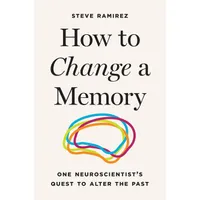
How to Change a Memory: One Neuroscientist’s Quest to Alter the Past (Hardcover) — $29.95 on Amazon
A disarmingly personal account of the new science of memory manipulation by one of today’s leading pioneers in the field.

Steve Ramirez has been featured on CNN, NPR, and the BBC and in leading publications such as The New York Times, National Geographic, Wired, Forbes, The Guardian, The Economist, and Nature. An award-winning neuroscientist who has given TED talks on his groundbreaking work on memory manipulation, he is associate professor of psychological and brain sciences at Boston University. His first book, "How to Change a Memory: One Neuroscientist's Quest to Alter the Past" is available now.
You must confirm your public display name before commenting
Please logout and then login again, you will then be prompted to enter your display name.