













A new test could flag people at risk for anemia by filming their eyeballs — no needles required
A new needle-free technology isn't ready to replace blood draws, but it could serve as a screening tool to flag people who need a full-blown blood test.

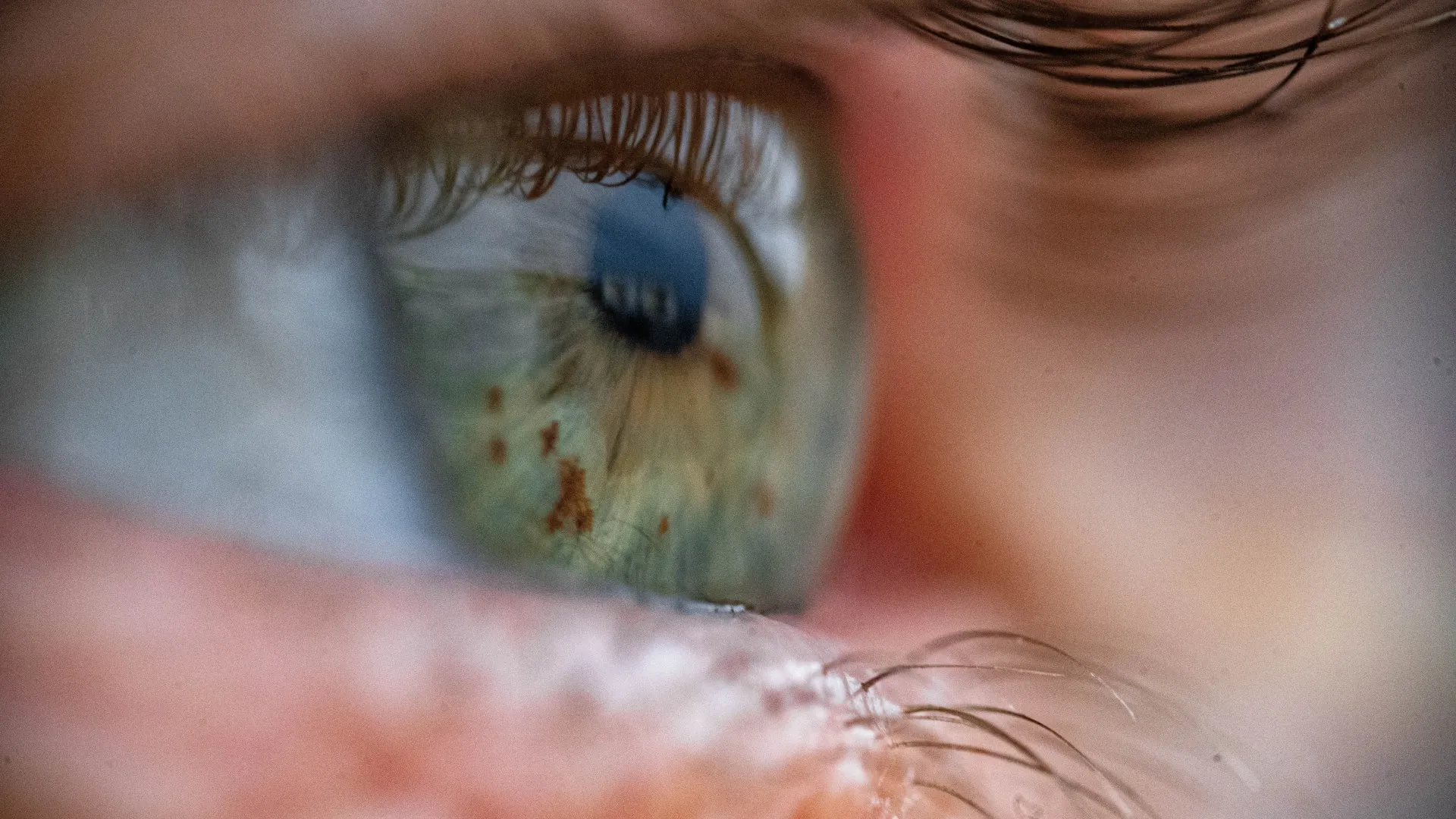
Researchers have developed a system that uses short videos of the eye to estimate a person's levels of red blood cells — no needles required.
The technology, described in a paper published April 8 in the journal npj Digital Medicine, correctly identified anemia more than 80% of the time in a trial involving 224 participants.
This technology isn't ready to replace standard blood draws, the researchers behind the study cautioned. But they think it could potentially serve as a screening tool to flag people who may need a full blood test. This could be especially useful in low-income countries where access to laboratory testing can be scarce.
"Its potential utility may lie in enabling frequent, noninvasive longitudinal monitoring or early identification of patients requiring further investigation," said Dr. Christine Kiire, a consultant ophthalmologist at Oxford Eye Hospital and a visiting researcher in the artificial medical intelligence lab at the University College London Institute of Ophthalmology. If validated and made affordable, the system could make blood monitoring more accessible in resource-limited environments, Kiire, who was not involved in the study, told Live Science in an email.
The method could be useful in settings where it's burdensome to draw and analyze blood repeatedly, said Dr. Theodore Leng, an ophthalmologist and vitreoretinal surgeon at Stanford University who wasn't involved in the study. This could include outpatient screening, home monitoring, follow-up appointments for dialysis and cancer treatments, or pediatrics, he said in an email.
That said, the system is not ready for prime time yet. "It's great research but will take a lot of steps to be clinically available," Dr. Peter Campbell, an ophthalmologist at Oregon Health & Science University who wasn't involved in the study, said in an email.
How the needle-free system works
Noninvasive blood sensors already exist. In 2021, the Food and Drug Administration (FDA) approved a device, the Pronto-7, that measures levels of hemoglobin in the blood by shining light through the fingernail. Hemoglobin carries oxygen inside blood cells.
Get the world’s most fascinating discoveries delivered straight to your inbox.
Unfortunately, Pronto-7's readings can be influenced by skin tone, meaning they're less accurate for people with dark skin. The white part of the eye, in contrast, contains very little pigment and looks roughly the same across different populations.
The new screening technique takes advantage of this. To build it, researchers used a microscope camera at 50x magnification to record 10-second videos of the whites of study participants' eyes. A software called Video-to-Vessels cleans the footage — removing blinks, eye movements and lighting changes — and converts the videos into time-lapse snapshots of the blood vessels within the eye.
Then, an AI model called VesselNet, which was trained on blood vessel snapshots paired with lab results regarding blood count, predicts the person's hemoglobin level and red blood cell count by analyzing patterns in the flow of blood cells.
"This paper is unique because it describes images of the front surface of the eye, rather than the retinal vasculature (at the back of the eye)," Campbell said. "So in theory it could be applied without expensive retinal cameras — even a smartphone."
The researchers tested the method on 224 people, including cancer patients with blood disorders and healthy volunteers, at Sheba Medical Center in Israel. They compared the model's predicted hemoglobin values with actual hemoglobin values measured using standard blood tests, finding that the model correctly identified whether a person had low hemoglobin about 83% of the time.
This falls short of what's needed for real-world use, Kiire said. For context, Pronto-7 scores between 80% and 88% for detecting low hemoglobin in men, and 84% to 87% in women.
"In practical terms, this sounds more like a great screening tool, rather than a technology ready to support dosing, transfusion decisions, or definitive hematology management," Leng said.
Related stories
Additionally, whereas the eye-based method measures only two things — hemoglobin and red blood cell count — a standard blood test measures many more, Kiire said. The study authors think they may be able to count white blood cells, as well, if they design a camera with higher resolution and magnification.
Kiire also noted that certain conditions, such as pink eye and dry eye disease, as well as drugs such as medicated eye drops, may affect blood vessels in the eye and lead to false readings. On a practical level, getting good results "requires careful patient positioning and sufficient optical focus,"which aren't easy skills for clinicians to master and may limit the usability of the new method, she added.
The researchers plan to do studies involving larger and more diverse cohorts, including patients with iron-deficiency anemia, which were underrepresented in this study. They also aim to do repeated testing of their method, to validate and extend their findings.
This article is for informational purposes only and is not meant to offer medical advice.
Denis, T., Sher, I., Praisman, E., Haiadry, M., Zag, A., Benjamini, O., Avigdor, A., Asraf, K., Doolman, R., Wolf, L., Suchowski, H., & Rotenstreich, Y. (2026). Towards noninvasive blood count using a deep learning pipeline from bulbar conjunctiva videos. Npj Digital Medicine. https://doi.org/10.1038/s41746-026-02598-2

Clarissa Brincat is a freelance writer specializing in health and medical research. After completing an MSc in chemistry, she realized she would rather write about science than do it. She learned how to edit scientific papers in a stint as a chemistry copyeditor, before moving on to a medical writer role at a healthcare company. Writing for doctors and experts has its rewards, but Clarissa wanted to communicate with a wider audience, which naturally led her to freelance health and science writing. Her work has also appeared in Medscape, HealthCentral and Medical News Today.
You must confirm your public display name before commenting
Please logout and then login again, you will then be prompted to enter your display name.