













Bizarre patterns on Venus have scientists puzzled
Scientists are trying to understand Venus' bright surface formations, called coronae, using new 3D maps.

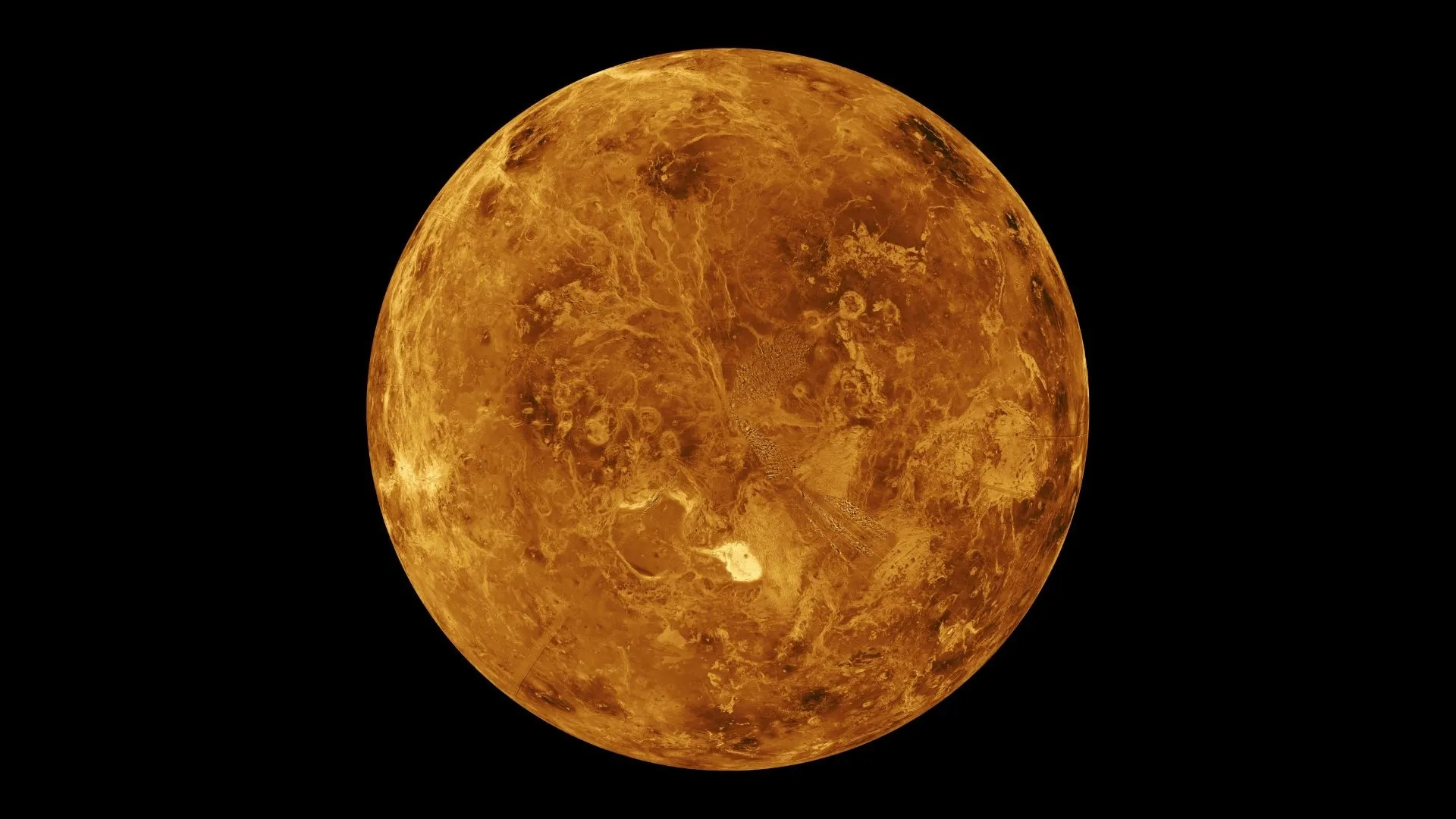
Bizarre Venus surface formations (or coronae) are likely key to understanding our twin planet's heretofore inscrutable interior. Using NASA Magellan spacecraft data from decades past, Anna Gulcher, an earth and planetary scientist at Germany's University of Freiburg, have created innovative new 3D models of the largest coronae to better understand Venus' puzzling geodynamics.
The team used data from the Magellan spacecraft's radar sensors, which officially ceased functioning in 1994, to get a closer look at the coronae's surrounding topography and gravitational signatures.
Coronae display extraordinary diversity in size, morphology, topography, gravity signatures, and tectonic setting, indicating that they do not represent a single formation mechanism, but instead reflect a spectrum of dynamic processes, Gulcher and colleagues write in a paper presented at the European Geosciences Union's 2026 General Assembly in Vienna.
The updated database includes 741 coronae which span Venus' surface.
They are huge circles of fracture systems that we think are basically the surface expression of a plume of hot material moving upwards from the interior of the planet, Gulcher told me at EGU26 in Vienna.
Understanding these structures is critical not only for deciphering Venus' geodynamic regime, but also for assessing whether similar processes may have operated on the early Earth, Gulcher and colleagues write in the EGU paper.
By combining gravity and topographic data with geodynamic simulations, the study identifies possible warm mantle upwellings beneath 52 coronae and presents perhaps the strongest evidence that different plume-related tectonic processes occur there, says Gulcher. The work also shows that current gravity data can miss many active tectonic signals, meaning activity on Venus could be more widespread than currently detectable, she says.
Get the world’s most fascinating discoveries delivered straight to your inbox.
As For Why They Are Circular?
We think they are formed by something circular in shape from the interior, says Gulcher. A magma plume, for instance, that is hotter than the surrounding material can cause a lot of uplift of the crust, which creates these rings, she says.
The coronae are thought to have been the result of a lot of mantle convection.
Mantle convection is the movement of the mantle (or rocky layer between the core and crust) of any planet, where it can spread outwards and drive plates to move laterally, says Gulcher. It's the cycle of upward and downward movement of the mantle over a very long time scales, she says.
Planetary scientists still debate whether Venus ever had any geophysical process resembling atmospheric carbon recycling. The most significant would have been full-scale plate tectonics, the theory that ascribes our planet's lithosphere as being divided into giant moving plates. The idea is that such plates frequently collide causing earthquakes, volcanic eruptions as well as the continuous recycling of carbon in and out of our atmosphere.
Earth is beyond fortunate for having the unique ability to evolve plate tectonics, which enabled our atmosphere to remain stable over billions of years. Plate tectonics is arguably what differentiates the ability of any given rocky planet to evolve intelligent life.
On Earth, carbon is recycled back into the mantle very efficiently, says Gulcher.
That's in part because large scale water oceans at Earth’s surface created hydrous (or water rich) rocks. Such rocks are prone to become weaker and more pliable much faster than lithospheric rocks on a dry planet like Venus. In fact, Venus may never have had a large water ocean; that's an important conundrum that upcoming missions to Venus' surface hope to solve.
It's now thought that such water oceans are what's needed to create plate boundaries. That's when a planet's lithospheric rocks become much more pliable and thus more prone to break up and separate into separate into movable tectonic plates.
In contrast, without oceans, Venus likely only had very limited carbon recycling via tectonic and resurfacing processes, says Gulcher.
More details should come with future in situ data taken at Venus.
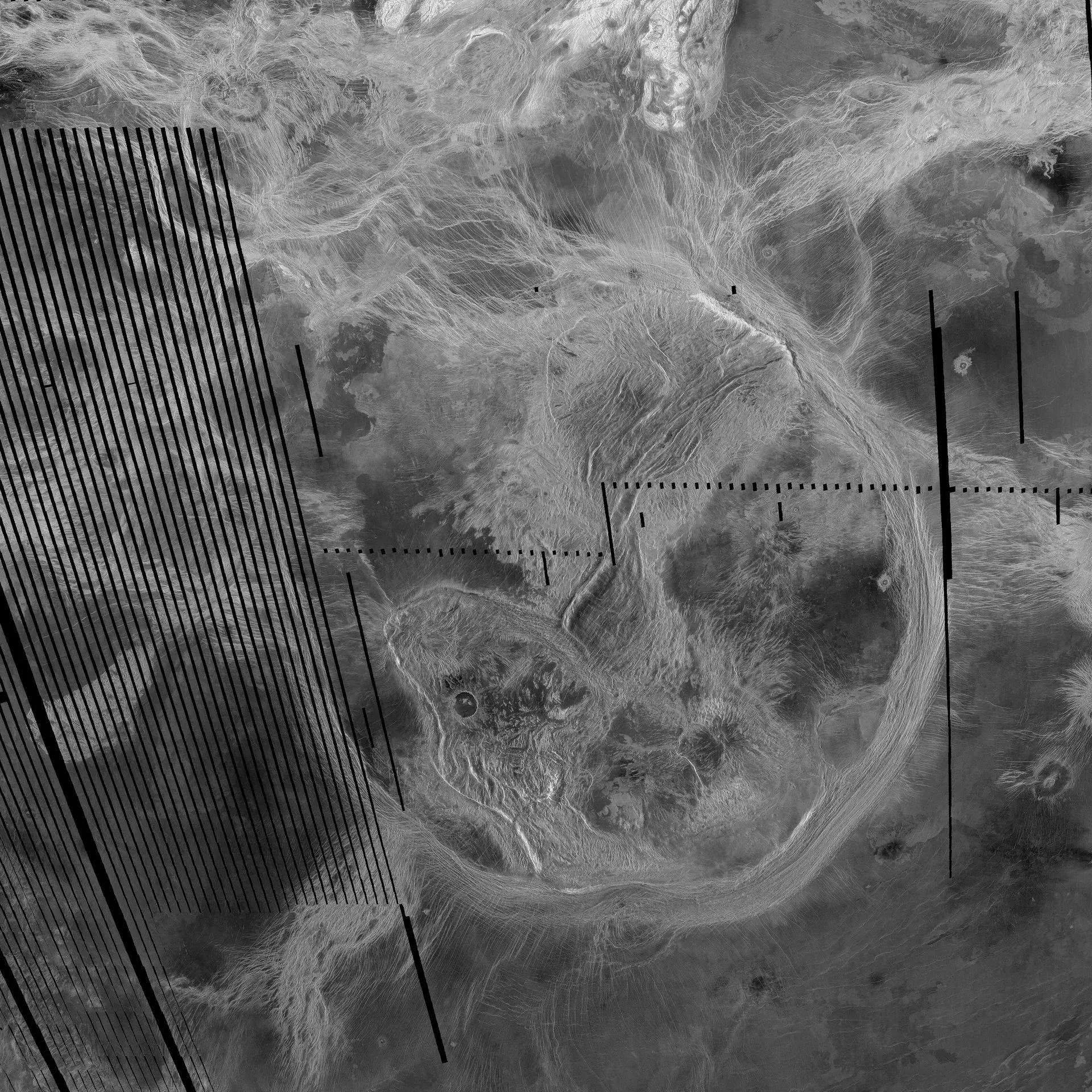
This spectacular Magellan image is centered on 30 degrees south latitude, 135 degrees east longitude, spans 3500 kilometers (2170 miles) from east to west (left to right), and shows the near-circular trough of Artemis Chasma. Its circular shape and size (2100 km or 1302 miles in diameter) make Artemis the largest corona identified to date on the surface of Venus. Artemis could encompass most of the U.S. from the Front Range of the Rockies (near Denver) to the West Coast
Future missions, such as VERITAS and EnVision, will significantly enhance our ability to analyze coronae with unprecedented detail in surface and subsurface structure, and increased topographic and gravity resolution, Gulcher and colleagues noted in a 2025 paper in the journal JGR Planets.
As For Earth?
Related stories
Plate tectonics have been stable here on Earth for at least 3 billion years, says Gulcher. This global destruction of material and formation of material allowed our planet to lose a lot of heat and also to recycle material back into the mantle, she says. This continuous cycle allowed our planet to have stable surface conditions over billions of years, says Gulcher.
What haunts Gulcher most about Venus?
We see structures on Venus that are so earthlike yet also show a few very important differences, says Gulcher. With the available data, we don't fully understand how it can look so similar but be so different, she says.
The original version of this article was published on Universe Today.

Over the last three and a half decades, award-winning science journalist Bruce Dorminey, a former Forbes senior science contributor, former Hong Kong Bureau Chief at Aviation Week and Space Technology magazine and former Paris-based technology correspondent for the Financial Times, has written for a multitude of high profile publications. They include Astronomy Magazine, Sky and Telescope, Scientific American, Science, Nature News, National Geographic, and Universe Today. He is the author of the 2001 book "Distant Wanderers: The Search for Planets beyond the Solar System." He was also the host of the "Cosmic Controversy" podcast which is still available via Podbean.
You must confirm your public display name before commenting
Please logout and then login again, you will then be prompted to enter your display name.